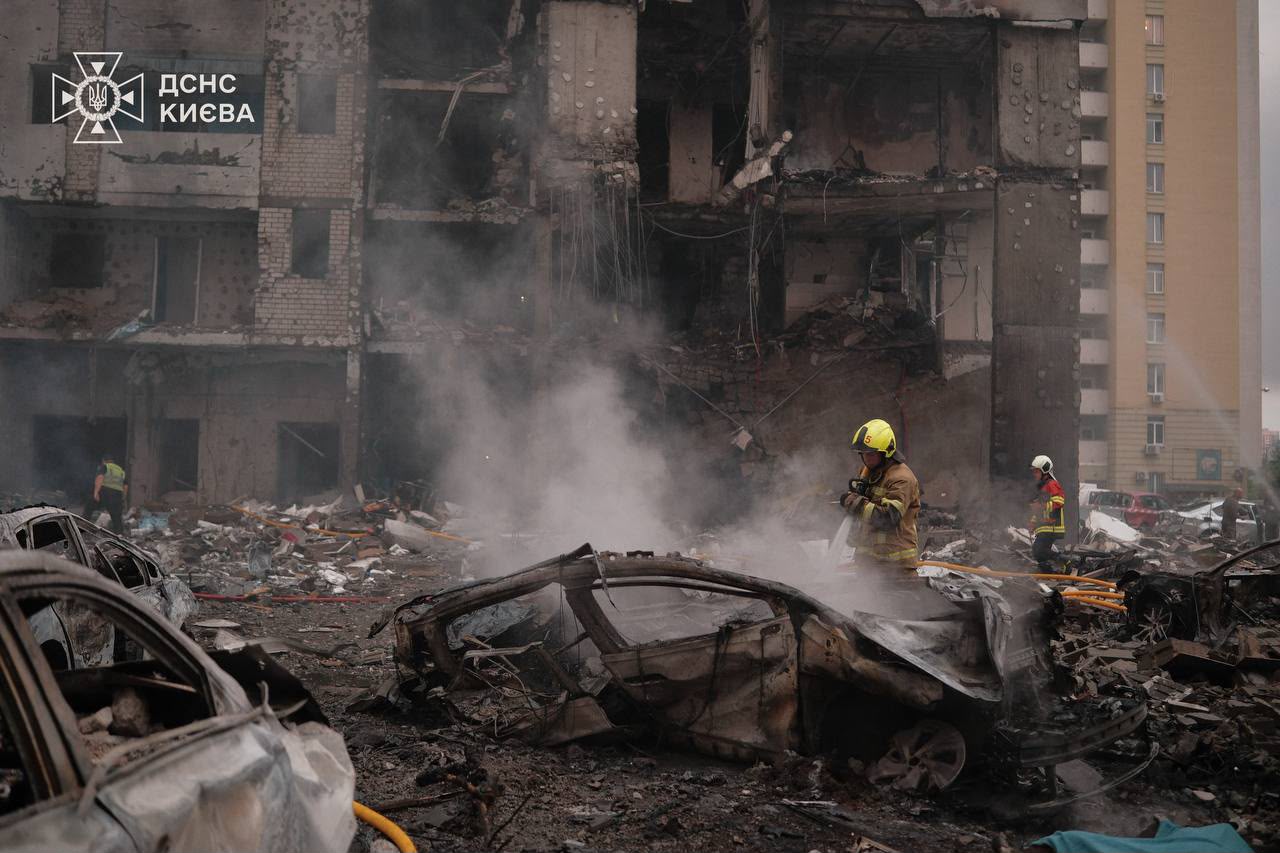
Kyiv is mourning. For the second time within a week, the city has been hit by a major missile and drone attack, this time killing at least 12 people and injuring 46, including five children. Last week’s strike, the largest the city had faced in a single night, killed at least 30. As of now, everyone connected to ORT in Kyiv is safe.
For ORT students and teachers across Ukraine, war is not a single event but a constant condition. Weeks earlier, a 10-year-old student at ORT-Aleph Lyceum in Zaporizhzhia was seriously injured in a separate missile strike, and World ORT has been standing with his family every step of the way.
World ORT is a global Jewish educational network serving 80,000 students and 200,000 beneficiaries in more than 30 countries, including Ukraine, where schools have remained open throughout the war.
The boy, a fourth-grader, was inside a grocery store on June 6 when a missile struck the roof of the building, causing fires and widespread damage throughout the city. He suffered a concussion, back injuries, and broken fingers, and has undergone three surgeries so far. Doctors say additional surgeries will likely be required after he spends some time recovering at home. Two people were killed in the attack; the boy was among several injured.
His father died a few years ago, and he is being raised by his mother and grandmother. ORT Ukraine, supported by World ORT, has already provided the family with financial assistance, and additional therapeutic support is being arranged.
“It is a tragedy,” said Mila Finkelshtein, Chief Executive of ORT Ukraine. “His psychological state is very, very bad. We are waiting to hear the next steps and what he will need. I am sure we will need more therapy sessions for him.”
The school in Zaporizhzhia serves 326 students and sits less than 20 miles from the front line. Since the Russian invasion, students have rotated through lessons held in a nearby underground shelter, as conditions inside the school building have made regular instruction unfeasible.
“There are constant alerts, drones, rockets, and missiles. It is impossible to study in the building,” Finkelshtein said. “Teachers are taking classes in the underground school.”
The attacks on Zaporizhzhia and Kyiv are not isolated incidents. A missile strike on Kyiv last month damaged the apartment of an ORT teacher, shattering all windows and destroying furniture and internal water pipes. The apartments of the teacher’s parents and a student’s family were also severely damaged.
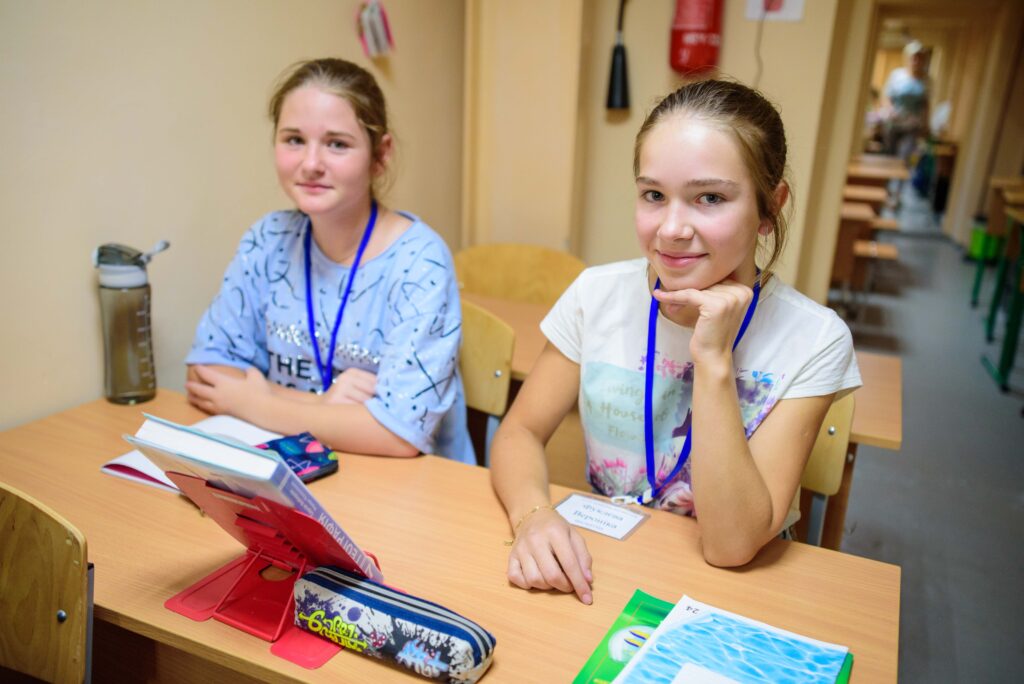
Despite relentless disruption, ORT schools have remained open, functioning as places of safety, stability, and Jewish continuity. They are often the most secure and supportive environments available to children and families during attacks, blackouts, and displacement.
That trust is reflected in enrollment. Nationally, the number of first-graders in Ukraine has fallen 13 percent, and schools across the country are projected to lose 15 to 25 percent of their student population in the years ahead. Against the trend, ORT School #141 in Kyiv has held stable, with demand for first-grade placement currently exceeding spots available.
This has been made possible through the generosity of World ORT donors and partners, who have raised more than $5.5 million for the Ukraine emergency campaign since February 2022.
World ORT projects a funding need of $3 million through the end of 2026 and into 2027 to reinforce shelters and security, expand psychological services, strengthen energy resilience, and ensure that schools remain open and responsive to growing wartime and trauma-related needs.
“Thank you, thank you, thank you,” Finkelshtein said. “Every minute and every second of every day. Because without our donors, we would not be able to operate. We would not be able to save our schools. Without all of this support, we would not be able to open schools, to work in blackouts, to save children, to help families, to find teachers. There would be nothing for us without it.”
The uncertainty of wartime is its own burden. “When you don’t know what will happen in the next hours, you cannot know what you will need,” Finkelshtein said. “Life becomes more and more difficult with each attack. Every child’s life for me is like a personal wound.”
ORT opened its doors in 1880. Its commitment now is the same as it has always been: to keep students learning, safe, and connected to their community, whatever the circumstances.
If you have questions or would like to speak with someone about your gift, please contact Allison Baumwald, Chief Development Officer, at [email protected]