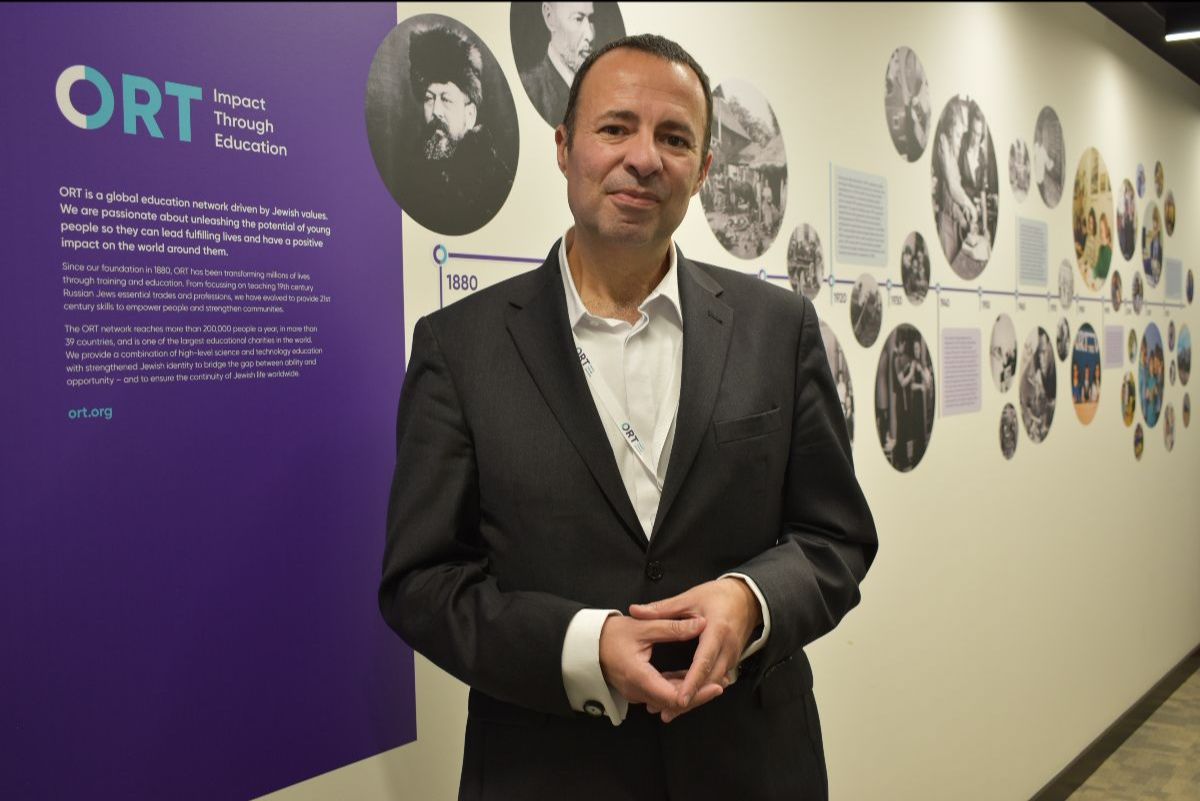
Dear ORT Friends and Leaders,
I should have been happy. On my flight back from Israel a few days ago, the Wi-Fi was free. And it was fast. Really fast.
I was able to answer emails, review documents, send messages, deal with things that would normally have waited until I landed. By the time we arrived, I had accomplished an impressive amount. And I hated it.
Not because the Wi-Fi didn’t work – but because it worked too well. I was efficient. I was responsive. I was productive. But I wasn’t particularly strategic. I wasn’t thinking deeply. I wasn’t looking at the bigger picture. I wasn’t allowing my mind to wander from one idea to another, or sitting with a difficult question long enough to see it differently. I was getting things done. I just wasn’t necessarily thinking. And that’s a very powerful (and humbling) thought when you’re the CEO of a global Jewish educational nonprofit.
We live in a world that increasingly rewards speed. Information is instantaneous. Answers are available in seconds. Artificial intelligence can summarize a book, explain a concept, translate a language or produce a first draft almost immediately. These are extraordinary tools. And at World ORT, we should absolutely be helping young people understand how to use them. But there’s a danger in confusing quick and easy access to information with learning.
Jewish tradition has always understood that learning is something different. Pirkei Avot tells us: Turn it over, and turn it over again, for everything is in it. The point isn’t simply to acquire information, but to return to an idea, examine it from another angle, argue with it, question it, and discover something that wasn’t visible the first time. That’s a very different model of education from simply finding the answer. And it’s one of the things that I think makes Jewish education so powerful. We’re not afraid of difficult questions, in fact, we often seem to assume that the question is where the real learning begins.
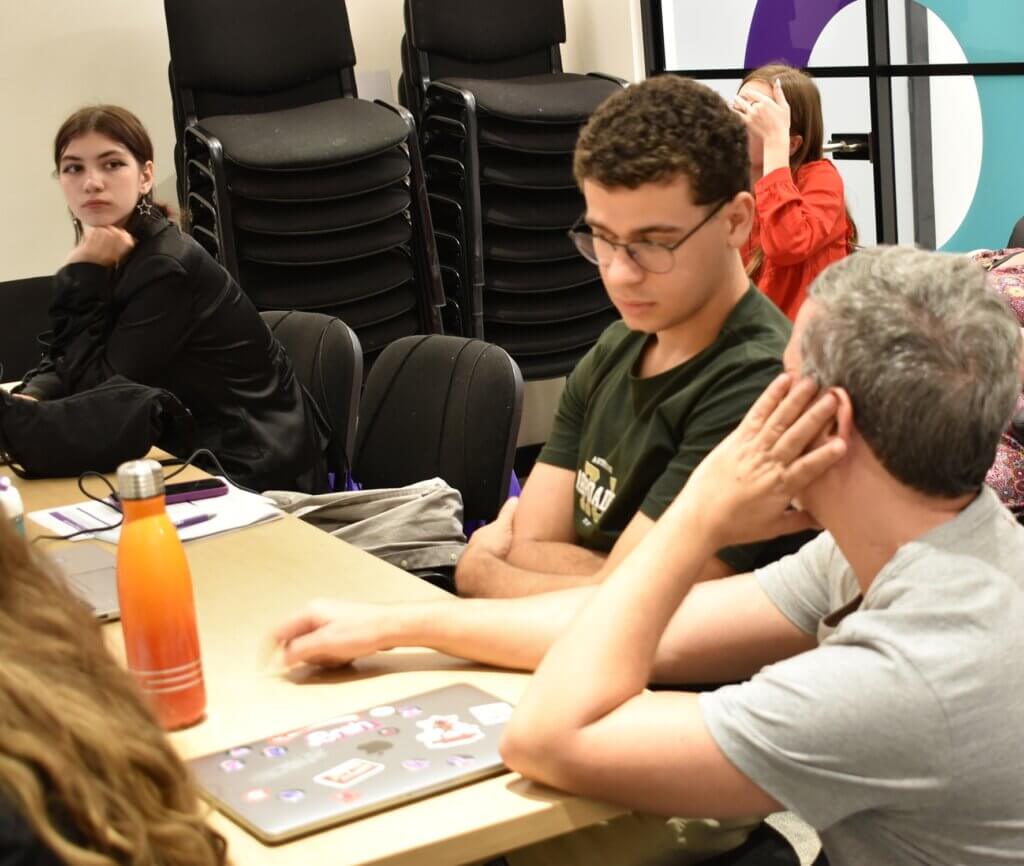
in London as part of World ORT’s flagship Young Entrepreneurship Program
This week’s parasha, Ki Teitzei, tells us to use a full and honest weight and a full and honest measure. I like that for education too: we don’t measure learning only by how much information a student can absorb, how quickly they can complete an assignment, or how efficiently they can produce an answer. We ask if they learned to think, how they learned, did they develop curiosity. Did we measure their growth in a full and honest way. Because technology can make learning faster, which is great, but we have to make sure that it doesn’t make thinking shallower.
As I’ve traveled around World ORT schools, I’ve seen a deep belief in innovation and in giving students the skills they need to thrive in a rapidly changing world. But I’ve also seen a commitment to prepare students to think, question, create, lead and make wise choices in a world that will increasingly provide them with instant answers. And sometimes the most important thing we can give a student isn’t a faster answer, it’s the time, space and encouragement to think about the question.
And sometimes, perhaps, the most productive thing we can do is turn off the Wi-Fi.
Shabbat shalom,
Dov
Dov Ben-Shimon,
Chief Executive Officer, World ORT