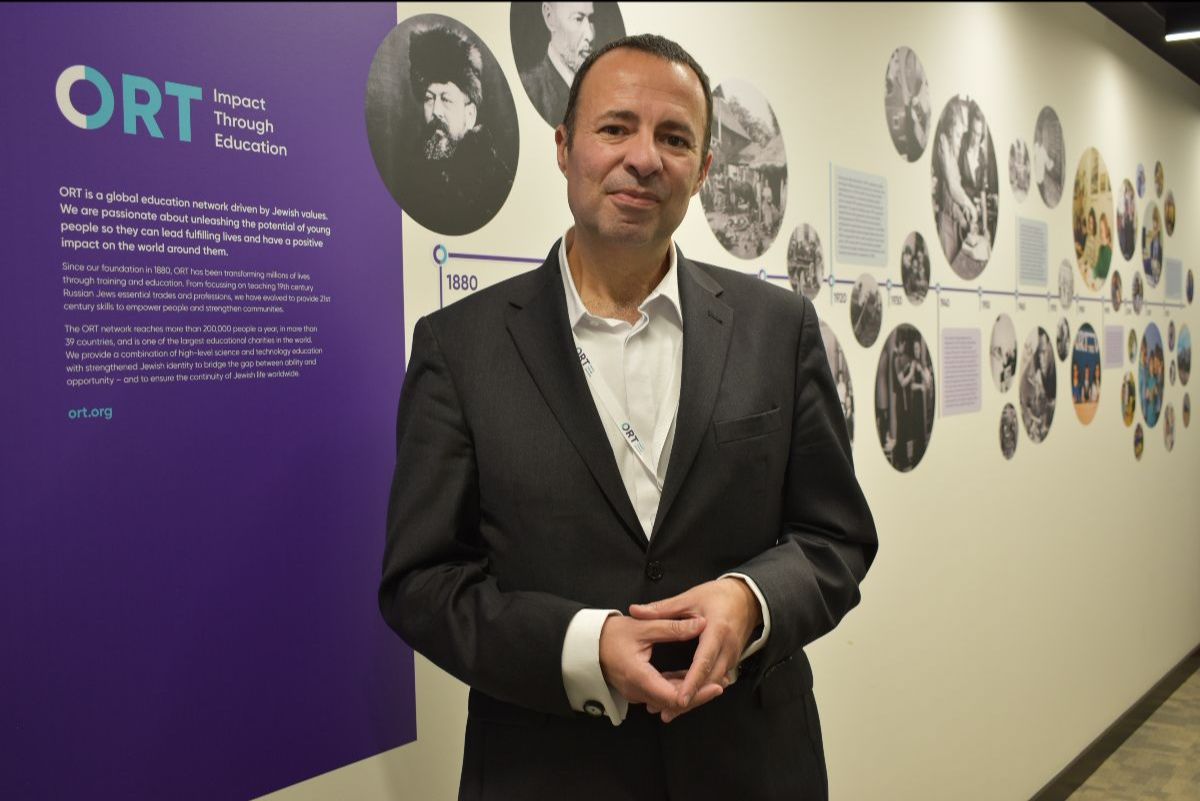
Dear ORT Friends and Leaders,
I have a few more things to tell you about Bulgaria. But this time I want to tell you about the small details that ended up teaching me the most.
Some of the things that stayed with me weren’t from formal meetings or presentations. They were the small observations, the details you notice when you walk the streets, sit with people, and allow yourself to experience a place. They’re the things that tell you something deeper about a culture.
One thing I noticed immediately in Bulgaria was the watches. In many professional meetings, I found myself noticing that Bulgarians often wear substantial, striking watches. Large faces, bold designs, watches that are clearly meant to be seen. At first, it was just a casual observation. But it made me think about the ways we express success, achievement, and identity. In Bulgaria (like many parts of Eastern Europe), a watch can be more than a practical object. It can be a symbol of accomplishment, aspiration, and pride in what you’ve achieved.
Then there are the wonderfully unique cultural details. The famous Bulgarian head movement, where traditionally nodding up and down can mean “no” and shaking from side to side can mean “yes,” is an awesome (and slightly hilarious) reminder that even something as universal as body language is shaped by history and culture. Flowers are another example. Flowers are everywhere in Bulgaria, beautiful expressions of care and respect, but with an important tradition: always give an odd number of flowers. Even numbers are reserved for funerals. That’s a pretty good reminder that culture lives in the details: small mistakes can say something very different from what you intended, which is why curiosity and humility are essential when we enter someone else’s world.
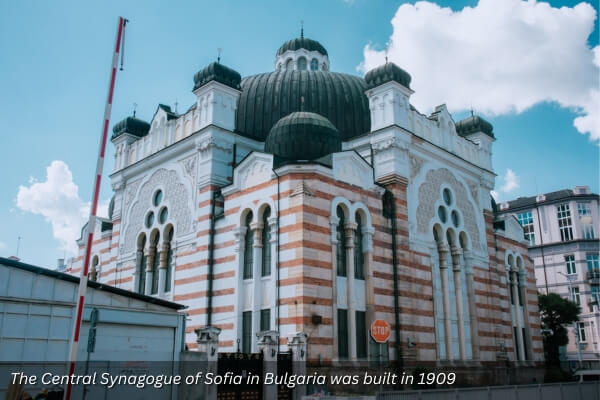
So that’s the small but interesting stuff. What struck me most, though, was the incredible layering of history in Sofia. Within a few blocks, I saw Roman ruins, an Orthodox cathedral, a mosque, a synagogue, Communist-era government buildings, and modern cafés filled with young professionals working on the future. It’s a city where centuries coexist: I saw a luxury SUV parked beside a Soviet-era apartment block. A centuries-old place of worship next to a sleek office building. Young entrepreneurs working remotely in cafés while older generations continue shopping at traditional open-air markets. Bulgaria is a reminder that societies aren’t replaced, they’re built layer upon layer. And that’s powerfully visible in Bulgaria’s Jewish story.
Within the same city streets, you can see the physical reminders of Jewish life that has existed in Bulgaria for centuries. The magnificent Sofia Synagogue (pictured above) stands as a symbol of a community that has endured, contributed, and remained an important part of the country’s story. Bulgaria’s history is deeply complex, with moments of both courage and challenge, but the story of Bulgarian Jews, including the remarkable survival of most of Bulgaria’s Jewish population during the Holocaust, remains a powerful reminder of the importance of moral choices, memory, and responsibility.
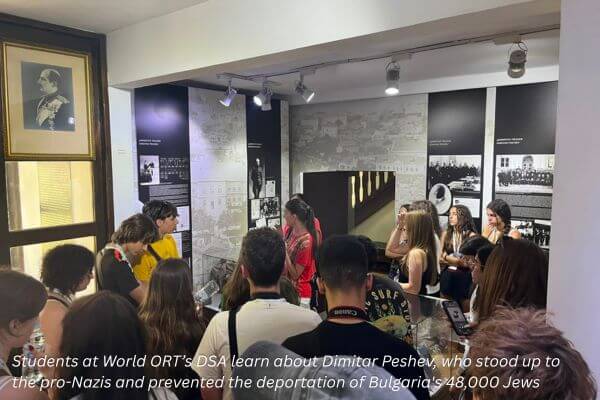
I think this resonates deeply for World ORT. Our work has always been about strengthening communities, nurturing Jewish identity, and ensuring that every generation has the knowledge, skills, and confidence to build a better future. In this week’s Torah portion, Parshat Eikev, Moshe continues preparing the Jews for the next chapter of their journey. As he does so, he reminds them that faith isn’t only about remembering the past, it’s about passing our values to those who come after us. He commands: “You shall teach them to your children…” And those words capture something profound: every generation inherits a story, but every generation also has the responsibility to add its own chapter.
That’s the heart of ORT’s mission. We teach skills, certainly. But we also help young people inherit the wisdom of the past while equipping them with the confidence, curiosity, and capabilities to shape the future. Education is how values endure. It’s how communities remain strong. And it’s how hope is carried from one generation to the next.
My deepest thanks go to our ORT Bulgaria team, the Digital Skills Academy educators, our students, and all those who make this work possible. I returned from Bulgaria inspired, grateful, and reminded once again that the future is built by people who respect the past while having the courage to imagine what comes next.
Shabbat shalom,
Dov
Dov Ben-Shimon
Chief Executive Officer, World ORT