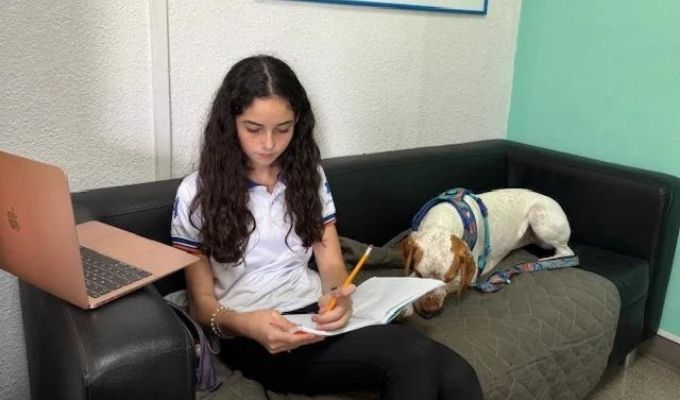
An ORT-affiliated school in Costa Rica has welcomed a dog into the classroom as a way of improving students’ wellbeing.
Menta arrived at Instituto Dr. Jaim Weizman school, in San José, in August as a nine-month-old puppy. She has already brought “lots of joy and love to our children and staff”, said the school’s Director General, Katia Alfaro, whose office is Menta’s base.
The training and the initial expenses for the English Pointer were acquired through the World ORT Mental Health and Emotional Wellbeing Micro-Grants program. This allows schools to submit applications of up to $2,000 for funding for new projects that address issues around mental health and wellbeing that will benefit staff or students.
The Institute’s leaders had been considering bringing in a dog to the school as they felt it would enhance and complement the various programs its wellness department already implements to support students and teachers.
“We had three dogs on campus last year for a couple of days for a science experiment and students truly enjoyed it,” Ms. Alfaro explained. “Knowing the emotional impact pets have on children and adults, I started navigating the idea of having a school dog. Then we received the email from ORT announcing the Wellbeing Micro-Grants and the timing was perfect.”

Speaking about Project Kelev [kelev means dog in Hebrew], student leader Maia Rubinstein said that having a dog in school can help to reduce stress, improve emotional wellbeing, foster a sense of responsibility, and contribute to a positive school climate. She also believes that a school dog can help to ease conflict and even increase focus and attention in some students.
“The project’s name, כֶּ-לֶב, as proposed by Maia, combines the Hebrew words for dog and heart: two ideas in one, representing a puppy with a big heart who is here to touch the hearts of our entire community,” explained Ms. Alfaro. “Menta is a direct source of love for all of us and she is an oxytocin-producing friend!”
Menta greets students early in the morning in the school’s ‘kiss and drop’ zone. Students can play with and pet her during morning recess and lunch breaks and can sign up if they want to take her to their classes. Menta is also available should the wellness staff need her to support students who are navigating challenging times. Students have even come to her for comfort ahead of a test.
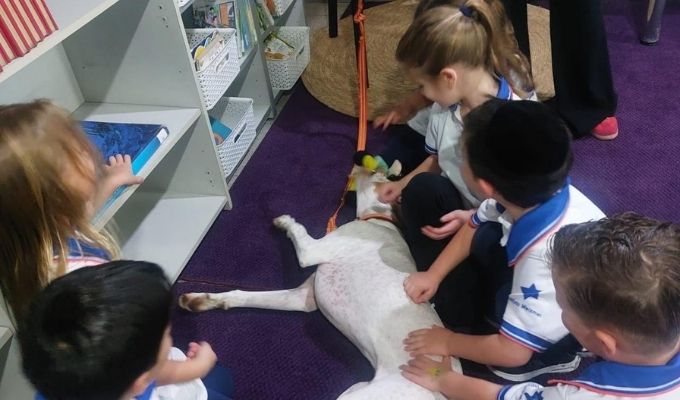
“Menta has also brought calm to the counselor’s office on days when emotions run high, offering comfort through her gentle presence,” said Ms. Alfaro. “Among older students, a strengthened sense of responsibility has emerged. They ensure her water bowl is always full, that she is treated kindly, and that her routines are followed.
“Ultimately, Project Kelev has become far more than a school-based wellness strategy – it has become a living lesson in empathy, care, and community. By nurturing students’ capacity to connect, regulate their emotions, and assume responsibility for another living being, this initiative transcends the present moment.”
As the student leader, Maia, aged 13, looks out for Menta’s wellbeing and models for other students the correct way to deal with her.
She said: “Having Menta at school makes me feel comfortable, socially and emotionally. Her presence makes going to school so much easier – my stress and anxiety has reduced a lot since I have her here.
“I’ve noticed big changes in our school and community. I’ve never seen fourth graders so happy at recess before, waiting anxiously to see her. At the counselors’ offices, when students are feeling stressed or not in a good mood, Menta arrives to bring good vibes to wave stress and pain goodbye. She brings peace and good energy wherever she goes.
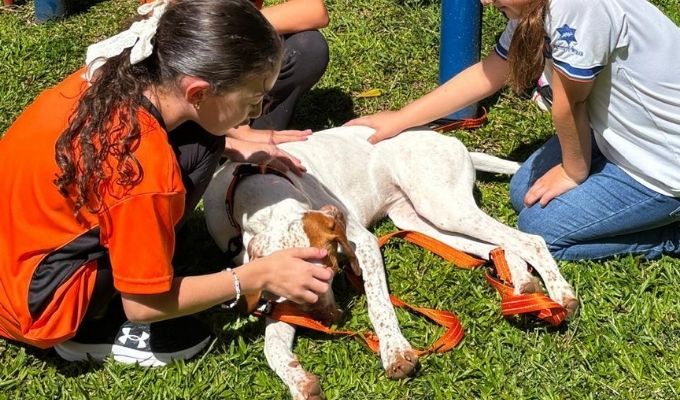
“To me, Menta is more than just a school dog; she’s a reminder that things are okay, that you’re not alone, and that love and company is not meant for words.”
Daniel Tysman, head of World ORT’s Education Department, said: “This is one great example of many projects made possible through the Mental Health and Wellbeing Microgrants scheme.
“Hugely impactful projects, which the grant helped to advance, have been implemented all over the world. Schools have been most creative in finding ways to use the Micro-Grants to benefit their students and teachers.”