World ORT and ORT America Unite

World ORT and ORT America have united, bringing together two organizations that have long shared a mission yet operated with distinction: one raised funds, the other developed programs.

Now, both will operate under the leadership of CEO Dov Ben-Shimon with headquarters in New York and offices in London and Israel. The announcement marks a defining moment for a cause that has never stopped evolving or wavered on why it exists.

A Promise Made in 1880
In 1880, Jewish life in Tsarist Russia was under siege. Legal restrictions barred Jewish people from most professions, owning land, and living freely outside the Pale of Settlement. When a group of Jewish leaders in St. Petersburg petitioned to establish an organization dedicated to teaching trades to impoverished Russian Jews, they were determined to improve their circumstances — they called it ORT.

That promise has proven itself across every generation since. From 1880 Russia to 30+ countries spanning five continents, World ORT has grown into one of the most far-reaching Jewish educational networks in the world.

What the Merger Makes Possible
World ORT is positioned to deepen relationships with locally run schools, connect educators across borders, and direct funding more strategically to where the need is greatest. The ambition is not to standardize. It’s to strengthen. Every student in the World ORT network, wherever they are, should have access to the best that the network has to offer.

Dov Ben-Shimon, CEO of World ORT, said: “Even when situations are dire — poverty, war, displacement — ORT students can imagine a future. That is what World ORT has done for 145 years. And we will carry it forward for 145 more.”

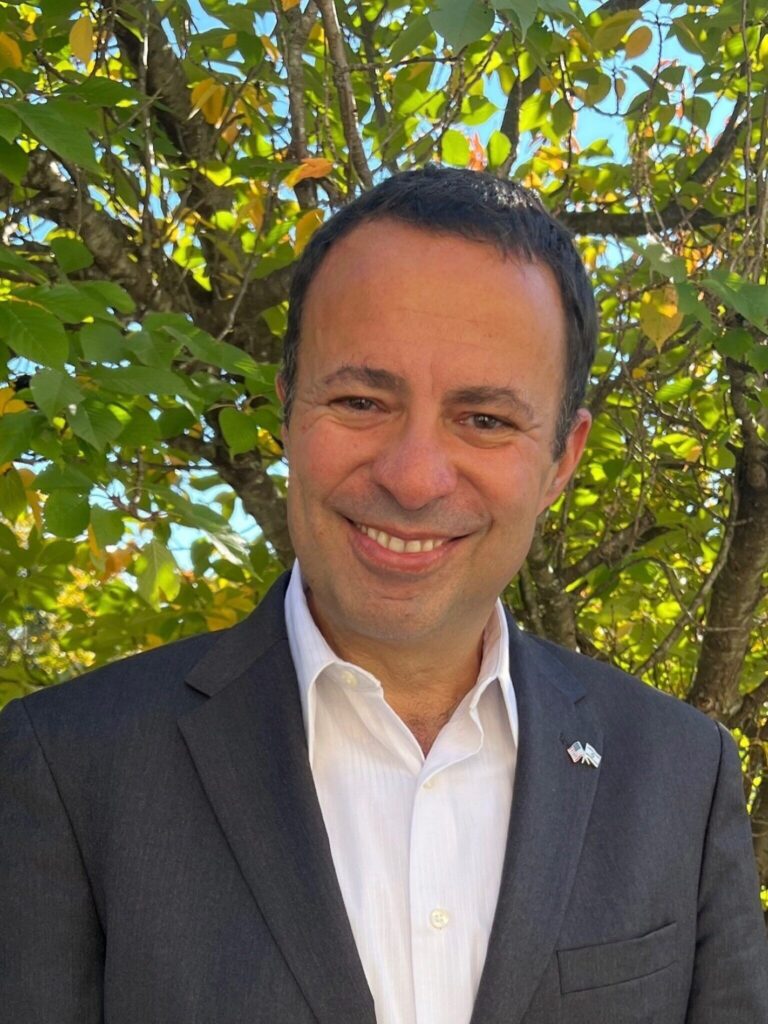
Dov Ben-Shimon, World ORT CEO

Jon Levine, Board Chair of World ORT, said: “World ORT doesn’t just teach skills. We also share the joy of Jewish Peoplehood, ensuring our students are both prepared for the future and proud of their identity.”

World ORT by the Numbers
145 years of impact · 30+ countries · 5 continents · 80K annual students · 200K annual beneficiaries

Watch the video created for the announcement below. For more information about the merger, visit ort.org/merger

Digital Skills Academy Empowers Young Minds with Skills, Confidence and Lasting Friendships

Days after meeting for the first time, laughter and song echoed through a lively karaoke party, as high school students from across Europe and Israel quickly bonded at the World ORT Digital Skills Academy (DSA) in Sofia, Bulgaria.

Over the course of two action-packed weeks, the Academy provided 25 students from 14 ORT schools in nine countries with a unique blend of technical learning, cultural enrichment and personal growth – all wrapped in a spirit of friendship and discovery.

A Warm Welcome and Fast Friendships

Students, supported by a team of madrichim, dived into ice-breaking games and settled into their new home in Sofia in the opening hours of this life-changing summer program.

The group quickly felt at ease with the support of a dedicated team of professional staff from World ORT and ORT Bulgaria who encouraged them to make the most of the experience ahead.

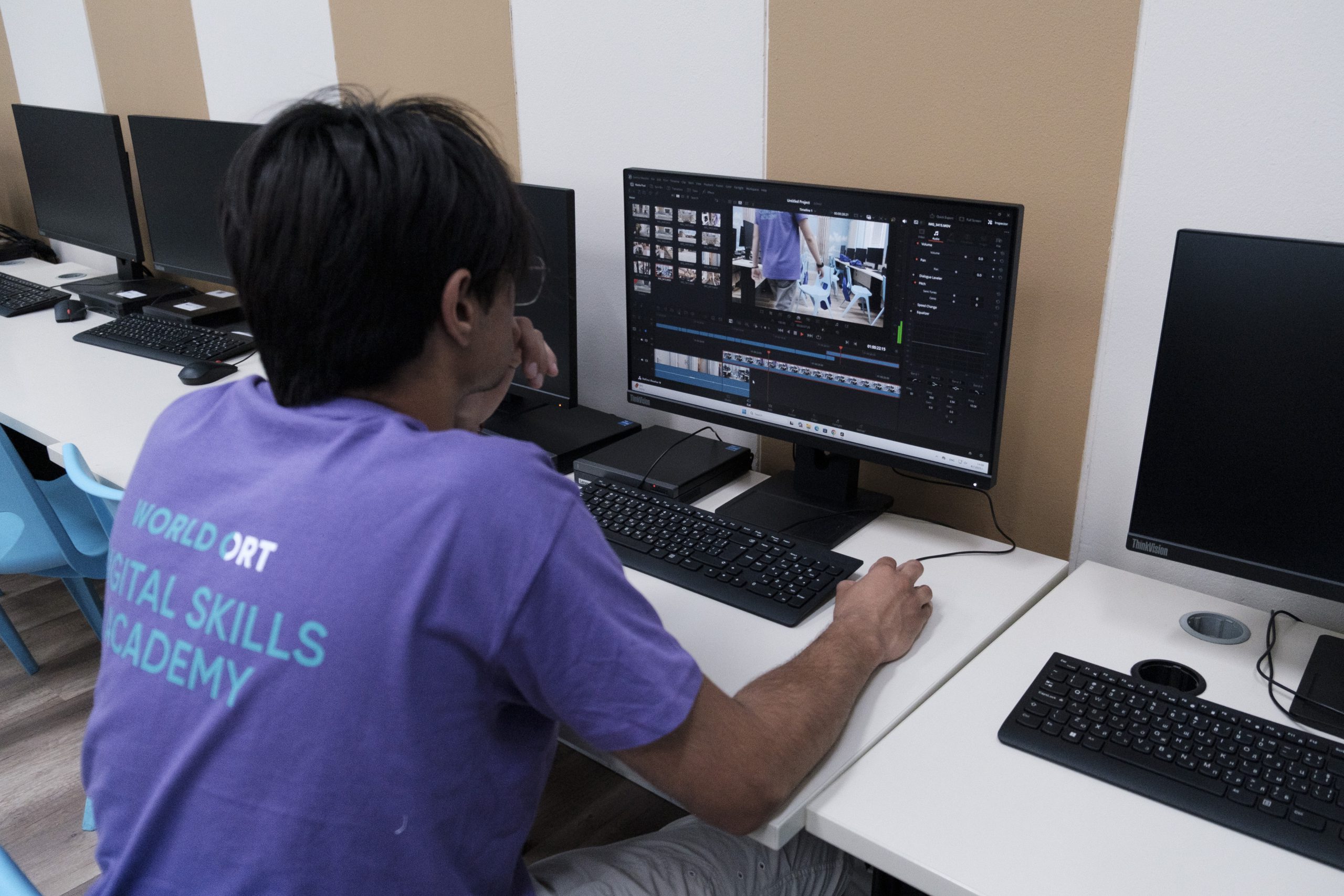
Then it was time to get hands-on: half the group explored digital photography with a professional photographer, while the others dived into video production with digital media experts.

Behind the Scenes of Global Creativity

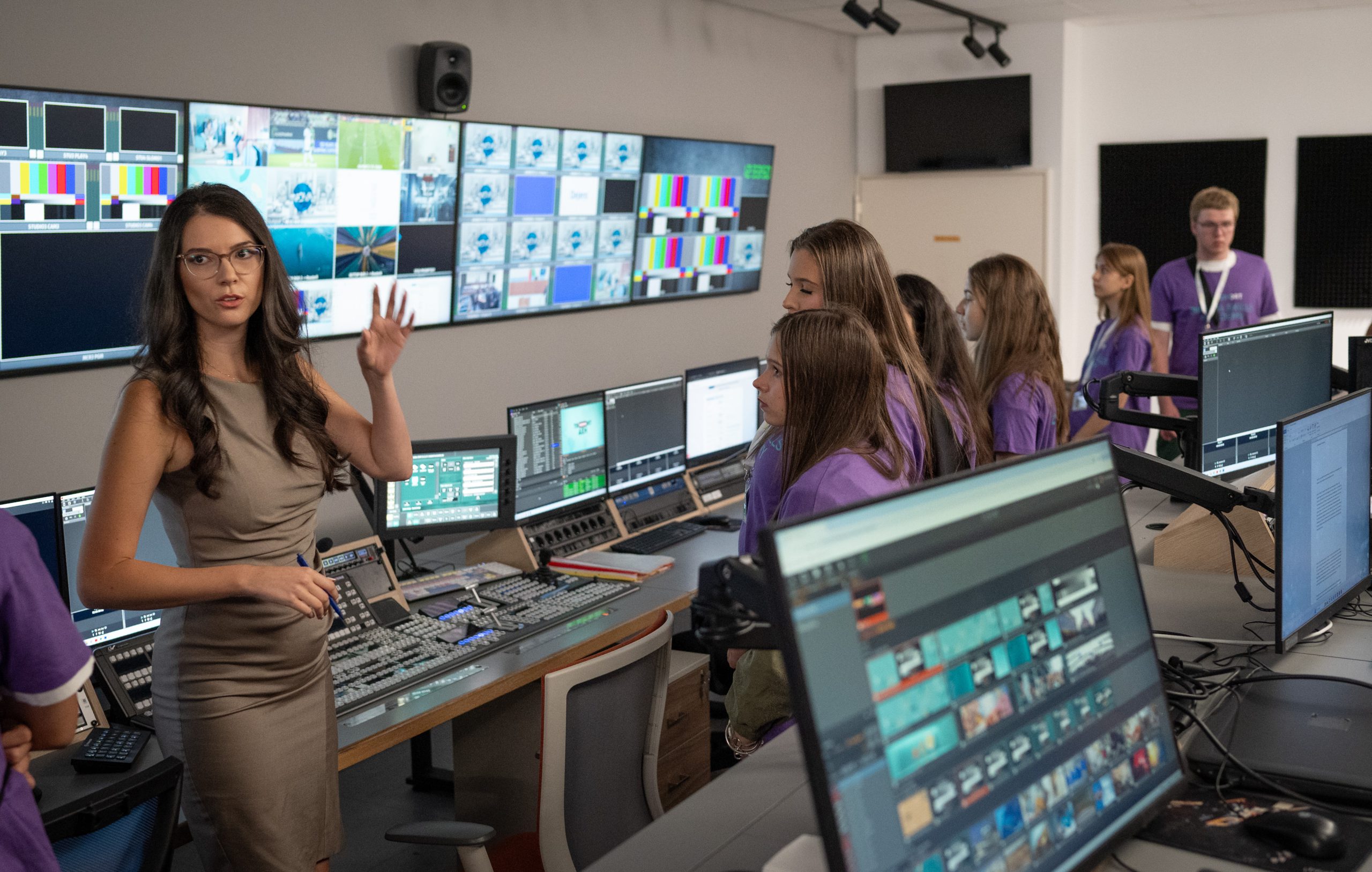
Students experienced inspiring excursions in the Academy’s first week. A visit to Bulgaria’s renowned Nu Boyana Film Studios gave them rare access to working film sets where they filmed and took photographs amidst blockbuster backdrops. They also had the opportunity to visit Disney’s regional headquarters in Sofia, where they learned how departments such as legal, marketing, and creative teams collaborate on Disney, STAR, and National Geographic content.

Another highlight was the trip to NOVA TV, one of Bulgaria’s leading television networks. Students sat in on a live news broadcast, toured the studios, and met Bulgaria’s most popular weatherman. It was an eye-opening glimpse into media careers and the skills behind the screens.

Workshops, Reflection and Cultural Immersion

Students spent their days building skills through workshops in video editing, photography, podcasting and Photoshop. Each evening they reflected on the day’s highs and challenges, reinforcing the importance of self-awareness and growth.


ORT student Miglė, from Vilnius in Lithuania, said: “I have always wanted to be involved in cinema and after seeing everyone here work with such passion and creativity I realised that it is what I really want to do. I want to work with people who share the same passion and now I will do everything to continue working with confidence in video production.”

At the end of the first week the group explored Sofia’s rich Jewish heritage with a visit to the city’s historic synagogue. Shabbat offered a welcome pause. At a kosher restaurant close to the ORT No. 134 “Dimcho Debelianov” Jewish School, the group shared Kiddush and traditional food, creating a warm and inclusive atmosphere. A walking tour of Sofia’s landmarks, including the Square of Tolerance and the Roman ruins of Serdica, ended with group games and laughter at the National Theatre.

From Sofia to Kyustendil: A Journey of Discovery

For the Academy’s second week the group travelled to Kyustendil in south-western Bulgaria, in a picturesque setting near the Osogovo mountains. A trip to a nearby sequoia forest showcased the creative power of the natural world and provided stunning scenery for long-exposure activities.

The final days saw a flurry of collaboration and creativity. Students filmed five-minute short movies based on imaginative prompts such as “The Lost Key” and “Wrong Room”, edited their final photo collections, and prepared for the much-anticipated exhibition and talent show. A special celebration included traditional Bulgarian folk dancing, a disco, and birthday cake for one student.

Elizaveta, an ORT student from Moldova, said her experience at the Academy was overwhelmingly positive.

“I think the most valuable part of this program is the people who worked here and the people who came here. This event will stay with me forever and will remain in my heart as a warm memory.

“I would definitely recommend this program to other people interested in photography because through it, you can truly understand if you like photography, meet amazing people, visit incredible places, and just spend two weeks of your summer productively.”

On the Academy’s final day, students completed their projects under time pressure but with enthusiasm and teamwork. The photo exhibition was hung, videos were rendered, and skits were rehearsed. As the end approached, excitement gave way to nostalgia.

One last ceremony showcased the group’s best work to an audience of special guests, including Israel’s Ambassador to Bulgaria together with the Cultural and Scientific Attaché, plus the Mayor of Kyustendil. It closed a chapter filled with unforgettable experiences and friendships that will endure far beyond Bulgaria.

Leor Harel, World ORT Learning Development Manager, said: “It was inspiring to see students given the opportunity to learn from industry professionals and gain a comprehensive understanding of the skills and knowledge needed to succeed and thrive in media and the creative industries.

“This unique experience enables students to develop critical skills, step outside their comfort zones, and connect with like-minded peers from across the ORT Network.”

ORT Network Comes Together To Support Students Stranded in Prague

Eight students and two staff from World ORT’s operational arm in Israel who were stranded in the Czech Republic due to the Israel and Iran conflict have returned home on an emergency flight.

The group, which was part of a wider Israeli delegation of 60 students and 20 teachers who had been taking part in an international science accelerator competition in Prague, landed back in Israel on Friday morning [June 20]. They had been due to return to Israel a week earlier, but their plane had been turned back due to the closure of Israeli airspace on June 13.

Half an hour after arriving at Israel’s Ben Gurion Airport, the students and staff had to run to an airport bomb shelter because of emergency alerts during an Iranian missile bombardment.

Dr. Moshe Leiba, Chief Pedagogy and R&D Officer for World ORT Kadima Mada, said: “They landed 30 minutes before an attack – other planes were in the air so were turned back. Our group landed and had to run back to the shelter, and then they finally got home after driving more than an hour.”

Speaking before the group returned, he had said: “These are very challenging times. Our students, who are aged 13 and 14 and in Grade 8, are staying in an apartment we rented for them. We have arranged a full array of activities for them. All the groups are connected and there are meetings on a daily basis.

“We are also taking care of their mental health needs with our professionals (including me) and locals. I meet with staff and students on Zoom daily.”

The students and staff were looked after by World ORT Kadima Mada colleagues as well as staff and students from the ORT-affiliated Lauder School in Prague. Dr. Leiba added: “The Jewish community in Prague was amazing and gave its full support for every need.”

Lior Barzilay, vice-principal of the Junior High School at World ORT’s Kfar Silver Youth Village at Ashkelon, said: “It was a very stressful situation. We were shocked because we didn’t know what was happening in Israel, and we didn’t know how or when we were going to come back.

“But World ORT Kadima Mada, Dr. Moshe Leiba, Kfar Silver CEO Amos Gofer, and the program’s CEO Vered Cohen Barzilay, took care of everything behind the scenes so we could focus most of our attention on the children.”

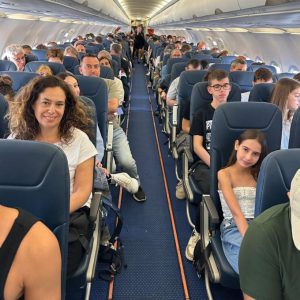
The Israeli students on the plane home

The Israeli students on the plane home

ORT America supporter Margie Green, of Florida, who has a long-standing connection to Kfar Silver, made a significant donation to help cover the costs of the students’ time in Prague and travel back to Israel.

The parents of these students wrote in a letter to Ms. Green of their “heartfelt appreciation”, adding: “Thanks to your help, our children had a safe and welcoming place to stay in Prague during uncertain and stressful times.

“Your care, generosity, and quiet strength made all the difference. You gave us not only practical help, but real peace of mind — and for that, we are truly grateful.”

Tzippi Becker, a teacher at Kfar Silver, said: “The Jewish community in Prague were very welcoming and students made us feel comfortable and showed us places in the city. They gave us kosher food, which, for a lot of people, was important.”

Lucie Hall, World ORT’s representative in Prague and a teacher at the Lauder School, said: “The school normally has around 400 students but needed to accommodate and feed an extra 80 people. Our school paid for their food, and Czech parents sent us contributions.”

English and Hebrew teachers at the Prague school prepared a program for the students. During the week, students visited the school and attended lessons, played sport including football and table tennis, made pancakes and chatted to their Czech counterparts.

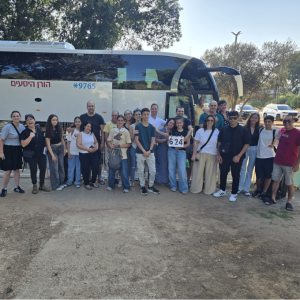
Kfar Silver students back in Israel

Kfar Silver students back in Israel

“Emotionally, they seemed to be fine when in school, but their teachers said they were up and down,” Ms. Hall said. “Sometimes it was emotionally exhausting for them – they were happy for two hours, then they were sad, possibly when they received news from their families.

“They were talking with the Czech students a lot about our school, about their situation, about their school in Israel,” said Ms. Hall.

Student Yonatan, who is 13 and studies at Kfar Silver , said: “It was a very good trip – I had a lot of fun and enjoyed meeting new people. The community treated us very well. Two of the older students showed us around Prague.”

Students attended the competition from all over the world, including Turkey, Ukraine, and Nigeria.

Israel Update: June 13

Following the increase in military activity in the Middle East, World ORT remains in close and ongoing contact with our schools and educational leaders across Israel.

At the current time there has been no significant impact on students or teachers. Our schools and programs will continue to follow the Israeli government and civil advice on domestic safety precautions. All educational activities have been cancelled in Israel for the next two days.

Some boarding students from World ORT’s Kfar Silver Youth Village at Ashkelon have returned to their family homes for the weekend to minimize risk levels.

A small group of our Israeli students and teachers have been taking part in an international competition in the Czech Republic. While returning to Israel their plane was turned back due to the closure of Israeli airspace.

Accommodation for the group has been organized in Prague. World ORT Kadima Mada staff are providing full support including psychological assistance. Colleagues from the ORT-affiliated Lauder Schools of Prague are aware of the situation.

Security precautions at ORT schools worldwide will continue in line with local advice in each country.

We continue to pray for the safety of our students, teachers, friends and colleagues in Israel and across the Jewish Diaspora.

Shabbat Shalom.

‘Everyone in Israel is suffering from trauma after October 7’

This article first appeared on JNS

“Everyone in Israel is suffering from trauma — it doesn’t matter if they weren’t present at an October 7 incident, lost a member of their family or were evacuated,” says Moshe Leiba, chief pedagogical officer and deputy director general of World ORT Kadima Mada (WOKM).

“Even those who weren’t affected directly are traumatized … we are seeing students and teachers who are severely traumatized.

“There are cycles of grief; we are, unfortunately, a state in trauma. Even if the war would stop today, it will take years to rebuild ourselves.”

The Hamas-led terrorist attacks in southern Israel on October 7, 2023, followed the distress and disruption of the multi-year Covid pandemic. Students were starting to return to school and a sense of normality when Hamas attacked and sent them into another crisis, Leiba says.

“Children had a lot of mental health issues from Covid, from the lack of social interaction and structure, and we were already talking about how it would take years to bridge the gap,” he explains. “Now, some of those children have been evacuated for a year and a half, and the issues continue with the trauma of October 7.”

WOKM Educational Psychologist and Sports Consultant Royi Yablochnik, who was seconded to World ORT’s Kfar Silver Youth Village to provide much-needed psychological support, credits World ORT with helping staff and students to access it.

Animal therapy at Kfar Silver Youth Village

“It was very important that we were able to open up this support for everyone who wanted to see a therapist and not let them wait weeks or even months,” he stresses. “More people are now coming to therapy because they have time to treat themselves and are no longer in survival mode.

“We need to give them the opportunity to see psychologists — the connection between a patient and a therapist can help to prevent post-traumatic stress disorder.”

He says that his main goal after the attacks was to give people a sense of control and the opportunity to “rebuild”.

Another pressing issue was that many staff and students were evacuated from their homes, especially in Israel’s south. While around 98% of people have returned to the WOKM schools and programs in the south, there is still displacement in the north. Only 40% of students returned when northern schools reopened in March.

Support provided by World ORT’s campaign and global supporters includes providing students’ families with money for food, in one case in the north for a family where a student’s mother was ill with cancer and the father had lost his job.

At Kfar Silver Youth Village, only eight miles from the Gaza border, scholarships and stipends were provided not only to students and their families but to teachers and other staff, as well as therapeutic and psychological support.

Yablochnik says giving people the strength to “get used to this routine, of life in war” was crucial.

Moshe Leiba (second left) at an art therapy session with students on a respite trip to Chicago

WOKM provided mentoring and organized activities in evacuation centers, hotels and hospitals where people had been displaced.

“We did a lot to try to alleviate stress,” Leiba says. “Some of our staff went under fire in bomb shelters to work with students, doing robotics, DIY and photography, and we’re still doing that.”

Other resilience and confidence-building programs have included Krav Maga self-defense sessions with techniques on how to control mind, body and energy. Meditation and mindfulness, which are included in the classes, have helped students remain calmer during lessons.

Another program both experts believe has been supremely beneficial to students is the respite trips that have taken place in the United Kingdom, the United States and Mexico.

“It’s something ORT did that was very powerful; it gave students a break from all the stress in Israel, and it was amazing for them to see the love from the community all over the world,” says Yablochnik. “There was a feeling that the Diaspora is looking out for us and that we all have the same goal.”

Leiba adds: “The bonds created between the host families and the kids gave the students a lot of strength. In many cases, they are still in touch, even after a year. The ORT host families felt they were doing something meaningful, and it connected them much more to the organization.”

One consequence of the respite trips was that some students who had not previously wanted to pursue psychological support asked for it upon their return. “They understood the importance of it afterwards,” he said. “For the others, we try to find alternative solutions, for example, photo, drama and animal therapy.”

ORT Group’s Israel Visit ‘Deeply Moving’, says Chair

A delegation of ORT leaders has travelled across Israel meeting those affected by the October 7 attacks as part of an emotional and powerful experience to deepen their understanding of the past year’s events.

The delegation engaged with journalists, survivors, resilience counsellors, and leaders in Tel Aviv, across southern Israel and in Jerusalem.

Robert Grey, World ORT Chair, led the mission and said it had been a deeply moving few days.

“To see for ourselves the extent of the carnage wrought on the kibbutzim and sites in southern Israel was hugely affecting for our group. But equally, spending time with the Israelis who have worked so hard every day since October 7 to repair not just their physical surroundings, but their emotional and mental wellbeing, was incredibly uplifting,” he said.

“I am so proud of the immense effort being made by World ORT Kadima Mada staff across Israel to support our students and teachers at this time. Their bravery and sacrifice are truly inspiring. We treasured the time we had with our staff and children.”

At Kibbutz Nahal Oz, one of the closest kibbutzim to the Gaza border, the group heard a deeply moving account from Yifat Fiorentino, a member of the kibbutz who teaches at World ORT’s Kfar Silver Youth Village a few miles away. Her brother Ilan, head of a team of first responders, was killed while bravely defending the kibbutz.

Yifat shared the harrowing events of October 7, describing how at 6.29 am, when the first sirens blared, she and her husband, along with their two young children, moved to the shelter of their home.

They endured a tense and agonizing 13-hour wait, without water and food, and at times without electricity, until they were finally rescued by IDF troops.

She described how Ilan left behind a wife and three young children, and his sacrifice stands as a powerful testament to the courage and selflessness of many Israelis in the face of unimaginable danger.
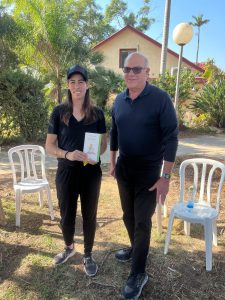
Yifat Fiorentino and Bob Grey

From Kibbutz Nahal Oz, the participants continued to the stark and haunting Tkuma Memorial, where hundreds of charred and battered vehicles have been gathered. Most of these vehicles came from the Nova Festival, a place meant for celebration but transformed into a scene of horror. These burnt cars powerfully echo the immense loss of life and the anguish of that fateful day, each vehicle a sombre symbol of lives interrupted too soon.

The ORT group also heard the testimony of Doron Landau, whose son, Ben, survived the Nova music festival massacre. He recounted his son’s terrifying experience of being pursued by terrorists and finding refuge in a shelter, where he was eventually rescued after hours of hiding under the bodies of his murdered friends.

At the Nova site itself, another survivor, Yael Ze’evi, a 36-year-old married mother-of-two, described how she and her husband managed to escape by hiking and hitchhiking away from the site despite having both been shot by terrorist attackers.

During the group’s time at Kfar Silver, participants spoke to students who had experienced the anguish of October 7 first-hand. They heard about the work done at the village in the past year to provide mental health support and post-trauma assistance to address the students’ needs.

Following a solidarity dinner with students and staff, Esther Marcus, from Kibbutz Alumim – also near Kfar Silver and the Gaza border – spoke about how her work in resilience centers across Israel has grown to include hundreds of therapists treating more than 3,000 Israelis every week.

Isaac Touitou, Head of the Lycée ORT Daniel Mayer in Montreuil, Paris, said: “I feel the deepest emotion after our mission to Israel. The people we met have been so courageous in the way they have dealt with recent events.

“Those we met who were affected first-hand were extremely moving in telling their stories. We admire their ability to overcome the tragedies they have experienced, as well as their capacity to keep faith in life.”

He said the speaker sessions had “enlightened” the delegation and that their time together had been a moving collective experience.
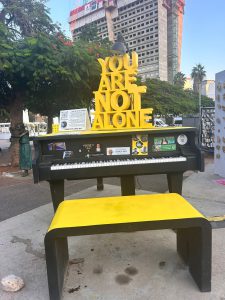
In Tel Aviv, sessions included time with Dr. Michael Milshtein, who offered insights from his extensive background in Palestinian affairs and security, tracing the roots of the current conflict and considering scenarios for the future.

The group also visited the Peres Center for Peace and Innovation, touring a special exhibit of photographs by Ziv Koren covering the time since October 7 last year in the kibbutzim near Gaza, images of released hostages and soldiers’ journeys to rehabilitation. A poignant visitor later took place to Hostage Square, an impactful reminder of the continued human cost of the ongoing conflict.

In Jerusalem the participants heard from veteran journalist David Horovitz who reflected on his experience of covering wartime politics, and from Khaled Abu Toameh, an Israeli Arab journalist, who offered a nuanced perspective on Palestinian affairs. Fleur Hassan-Nahoum, former Deputy Mayor of Jerusalem, concluded the discussions and explained how the recent conflict impacts on coexistence between Palestinians and Jews in Jerusalem.
October 7: Remembering Eyal

As the ORT family joins global Jewry in marking the first anniversary of the October 7 attacks, we are inviting our students, teachers, and all across our schools network to join us in a special ORT project.

In June we shared our collective grief following the death of Eyal Shynes, son of Mirav Shynes, manager of World ORT Kadima Mada’s YOUniversity program in northern Israel.

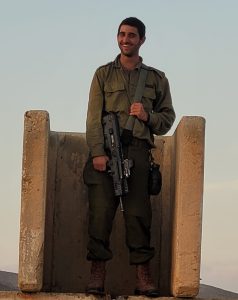
Eyal z”l was killed in Gaza while serving as a sergeant in the IDF’s 931st Battalion of the Nahal Brigade. He was just 19 years old.

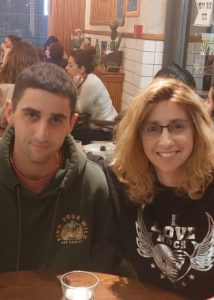
Eyal z”l and his mother, Mirav

In his memory we are launching a campaign encouraging the ORT family worldwide to come together as one community to support an initiative at Eyal’s former school.

A distinguished and popular Jewish Philosophy student, Eyal left a deep impression on his friends and teachers at the Beit Yerach school on the banks of the Kinneret, Sea of Galilee, in the Golan.

To create a lasting link between Eyal, the ORT network and the school he loved so dearly, we are supporting Beit Yerach in a memorial project which will:

Together, as an international educational community, the ORT Family can demonstrate our unity and commitment to the values that were so important to Eyal. We extend our thoughts and condolences to his parents, Mirav and Itay, brother Noam and the Shynes family.

Mirav said: “Eyal was a man of values, moral, he had a strong sense of justice, he was a charmer. Eyal respected everyone and every opinion. He was very smart and loved sports, especially soccer, and spending time with his friends. He was a good son.

“To fight for his country, his family, it was his calling. I am sure he didn’t think he would lose his life. We are taking it one day at a time, but it is hard. I cannot bring him back.”

How can you help?

We are asking everyone across the ORT schools network to make a small contribution towards the costs of the memorial project. Students and teachers can donate within their schools. ORT supporters can also contact their local ORT organization to make a donation.

Donate via this link.

‘The Single Most Rewarding Experience of My Life With ORT’

By Judy Menikoff, World ORT Vice-Chair

For much of my adult life I have been engaged with the work of ORT, the global education network. I cannot begin to count the hours I have spent at meetings, on missions, visiting schools around the world or on Zoom calls.

But the single most rewarding experience of my time in this organization was the day I just spent with 21 of our Israeli students at my own home in Connecticut.

This group of young people, each of whom lost a close family member or friend on October 7 or in the months of violence since, travelled to the U.S. as part of a respite delegation led by educators and counsellors from World ORT Kadima Mada, our operational arm in Israel.

The two-week trip fostered a sense of normalcy, unity, and importantly fun, despite the challenging circumstances. The students took part in activities at JCC summer camps, cultural exchanges and recreational programming such as days out at Wild Play parks.

But crucially they also benefited from one-to-one and group counselling sessions every day, helping them process what they have been through and the emotional impact of this unprecedented upheaval and loss in their lives. This need for psychological support will remain extremely high throughout Israel, especially among these ‘first circle’ trauma victims, for a long time to come.

The trip was laced with its own mix of emotion, tragedy and pain. The group was renamed as the ‘Eyal Delegation’, in honor of Sergeant Eyal Shynes of the IDF’s Nahal Brigade who was killed in Gaza days before the group left Israel. Eyal’s mother, Mirav, is the manager of a World ORT Kadima Mada YOUniversity project in northern Israel and had been due to travel to the U.S. with the students.

And so when the delegation arrived at our small, historic synagogue in Amenia, across the state border in New York, we did not know what to expect. We found a packed congregation had turned out to welcome the Israelis. It felt like a High Holiday. When the rabbi gave the group a blessing, and then community members said kaddish, it was indescribable.

Later when we reconvened at our house, the teenagers dived into the home-made ice cream, snacks – and the lake – with relish.

Many of them played with our dog, Maple. She’s a gentle, black labrador and the kids could not leave her alone. Dogs are widely used in therapy and so it gave us the opportunity to really see these young people as themselves, outside of their school environment, relaxed and able to let go of everything they have been holding these past nine months.

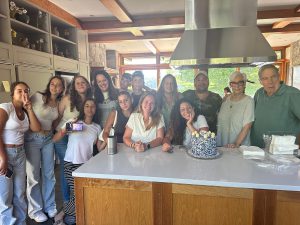
The Israeli students spent a day with Judy Menikoff and community members in Salisbury, CT

The finale of their day was perhaps the most impactful. As a blue and white cake iced with the words ‘Am Yisrael Chai’ was placed on the counter, we played ‘Jerusalem of Gold’. All of a sudden, the students and their teachers, together with our friends and other visitors, stood swaying, arms around each other, waving the lights from their phones. Everyone was crying. It was very special – it was unexpected, unplanned and unrehearsed. The kids had such a sense of unity. You could see their love of their country in their eyes.

The day was a microcosm of what our colleagues in Israel are doing non-stop. In the most challenging circumstances they are working as hard as they can to help the students deal with these traumatic experiences. Staff themselves remain evacuated from their homes and communities in northern Israel. Each has their own story of loss and pain. We continue to work in evacuation centers across the country, helping thousands of young people, as well as their teachers and family members, deal with the upheaval, plan for the future and continue their education.

Like many organizations working in Israel or in Jewish communities worldwide, we talk about delivering impact but too often measure it in terms of refurbished buildings and new constructions. We must not lose sight of who is receiving the real benefits – the students, teachers, social workers and families at the heart of everything we do. Whether it is delivering our extra-curricular programs in the Galilee or running our youth village close to the Gaza border, the true impact of our supporters’ dedication and our decades-long work is most clearly measured in the hearts and minds of this group of young people.

I have been fortunate to have some amazing experiences during my time with ORT; meeting President Clinton and Egypt’s Hosni Mubarak, travelling to schools and communities around the world, but nothing prepared me for the unbelievably moving moment of witnessing those children in my own home, joining to share a sense of togetherness, belief and hope in a more positive future.

I will never forget it and it will be the catalyst for me to rededicate myself to supporting our global ORT family as we continue our vital work.


Judy Menikoff is Vice-Chair of World ORT and a former President of Women’s American ORT


Unity, Kindness and Heroism: Lessons for Jewish Identity Education

Earlier this year Daniel Tysman, Head of World ORT’s Education Department, took part in a very significant mission to Israel, alongside 30 leading educators from around the world.

The group considered the key issues facing Jewish education globally post-October 7.

Participants explored the educational opportunities presented by the tragedy and considered the resources needed to transform a Jewish crisis into an opportunity for fostering greater Jewish belonging, confidence, and resilience.

In this piece, written as part of a compilation of essays for the UnitEd organization which provides a network for developing and empowering Jewish educators worldwide, Daniel explores some of the lasting impressions he took from the trip:


The mission provided an extraordinarily close-up view of how Israelis are living through and responding to their ongoing trauma.

We were persistently challenged to reflect, respond, and share our thoughts, making it feel like an event of historic significance for the entire Jewish people.

The main impression made on me was that we all have a huge and pressing obligation to respond. Examples of unity, kindness and heroism that we witnessed gave me optimism that educators responsible for Jewish identity can use this momentous time to rethink and rebuild.

Spontaneous expressions of unity in response to shared grief can be a foundation for systematically building a new, deeper, more intentional version of Jewish peoplehood.

The kindness shown to displaced families, and the outpouring of support for the loved ones of the victims and hostages showed us a different and better way to respond to cruelty.

Visiting the sites of tragedy and meeting people whose lives have been torn apart also exposed stories of individual heroism.

Elie Wiesel wrote that whoever listens to a witness becomes a witness. The narrative and language that we use as educators to retell the story of this tragedy has the potential to reinvigorate Jewish pride.

The ORT network reaches a hugely diverse student population across more than 30 countries. One unifying feature is that our schools share a sense of belonging to a global Jewish family and their educational programs put emphasis on our collective history.

In the wake of the events of 7/10 our connection to this supportive network helped us to navigate the dark months that followed. The heartache of colleagues, relatives and friends has left us emotionally drained. The representation of the war across all forms of media and new expressions of antisemitism have contributed to a sense of insecurity and uncertainty that has tested our resilience.

For all of us responsible for building confident Jewish identities and positive connections to Israel, the Jewish educators’ mission came at a critical time.

We had been asking ourselves how to reassure young people whose media feeds portray Zionists as the perpetrators of evil. What level responsibility should they assume to promote a narrative that counters hate? How do we prepare them for the transition to university campuses where they are likely to encounter hostility towards Israel?

In the short term we need measures to address the specific challenges, to find some order in the chaos, to look out for each other’s wellbeing and to provide a level of security that makes us all feel safe.

Over the coming months we are going to be conducting a strategic review of Israel education across the international ORT network, leading our school leaders and educators to transform our approach to building Jewish identity in terms of peoplehood and forming relationships with Israel.

The social entrepreneurs we met during the mission taught us that above all, it’s important to respond to a need with action, and that having a clarity of mission can overcome obstacles and lead to impactful change.

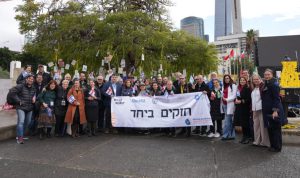
Daniel (holding the left corner of the banner) with fellow educators in Israel. The trip was organized and sponsored by the Israeli Ministry of Diaspora Affairs, the Pincus Fund for Jewish Education, the World Zionist Organization and The Koret Center for Jewish Civilization – a partnership between ANU – Museum of the Jewish People and Tel Aviv University.

Anxious, Overwhelmed, Scared: Seeing The Impact of October 7 On Our Global Schools Network

By Jennifer K Saber

I struggled with what I was hearing, holding back tears, hoping no one noticed my desperation to keep my composure as I facilitated the discussion. Once, as a teacher at an American Sunday school, my greatest problem was unearthing sharpened pencils. Such innocent concerns paled in comparison to what I was hearing on Zoom.

I was participating in World ORT’s Educators’ Forum, convened to discuss the impact of the horrific October 7 attacks and rise in antisemitism on staff and students from across ORT’s network.

The stories I heard shook me. Teens frightened watching social media posts of “war porn” and antisemitic images hitting too close to home; schools in the Diaspora opening their doors to students from Kfar Silver Youth Village needing respite from war-ravaged Israel; teachers worldwide not knowing how to comfort their students, while in need of comfort themselves.

At World ORT we knew we couldn’t sit idly by. We are driven by our priority to give our schools the tools to support the social emotional wellbeing of their students and staff. The Educators’ Forum was a space to gather, hear from professionals about the benefits of addressing the mental health needs of our beneficiaries, and an opportunity for schools to share their lived experiences.

Daniel Tysman, Head of World ORT Education Department, opened by sharing a message of solidarity and unwavering support. Dr. Moshe Leiba, Chief Pedagogical and R&D Officer of Kadima Mada, gave an insider’s view of Kfar Silver. Julia Alberga, Wellbeing Manager at Partnerships for Jewish Schools, addressed using Social Emotional Learning as a tool to support students and teachers during these tough times.

Boarding school students at World ORT’s Kfar Silver Youth Village are dealing with the ongoing impact of October 7

Listening in breakout rooms, the facilitators heard exactly what we had hoped – and dreaded – staff would raise. They painted a heart-wrenching picture. One teacher described her students with constant anxiety. She said the students are fortunately not familiar with what war looks like based on its absence from their own country. But then how to explain the anxiety? “Even though the war is far away from them in Israel, the war is in their hearts.” She said students have family and friends fighting for the IDF so are worried around the clock. “They are thinking about it every moment. Every time someone brings up the war it reminds them of their brothers and sisters on the front lines.”

Another concern for students is their own security. Participants spoke of an increase in security at schools worldwide as a preventative measure against rising antisemitism. One teacher said this was a red flag for her students. “Increasing visible security around the school had the opposite effect. The students questioned why there was all of a sudden more security and asked if they were in danger. One teacher said following October 7, some students were scared to come to school for fear of a terrorist attack. Parents kept their children home under their protective eyes until they understood that life needed to go on as usual and sent their kids back a few days later.”

An unexpected topic that emerged was the effect on Jewish identity. “Some of the recommendations students were given were to be careful with things like wearing sweatshirts with Hebrew lettering,” explained one staff member. “Students are grappling with the internal conflict of ‘I want to be safe but this is my sweatshirt, it’s who I am.’.”

Emotions running high were not just reserved for students. Faculty shared their own personal anxieties and frustrations. How do we support teens who are viewing antisemitic social media? How do we navigate the mental health issues of our students when we need to address our own? How do I come to work to tackle the day when I am not trained in mental health and trauma and don’t have the tools to deal with what is happening? It is completely overwhelming.

There are no easy answers. This is a crisis with no end in sight. World ORT’s Education Department will support our network of schools – both as a shoulder to cry on and to lend a helping hand. We are taking the emotions, thoughts and directives we heard at the Educators’ Forum as fuel to move forward with an action plan.

In Pirkei Avot (Ethics of Our Fathers) 2:16, Rabbi Tarfon said: “It is not your duty to finish the work, but neither are you at liberty to neglect it.” The social and emotional wellbeing of our global network is our top priority. It is our duty to work towards finishing the work of emotional and mental repair.

Jennifer K Saber is a project manager in World ORT’s Education Department