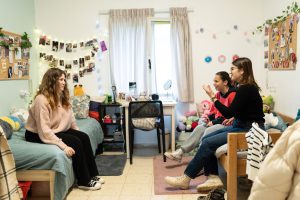
Israel Update: June 13

Following the increase in military activity in the Middle East, World ORT remains in close and ongoing contact with our schools and educational leaders across Israel.

At the current time there has been no significant impact on students or teachers. Our schools and programs will continue to follow the Israeli government and civil advice on domestic safety precautions. All educational activities have been cancelled in Israel for the next two days.

Some boarding students from World ORT’s Kfar Silver Youth Village at Ashkelon have returned to their family homes for the weekend to minimize risk levels.

A small group of our Israeli students and teachers have been taking part in an international competition in the Czech Republic. While returning to Israel their plane was turned back due to the closure of Israeli airspace.

Accommodation for the group has been organized in Prague. World ORT Kadima Mada staff are providing full support including psychological assistance. Colleagues from the ORT-affiliated Lauder Schools of Prague are aware of the situation.

Security precautions at ORT schools worldwide will continue in line with local advice in each country.

We continue to pray for the safety of our students, teachers, friends and colleagues in Israel and across the Jewish Diaspora.

Shabbat Shalom.

ORT Day 2025: Celebrating Our Network – and Jewish Pride

ORT Day, the annual global celebration of our network, took place with students participating from countries including Bulgaria, Lithuania, Mexico, Panama, Brazil, Georgia and Israel.

The event unites students, teachers, alumni and friends of ORT to celebrate our mission, which is to prepare people and communities all over the world for meaningful, self-sufficient futures.

Welcoming attendees to the online session, Daniel Tysman, World ORT’s Head of Education, said: “ORT Day is an annual event where we’re celebrating almost 150 years of education and training all over the world.

“This is an important celebration of being part of ORT but at the same time we are all very much aware that these are very difficult times to be part of the Jewish community, to be living in the Jewish world.”

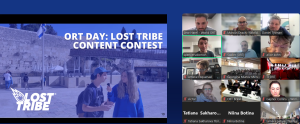
The students heard from keynote speaker Spencer Solomon, Director of Marketing of Lost Tribe, an organization aiming to build a stronger Jewish future. He delivered a compelling talk about celebrating Jewish identity and Israeli culture in the digital space. It included advice on how to produce good content, the power of analytics in brand growth, working with content creators and influencers and concerns relating to posting online.

Spencer Solomon’s Lost Tribe session

Lost Tribe has 81,800 followers on Instagram and 123,400 followers on TikTok and Spencer told the session: “Lost Tribe is the largest online Jewish teen community in the world on social media. [It] leverages the power of new media platforms to cultivate Jewish life, spread knowledge and strengthen Israel-Diaspora bonds, making connections around the world to Israel and connecting and empowering the next generation to lead vibrant Jewish lives and overcome antisemitism with Jewish pride, identity, and joy.

“I think [Lost Tribe and ORT’s] missions are very closely aligned, so it’s awesome to be speaking with all of you today as I know you have a deep and profound understanding of the importance of a mission like this, which is really special.”

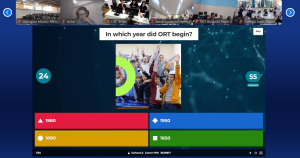
Following his talk, students tested their knowledge of the network at the annual ORT Day Quiz, for which they had previously received an information pack. The students answered questions about the foundation of the organization and its former and current programs. Liepa from ORT Sholom Aleichem Jewish Gymnasium in Lithuania won, collecting a $150 prize for herself and her school.

Students taking part in the ORT Day quiz

Jim Lodge, World ORT CEO, said: “I would like not only to congratulate you personally but to give applause to all of you. I am so impressed by both the depth on this program but also its international span, so it’s been a great pleasure being here. I want [to say] mazeltov to you all for what you are doing at our ORT schools, not only today, but daily throughout the world.”

All ORT network students were challenged to celebrate Jewish identity through social media: to create an engaging Instagram Reel or TikTok that is up to one minute long on any Jewish-related theme in their own style before April 16.

To enter, students need to follow and tag @ort.orglife on Instagram or TikTok, use the hashtag #ORTDay and send us a message with their full name and Instagram/TikTok handle. The best Reel or TikTok will win a special prize.

‘This Seminar Deepened My Jewish Identity’

Dean Shannon, Jewish Education Teacher at Sir Manasseh Meyer International School, Singapore, reflects on his experience of the 2025 Jewish Educators’ Seminar

Despite being a Jewish educator for more than 10 years, I have rarely had professional development opportunities that tackled specific needs and ideas relevant to this world.

Facing our own challenges and ideals, the field of the Jewish educator can be a lonely one. This has been exacerbated in a post-October 7 world. I needed this Jewish Educators’ Seminar.

 I was a little sceptical about the seminar in advance. I questioned how suited I might be to an academic approach to Jewish education, but the seminar was filled with wisdom, depth, inspiration and even tears.

The speakers were excellent, the content was thought-provoking, and it was a privilege to share a room with all of the people involved. It was an incredible few days and the seminar exceeded all expectations.

 The ORT team who organized and led the seminar catered to our every need (and literally). The four-day program was outstanding. We covered an incredible range of topics and were exposed to a vast array of practical ideas that we can now implement in our classrooms.

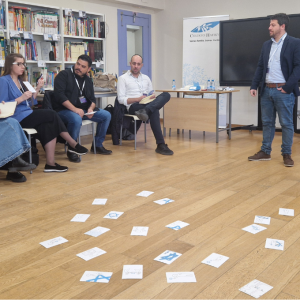
One of the highlights was an exploration of classical Jewish sources on ecology. The session started with the leader hanging texts on a washing line. We were encouraged to look at the sources from ‘different angles’ and then choose the text with which we most identified. This then led into a chevrutah-style learning session and demonstrated the extent to which Judaism contains powerful wisdom to face 21st century challenges.

Damián Weber of Colegio Hatikva reflects on Jewish identity post-October 7

Further invaluable opportunities included a guided online tour of Sefaria and the National Library of Israel. These practical sessions provided insights in how to enable students to discover and utilise primary sources to enhance their Jewish identity. We even explored how to best use AI in the classroom to facilitate our teaching.

We were in tears and in deep contemplation during a post-October 7 activity that explored identity through artistic postcards. A session on the symbolism of food had us considering how powerful ‘culinary stories’ can be in connecting to our Jewish identity.

The walking tour of old Jewish Barcelona provided insights into the importance of ‘urban space’ in education and the Xueta Island movie screening demonstrated the depth, breadth and tragedy of Jewish history. Despite being a terrible artist, the most memorable and enjoyable session was one on Midrash and art.

I am now more confident in delivering a similar creative lesson to my capable students. Each session provided me with insights and ideas that will not only enhance my teaching practice, but has further deepened my own Jewish identity.

The other educators, who were involved in Jewish education and hailed from all over the world, were truly inspiring people, each with an incredible story. We shared, we debated, we laughed, and we cried.

Despite our different nationalities, backgrounds, and opinions, the common denominator was that we all believed in the importance of supporting Jewish education and giving Jewish people the ability to connect meaningfully to their heritage and identity.

I am grateful for all the incredible work ORT does. The Jewish Educators’ Seminar demonstrated how deep, profound, diverse, and beautiful is Judaism. The team made us feel like superheroes who are here to deliver our message to the next generation and to help make the world a better place. Am Yisrael Chai!

Inspiration and Hope: Jewish Educators’ Seminar Renews Pride and Connection

There were tears and laughter at World ORT’s first Jewish Educators’ Seminar, a four-day event that tackled issues including Jewish education in a post-October 7 world, Jewish approaches to dealing with environmental crisis and change management in the community’s schools.

Twenty educators from around the world met in Barcelona, Spain, for an enriching and, at times, emotional seminar, which was coordinated by World ORT Education Project Manager Jennifer Saber. The packed schedule took in classroom activities and a tour of Jewish Barcelona and, importantly for ORT, publicized the organization’s innovative Jewish curriculum.

Educators were welcomed from schools across the ORT network including from Spain, France, Italy, Bulgaria, Israel, Peru, Mexico, Costa Rica, Singapore and South Africa. Four educators from war-torn Ukraine also attended, travelling for at least two days to get to Barcelona – a journey that should normally only take around five hours.

Speaking about the location of the first day of the seminar, one delegate said it was fortuitous to be at Colegio Hatikva, the only Jewish school in the city. The delegate added: “It is very important that there is tikva – hope – and schools are giving hope.”

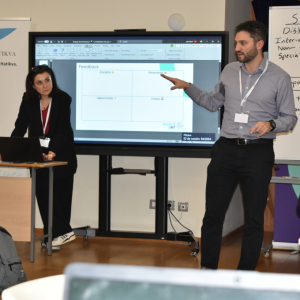
Colegio Hatikva Principal Ari Messer delivered a session on the benefits of analysing the demographics of a school to understand the needs of, and better integrate, its pupils. Gaynor Collins, World ORT’s Education Project Manager, and Leor Harel, its Learning Development Manager, ran a session on SWOT analysis and strategic action planning and prompted the educators to reflect on their departments’ areas for development or their own individual practice.

ORT staff Gaynor Collins and Leor Harel delivered a session on SWOT analysis

ORT staff also shared information about the organization’s B’nei Mitzvah twinning program and how AI can be used in a teacher’s school life, such as in planning and assessment. They also gave an introduction to World ORT’s Thinking Skills Curriculum and demonstrated a lesson.

Raquel Cohen, a teacher at Colegio Olamí ORT in Mexico, said: “I aim to introduce the skills of chevrutah in all the other subjects so pupils will know how to build respectful and meaningful dialogue with others without arguing.”

Haya Prys, Teacher of Jewish Thought and History at Lycée ORT Daniel Mayer, in Montreuil, France, said: “It was amazing. I made a lot of connections and am already talking about sharing materials with other educators. It was eye-opening to meet all kinds of people who work in all kinds of schools, with Jewish and non-Jewish pupils.”

Victor Sorenssen, the Director of the European Association for the Promotion of Jewish Heritage and Culture, led an “anti-tour” of Barcelona’s Jewish quarter, exploring an innovative approach to Jewish heritage. Moving beyond traditional tours, educators reflected on the opportunities urban spaces offer as extensions of the classroom. This was cemented by Dr. Goretti Luis Cobreros, Project Manager of Jewish organization Toldot, who took those delegates who were interested into sections of the Cathedral of Barcelona that are not accessible to the general public, including its original 15th century archive, where she gave a private viewing of Hebrew documents that have been hidden for centuries.

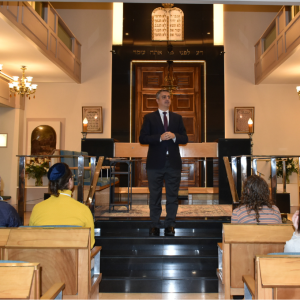
Rabbi Samuel Garzón of the Comunidad Israelita De Barcelona

There were also discussions on the diverse Jewish attitudes towards the relationship between humanity and nature, ways to enrich classroom teaching experience with Sefaria, which provides a ‘living library’ of Jewish texts, and a poignant exploration of Jewish heritage and identity through food from art therapist and chef Monica Buzali.

A hands-on session at Casa Adret in Barcelona’s old Jewish quarter by Nathalie Kertesz, Co-Founder and Artistic Director of LABA BCN, took some delegates outside their comfort zone by encouraging them to create their own Midrashim (pictured top right). They explored classical Jewish sources using artistic mediums such as watercolours, clay and collage.

Joanne Greenway, chief executive of the London School of Jewish Studies, gave an overview of the Jewish Lives longitudinal study research project as well as LSJS’s Project Innovate, aimed at developing new ideas.

The seminar gave educators a chance to connect with their counterparts across the world and hear about the highlights of working in the field of education alongside the challenges. The latter included students who are disengaged from their Jewish heritage, problems of integration and large numbers of pupils with special needs.

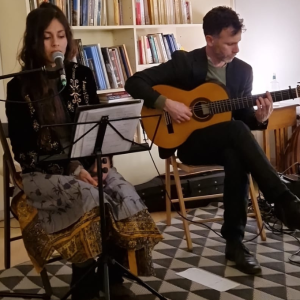
Ofer Ronen and Layla Akbal shared songs of the Sephardic Mediterranean at Casa Adret

Approaches that improve communication and connection among students of different ages were discussed, including Colegio Hatikva’s initiative of reading buddies, whereby older pupils read to those in the kindergarten or early year classes, and its termly class sleepover held at school.

Anna Tarasiuk, a teacher from Bila Tserkva Private Lyceum ‘Mitsva 613’ in Ukraine, said: “I had hoped to get ideas for new projects and to implement them, along with cooperation with other colleagues from around the world. I really liked the seminar. It was like a knowledge bank for me – you went to bed with a lot of ideas. I especially liked the art workshop. I will think about how I can implement a lot of things. I am also thinking about creating a Jewish Tradition course in English for High School in order to upgrade students’ knowledge and to give them opportunity to communicate with other Jewish schools all around the world.”

Delegates described the seminar as “enriching” and were grateful to be able to step away from the classroom to forge connections with colleagues and discuss their work.

One educator said: “The seminar inspired me to enhance our educational process by combining creativity and meaningful content. The ready-made lessons will significantly speed up lesson preparation. I plan to give students more responsibility, such as larger-scale project work connected to Judaism, as well as incorporating interdisciplinary integrations. Additionally, I’d like to create lessons on the Jewish history of our city, possibly in collaboration with the Museum of Jewish History. Another idea is to develop a custom board or mobile game related to Judaism.”

Closing the event, Daniel Tysman, World ORT’s Head of Education, said: “We’ve tried to show you that there are many ways to reach the minds and hearts of our students. We commemorated our pain together, but also shared beautiful music and food, and we’ve created many happy memories. Our main goal was to demonstrate our appreciation for the amazing work you do in Jewish education, and that you would leave knowing that ORT is here to support you.”

October 7: Remembering Eyal

As the ORT family joins global Jewry in marking the first anniversary of the October 7 attacks, we are inviting our students, teachers, and all across our schools network to join us in a special ORT project.

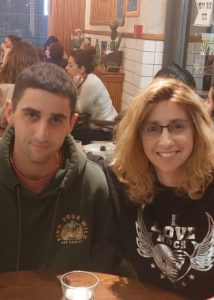
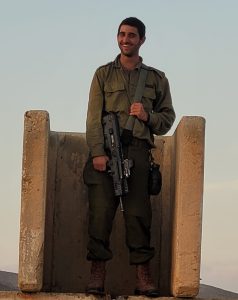
In June we shared our collective grief following the death of Eyal Shynes, son of Mirav Shynes, manager of World ORT Kadima Mada’s YOUniversity program in northern Israel.

Eyal z”l was killed in Gaza while serving as a sergeant in the IDF’s 931st Battalion of the Nahal Brigade. He was just 19 years old.

Eyal z”l and his mother, Mirav

In his memory we are launching a campaign encouraging the ORT family worldwide to come together as one community to support an initiative at Eyal’s former school.

A distinguished and popular Jewish Philosophy student, Eyal left a deep impression on his friends and teachers at the Beit Yerach school on the banks of the Kinneret, Sea of Galilee, in the Golan.

To create a lasting link between Eyal, the ORT network and the school he loved so dearly, we are supporting Beit Yerach in a memorial project which will:

Together, as an international educational community, the ORT Family can demonstrate our unity and commitment to the values that were so important to Eyal. We extend our thoughts and condolences to his parents, Mirav and Itay, brother Noam and the Shynes family.

Mirav said: “Eyal was a man of values, moral, he had a strong sense of justice, he was a charmer. Eyal respected everyone and every opinion. He was very smart and loved sports, especially soccer, and spending time with his friends. He was a good son.

“To fight for his country, his family, it was his calling. I am sure he didn’t think he would lose his life. We are taking it one day at a time, but it is hard. I cannot bring him back.”

How can you help?

We are asking everyone across the ORT schools network to make a small contribution towards the costs of the memorial project. Students and teachers can donate within their schools. ORT supporters can also contact their local ORT organization to make a donation.

Donate via this link.

Exemplifying our values: Harmatz Award Winners Celebrate Success

What do socks, chess and aquatic ecosystems have in common?

Believe it or not, they have all inspired a series of meaningful student projects that have been recognized as part of World ORT’s leading social responsibility program.

The 2024 Gina and Joseph Harmatz Award winners highlight the positivity of Tikkun Olam, teamwork, a sense of belonging, forward-thinking attitudes and problem-solving skills.

For students at the ORT-affiliated King David High School Linksfield in Johannesburg, South Africa, it was a hat-trick of successes, with three teams recognized for their inspirational projects.

WATCH: The five winners of the 2024 Gina and Joseph Harmatz Award

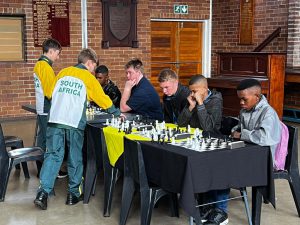
Among the winners were twins Caleb and Judah, whose ‘Every Move Matters’ initiative distributed chess resources to those less privileged.

They secured funding and collaborated with their local authority Department of Education to support other children and provide enhanced educational opportunities through chess.

The brothers, aged 13, have already been national chess champions in four different age groups.

They said: “Chess has transformed our lives in ways we never could have imagined – the strategies, the focus, the friendships. It has been an honor to represent our country and a life-changing journey. And now we want to share this incredible game with other kids. We believe every kid should have the chance to explore the world of chess.”

The brothers at the chess club in Johannesburg

A four student team from Escola ORT in Rio de Janeiro, Brazil, designed an app to raise awareness of freshwater species and promote the conservation of aquatic ecosystems. The app allows users to assess the water quality of nearby rivers and lakes, identify threatened creatures living there and access information on conservation techniques. Their ‘WaterWise’ project encourages the public to be more aware of conservation and sustainability, with the goal of creating a well-informed society.

Back at King David Linksfield, the school’s 75th anniversary was celebrated with a fundraising campaign to improve the lives of vulnerable children through the creation and sale of funky socks.

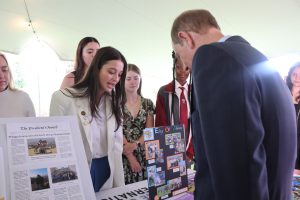
Student Gabi sourced materials, created sock designs and planned a marketing campaign as part of her efforts. In doing so she raised more than $10,000 and was invited to a reception at the British High Commission in Pretoria where she met dignitaries including Prince Edward, the Duke of Edinburgh, and South Africa’s Deputy Minister of International Relations.

Gabi said: “I am so proud of the success of this initiative because it exemplifies my personal values of community, outreach and Tikkun Olam. Not only have Jewish children benefitted from this initiative but also the children from the Kids Haven charity and the wider South African community too.”

Gabi explaining the initiative to Prince Edward, the Duke of Edinburgh

A group of students at the ORT Technology School in Moscow, Russia, created a social club for peers with developmental challenges and health conditions (main image). Meeting at school once a week, the club’s aim is to give children who are often isolated the opportunity to socialize, take part in specially co-ordinated quizzes and games, and to learn how to cook.

Team member Diana explained how a quiz for hearing-impaired children worked: “The kids wrote their answers on paper or showed with their hands. The main thing is not the way you speak or whether you can answer in a loud voice. What is more important are your emotions, your desire to communicate and the warmth that you are ready to share with another person.”

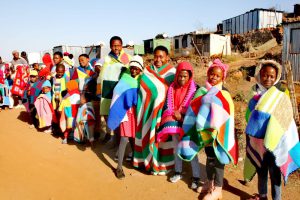
The final group of winners in Johannesburg created the ‘Woven Wishes’ initiative. Benjamin and Julia, a brother and sister team, sought to incentivize the knitting and donation of knitted squares from students across the city. They then partnered with an NGO which teaches unemployed women from a township new skills and roles in which they join the squares, creating blankets which can be sold for income or donated to those in need.

The siblings collected more than 200 knitted squares and have a goal of 5,000 for 2024.

Beneficiaries of the blanket project in South Africa

Other entrants in this year’s Harmatz Awards included a student from Mexico who welcomed Israeli peers into their community after the October 7 attacks, the creation of an app tackling pollution in Rio de Janeiro, a Russian flash mob project encouraging healthier lifestyles, and a boxing club in Johannesburg which promotes better mental health and physical outcomes for young people.

Prizes in the competition are awarded in memory of the late Gina and Joseph Harmatz, who played pivotal roles in ORT’s history.

Joseph Harmatz was Director General of World ORT in the 1980s and 1990s. He was a partisan who was regarded as a hero of Lithuania’s resistance movement against the Nazis.

Gina Harmatz escaped Nazi persecution in western Europe in the 1930s and 1940s before settling in Israel. She was renowned for her graciousness and the importance she placed on family relationships, and concern for the welfare of others.

‘A Safe Place for Students to Learn about Israel’

By Jennifer K Saber

Teens have not had it easy. In the last few years, they have been confronted with one roadblock after another on their life journey, navigating challenges during the pandemic followed by coping with its academic and social emotional aftermath.

Just as World ORT educators saw progress in recovery, the war in Israel erupted on October 7 leading to a backward slide of mental health and social emotional trauma.

To understand the breadth of the situation, World ORT held an Educators’ Forum to hear firsthand what the schools were witnessing amongst their staff and student body. What were the repercussions from the Israel War and from the spike in global antisemitism?

A topic that rose to the forefront was the new role which our Jewish students now found themselves in – being the voice of Israel.

Students discovered themselves in a situation where by virtue of their religion, they were expected by their peers to be a spokesperson for Israel. Our students were unfairly put in the position to field questions about the current landscape and defend our Jewish homeland.

Students were unprepared and struggling. The staff expressed concern that their students were stymied by a lack of knowledge and understanding about the conflict in Israel.

Responding to this urgent need, World ORT put a plan into action to offer educational support for students post-October 7.

Ken Stein, Founding President and Chief Content Officer of The Center for Israel Education, was invited to facilitate a mini-series for our network, providing content and context to this complicated current situation.

As one of the world’s leading experts in the field of Israel education, Professor Stein guided our students and their teachers through four sessions.

Topics for the first three sessions included: background to the Hamas–Israel War, Israel’s response and how it has unfolded since October 7, and the connection between anti-Zionism and antisemitism. A fourth session was offered for school principals and teachers, explaining how they could best support their students to use the materials.

To support and meet each school’s individual needs, World ORT encouraged our educators worldwide to participate in the live, interactive Zoom sessions led by Prof Stein, but the sessions were also recorded so classes could experience them at their own convenience and return to them as a permanent resource.

The ongoing feedback throughout the mini-series demonstrated its impact. One teacher said “the lessons represented a safe place to learn facts and share our doubts and uncertainties about the future”.

The Center for Israel Education met the goal of creating an atmosphere for students to openly express themselves, free of judgment.

The students’ response was a sigh of relief, a reaction to receiving the content they so desperately wanted and the social, emotional support they required.

One student said: “The lessons on the Hamas-Israeli conflict have been really interesting and helpful. Being a Jew in a world full of hatred requires a great knowledge, in fact during the three meetings I realized how important it was to be aware also about what happened before October 7.

“During the lessons we had the opportunity to ask questions and solve our doubts, giving us the ability to face situations in which we are discriminated against just for being Jewish.”

Another student added: “The lessons were well done. It’s difficult to find the knowledge like this that we have learned with ORT. One very important thing was that with this series we know how to have a debate with correct information. Thank you.”

Another student not only found a confident voice during the mini-series, but is now willing to use it. “I hope to share the information to all the people who still know nothing.”

As current events unfold, World ORT is committed to receiving ongoing feedback from our schools – which have a finger on the pulse of their students’ needs – and to transform it into an action plan of support.

Jennifer K Saber is a project manager in World ORT’s Education Department

Holocaust Art Website Launches on Yom HaShoah

On the solemn occasion of Yom HaShoah, World ORT is honored to launch a powerful educational resource born from the ashes of history: Art and the Holocaust.

Developed in collaboration with the Ghetto Fighters House Museum in Israel, this resource stands as a testament to the enduring spirit of those who suffered unimaginable horrors during one of humanity’s darkest chapters.

Available in English, Spanish, Russian and Hebrew, the site explores the art created by 30 individuals who were imprisoned in concentration camps during the Second World War and who painted and drew while incarcerated.

These works of art provide important documentary evidence, as well as an insight into camp life, the harsh treatment and the impact on the victims. It delves into the personal stories of these artists, revealing their artistic expression in unimaginable circumstances.

These artworks become windows into their hopes, fears and experiences within the camps. Through carefully curated biographies and a rich collection of artworks, the resource offers a glimpse into the lives and experiences of these remarkable individuals.

For most of the artists featured, only a few works survived, but in some cases many artworks were recovered after the war, hidden in walls or jars until liberation. The experience of the Holocaust so profoundly affected the surviving artists that it continued to dominate their work long after the war. For those who perished, their works are an enduring legacy of their lives and experiences.

Due to limited resources in the camps and ghettos, the works are mainly paintings or drawings on paper or cardboard but cover a wide range of subjects. The treatment of internees, the constant longing for food and shelter, the boredom, and the horror. Many works show a longing for the past, for a future and for peace, through depictions of nature and landscapes. But many of the works are portraits preserving the memory of those who lost their lives to the Nazi onslaught.

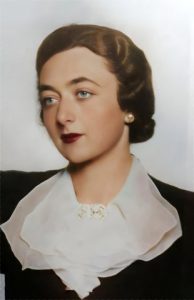
Charlotte Buresova, a talented Jewish artist who endured the horrors of the Terezin concentration camp, is among those featured on the site. Despite the brutality, Buresova used her art as a weapon against despair.

Charlotte Buresova

Buresova had a happy life developing her artistic skills before the Nazi occupation. Forced into Terezin, she found herself working for the Nazis, first painting roof tiles then later ordered to copy famous works in the camp’s artist workshop.

But Buresova created her own art in secret, capturing the artistic spirit of the camp through portraits, dancers and flowers. These works, in stark contrast to the suffering around them, offered a glimpse of beauty and hope.

Despite her artistic work, Buresova acknowledged her privileged position in the camp. She had a room, books and contact with friends, unlike many who suffered daily for their families. But the constant fear of deportation to unknown horrors remained a terrifying reality.

Buresova, along with a few others, managed to escape from Terezin a few days before the liberation. She returned to Prague and continued to create art, some of it inspired by her harrowing experiences.

This unique online resource is designed for educators, students, and the public. It aims to:

Join us on Yom HaShoah and beyond in exploring this new resource. Learn about these courageous artists and use their stories to inspire future generations to fight against prejudice and hatred.

As we commemorate Yom HaShoah, let us honor the memory of the millions who perished by bearing witness to their stories. Together, let us pledge to uphold the values of tolerance, compassion, and remembrance, ensuring that the horrors of the Holocaust are never repeated.

https://holocaust-art.ort.org/

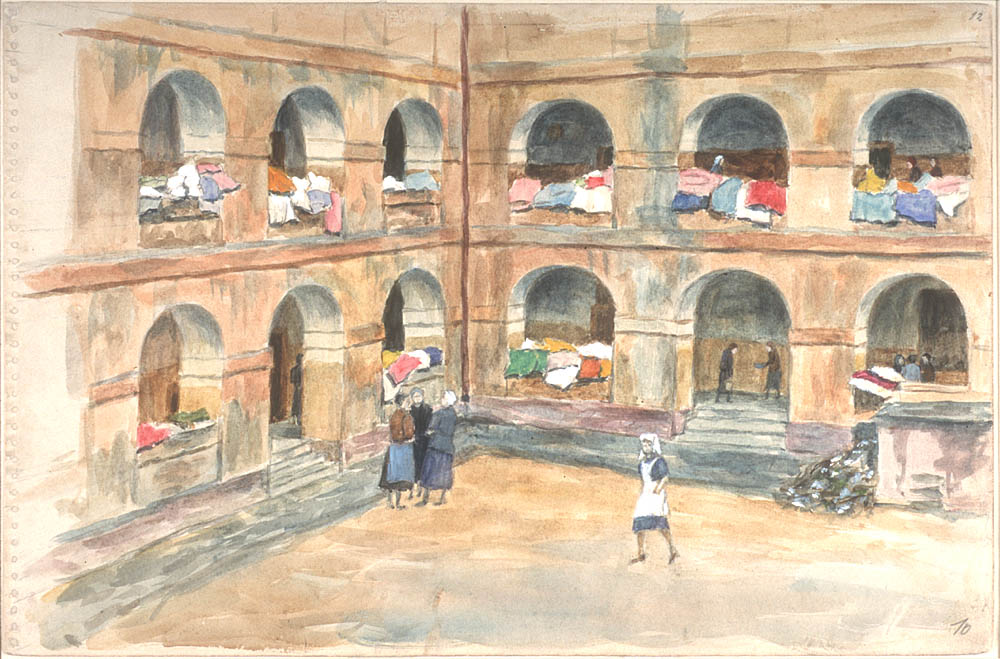
Malva Schaleck’s watercolour painting of the courtyard at Terezin

A Fresh Start: Ukrainian Student Benefits from ORT Support

The war in Ukraine is now in its third year and the impact of Russia’s invasion and ongoing attacks continue to be felt throughout the country. One family that fled Kharkiv has shared how ORT has aided their resettlement in Spain.

At the start of the war in 2022, several ORT schools in Europe, as well as ORT-affiliated schools, took in Ukrainian refugees.

Teenager Milada and her parents, Olga and Vadim, escaped terrifying bombardment in Kharkiv, Ukraine’s second-largest city. They now live in Barcelona, Spain, and Milada – now aged 15 – was accepted into ORT’s affiliate school, Colegio Hatikva, the only Jewish school in Barcelona. The support from the school community has been invaluable, the family says.

“The help from ORT has been wonderful,” Vadim says. “The teachers at Milada’s new school are very kind and understand our situation. We are very grateful for the good relationship we have with them.”

In February, ORT approved a grant for Colegio Hatikva for the 2024/2025 academic year to support their Ukrainian refugee pupils. It is the third such grant to the school since 2022 when Ukrainians began to arrive in Spain.

Terror, Anxiety – then Safety

Kharkiv, in northeastern Ukraine, has been under heavy bombardment since early in the war. It was home to Milada’s family, as well as Olga’s parents and Olga’s sister and her two children. Being only 40km from the Russian border, the family were increasingly aware of their perilous situation.

“At the start of the war I lost my job and had no hope. Every day there was less and less food and there was nowhere to get money – the ATMs didn’t work. The shops were open, then they weren’t, and, in any case, the queues were crazy. There have been periods without electricity,” recalls Vadim.

“At first, we would run to the basement when the sirens went off; then, we stopped running. But, one day, a shell exploded in the neighbour’s garden. The walls were shaking.”

Vadim told Olga that many people were leaving and suggested she went with Milada to Barcelona, where one of his cousins lived. They were aware that Spain had taken in many refugees from Ukraine and Vadim’s cousin had also offered to help them.

“It wasn’t easy. They were crying – they didn’t want to leave, especially because my wife’s mother, who is 70 and works as a nurse, was adamant that she herself was staying.”

Milada recalls: “It was very hard to leave my father and grandmother because we didn’t know what would happen to them or when we would see each other again. I still have not seen my grandmother since we left.”

Olga and Milada left Kharkiv in early March on an arduous train journey across Europe, often standing for 24 hours at a time in carriages that were packed beyond capacity.

Vadim stayed in Kharkiv for two months but, after buildings within 50 metres of his home were attacked, he decided to leave. By May he also reached Spain.

Warm and Welcoming

Milada, who had attended a Jewish school in Kharkiv, was initially enrolled in a Catalan school for around three months. She found the language extremely difficult to learn and the family says the school environment was not supportive.

“They just put me in a classroom. I sat there and didn’t understand anything, everything was in Catalan,” she recalls.

Vadim adds: “They didn’t pay her any attention; they didn’t speak to her or try to teach her Spanish or Catalan. They didn’t try to involve her in the education process, and they didn’t seem to care if she was at school – sometimes they even told her not to come in.”

The family, who had attended synagogue in Kharkiv for the festivals, was helped by Barcelona’s Beit Shalom synagogue and the wider Jewish community.
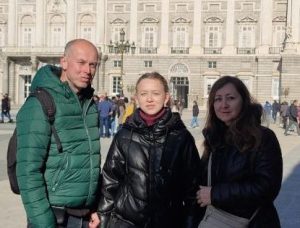
The family in Barcelona

“Thanks to ORT, we were offered the chance to enroll Milada in Colegio Hatikva. Everyone was – and is – so warm and welcoming and helped her,” explains Vadim. “The teachers are all professionals. They are very responsive and kind, and they treat us humanely; they understand our situation.”

Following intensive Spanish lessons, within two months Milada had begun to speak the language and was able to move on to learn other subjects.

“When I came to school for the first time, I made friends with a girl from Spain. Thanks to her, I got to know Spain, but then she left,” Milada says. “Then a new girl came, who is Ukrainian – we’re still in touch.”

Vadim adds: “It was hard at first for her – it’s still not easy – but we are extremely grateful to ORT. Staff at Colegio Hatikva constantly told her to talk to someone, constantly invited her places – in general, they were very attentive. They also provide financial support so Milada can go on school trips. The school is wonderful and we’re very happy.”

Milada is now choosing the subjects for her final school years. “I want to become an interior designer. It’s difficult and dangerous at the moment in Ukraine. I want to live and study here in Spain.”

It is hard for the family to consider the future when there are so many unknowns, and they are also worried about Olga’s mother’s situation. Will our apartment remain intact? Will there be a place to return to? When will the war end? How will it end? Will Kharkiv be completely destroyed?” asks Vadim. “So far, we are in a state of complete uncertainty. I would like to return – it is my home country.”

With the support of ORT’s donors around the world, many families like Vadim’s have found hope and the opportunity to start a new chapter, even if they also share the desire to one day return home.
Anxious, Overwhelmed, Scared: Seeing The Impact of October 7 On Our Global Schools Network

By Jennifer K Saber

I struggled with what I was hearing, holding back tears, hoping no one noticed my desperation to keep my composure as I facilitated the discussion. Once, as a teacher at an American Sunday school, my greatest problem was unearthing sharpened pencils. Such innocent concerns paled in comparison to what I was hearing on Zoom.

I was participating in World ORT’s Educators’ Forum, convened to discuss the impact of the horrific October 7 attacks and rise in antisemitism on staff and students from across ORT’s network.

The stories I heard shook me. Teens frightened watching social media posts of “war porn” and antisemitic images hitting too close to home; schools in the Diaspora opening their doors to students from Kfar Silver Youth Village needing respite from war-ravaged Israel; teachers worldwide not knowing how to comfort their students, while in need of comfort themselves.

At World ORT we knew we couldn’t sit idly by. We are driven by our priority to give our schools the tools to support the social emotional wellbeing of their students and staff. The Educators’ Forum was a space to gather, hear from professionals about the benefits of addressing the mental health needs of our beneficiaries, and an opportunity for schools to share their lived experiences.

Daniel Tysman, Head of World ORT Education Department, opened by sharing a message of solidarity and unwavering support. Dr. Moshe Leiba, Chief Pedagogical and R&D Officer of Kadima Mada, gave an insider’s view of Kfar Silver. Julia Alberga, Wellbeing Manager at Partnerships for Jewish Schools, addressed using Social Emotional Learning as a tool to support students and teachers during these tough times.

Boarding school students at World ORT’s Kfar Silver Youth Village are dealing with the ongoing impact of October 7

Listening in breakout rooms, the facilitators heard exactly what we had hoped – and dreaded – staff would raise. They painted a heart-wrenching picture. One teacher described her students with constant anxiety. She said the students are fortunately not familiar with what war looks like based on its absence from their own country. But then how to explain the anxiety? “Even though the war is far away from them in Israel, the war is in their hearts.” She said students have family and friends fighting for the IDF so are worried around the clock. “They are thinking about it every moment. Every time someone brings up the war it reminds them of their brothers and sisters on the front lines.”

Another concern for students is their own security. Participants spoke of an increase in security at schools worldwide as a preventative measure against rising antisemitism. One teacher said this was a red flag for her students. “Increasing visible security around the school had the opposite effect. The students questioned why there was all of a sudden more security and asked if they were in danger. One teacher said following October 7, some students were scared to come to school for fear of a terrorist attack. Parents kept their children home under their protective eyes until they understood that life needed to go on as usual and sent their kids back a few days later.”

An unexpected topic that emerged was the effect on Jewish identity. “Some of the recommendations students were given were to be careful with things like wearing sweatshirts with Hebrew lettering,” explained one staff member. “Students are grappling with the internal conflict of ‘I want to be safe but this is my sweatshirt, it’s who I am.’.”

Emotions running high were not just reserved for students. Faculty shared their own personal anxieties and frustrations. How do we support teens who are viewing antisemitic social media? How do we navigate the mental health issues of our students when we need to address our own? How do I come to work to tackle the day when I am not trained in mental health and trauma and don’t have the tools to deal with what is happening? It is completely overwhelming.

There are no easy answers. This is a crisis with no end in sight. World ORT’s Education Department will support our network of schools – both as a shoulder to cry on and to lend a helping hand. We are taking the emotions, thoughts and directives we heard at the Educators’ Forum as fuel to move forward with an action plan.

In Pirkei Avot (Ethics of Our Fathers) 2:16, Rabbi Tarfon said: “It is not your duty to finish the work, but neither are you at liberty to neglect it.” The social and emotional wellbeing of our global network is our top priority. It is our duty to work towards finishing the work of emotional and mental repair.

Jennifer K Saber is a project manager in World ORT’s Education Department