‘Everyone in Israel is suffering from trauma after October 7’

This article first appeared on JNS

“Everyone in Israel is suffering from trauma — it doesn’t matter if they weren’t present at an October 7 incident, lost a member of their family or were evacuated,” says Moshe Leiba, chief pedagogical officer and deputy director general of World ORT Kadima Mada (WOKM).

“Even those who weren’t affected directly are traumatized … we are seeing students and teachers who are severely traumatized.

“There are cycles of grief; we are, unfortunately, a state in trauma. Even if the war would stop today, it will take years to rebuild ourselves.”

The Hamas-led terrorist attacks in southern Israel on October 7, 2023, followed the distress and disruption of the multi-year Covid pandemic. Students were starting to return to school and a sense of normality when Hamas attacked and sent them into another crisis, Leiba says.

“Children had a lot of mental health issues from Covid, from the lack of social interaction and structure, and we were already talking about how it would take years to bridge the gap,” he explains. “Now, some of those children have been evacuated for a year and a half, and the issues continue with the trauma of October 7.”

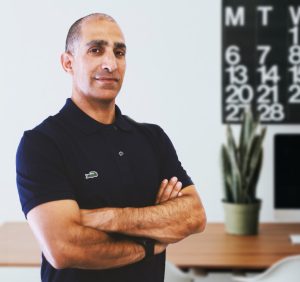
WOKM Educational Psychologist and Sports Consultant Royi Yablochnik, who was seconded to World ORT’s Kfar Silver Youth Village to provide much-needed psychological support, credits World ORT with helping staff and students to access it.
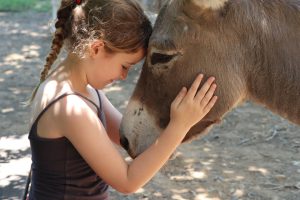
Animal therapy at Kfar Silver Youth Village

“It was very important that we were able to open up this support for everyone who wanted to see a therapist and not let them wait weeks or even months,” he stresses. “More people are now coming to therapy because they have time to treat themselves and are no longer in survival mode.

“We need to give them the opportunity to see psychologists — the connection between a patient and a therapist can help to prevent post-traumatic stress disorder.”

He says that his main goal after the attacks was to give people a sense of control and the opportunity to “rebuild”.

Another pressing issue was that many staff and students were evacuated from their homes, especially in Israel’s south. While around 98% of people have returned to the WOKM schools and programs in the south, there is still displacement in the north. Only 40% of students returned when northern schools reopened in March.

Support provided by World ORT’s campaign and global supporters includes providing students’ families with money for food, in one case in the north for a family where a student’s mother was ill with cancer and the father had lost his job.

At Kfar Silver Youth Village, only eight miles from the Gaza border, scholarships and stipends were provided not only to students and their families but to teachers and other staff, as well as therapeutic and psychological support.

Yablochnik says giving people the strength to “get used to this routine, of life in war” was crucial.
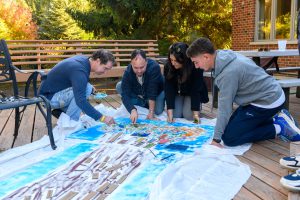
Moshe Leiba (second left) at an art therapy session with students on a respite trip to Chicago

WOKM provided mentoring and organized activities in evacuation centers, hotels and hospitals where people had been displaced.

“We did a lot to try to alleviate stress,” Leiba says. “Some of our staff went under fire in bomb shelters to work with students, doing robotics, DIY and photography, and we’re still doing that.”

Other resilience and confidence-building programs have included Krav Maga self-defense sessions with techniques on how to control mind, body and energy. Meditation and mindfulness, which are included in the classes, have helped students remain calmer during lessons.

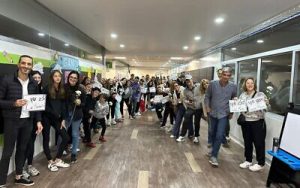
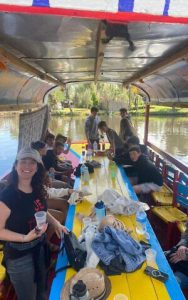
Another program both experts believe has been supremely beneficial to students is the respite trips that have taken place in the United Kingdom, the United States and Mexico.

“It’s something ORT did that was very powerful; it gave students a break from all the stress in Israel, and it was amazing for them to see the love from the community all over the world,” says Yablochnik. “There was a feeling that the Diaspora is looking out for us and that we all have the same goal.”

Leiba adds: “The bonds created between the host families and the kids gave the students a lot of strength. In many cases, they are still in touch, even after a year. The ORT host families felt they were doing something meaningful, and it connected them much more to the organization.”

One consequence of the respite trips was that some students who had not previously wanted to pursue psychological support asked for it upon their return. “They understood the importance of it afterwards,” he said. “For the others, we try to find alternative solutions, for example, photo, drama and animal therapy.”
Let’s Talk Schools: AI is here to stay, let’s embrace it

This article first appeared in The Jewish Chronicle

JANUARY 19, 2025

It is a beneficial tool, which children should be taught to use responsibly

When ChatGPT burst on to the scene two years ago, some of my students, who had previously barely been able to string a few words together, were suddenly producing phenomenally well-constructed written work. They must have thought we, their teachers, were born yesterday.

The concern that students will lose the willingness or ability to study, and instead pass off work done by chatbots, is an extremely valid one. But Generative AI – of which ChatGPT is just one example – is also an immensely useful tool. In many schools, AI has become a focus for professional development as leaders seek to harness its potential while ensuring it is not misused.

World ORT is an educational not-for-profit that supports Jewish schools in more than 30 countries, prioritising high-quality STEM education. At our recent annual Hatter Technology Seminar, we explored how AI can enhance teaching and learning, support leadership and equip students for a future where mastering AI will be essential to succeed in the workplace.

We shared our fears about the risks posed by unregulated AI. There is an urgent need to adopt policies to promote responsible AI use and provide training that highlights its risks, including bias, misinformation and potential job losses. We must work towards ensuring that students develop their critical thinking in order to spot hallucinations, or inaccuracies, and to understand when to use their own thinking to complete tasks.

But we also learnt about the opportunities AI provides and that, as it rapidly evolves, we and our students must not be left behind. We were reminded that, just as previous technological advances – calculators in the classroom, for instance – caused concern, AI is also here to stay.

AI’s far-reaching benefits include improving student engagement and broadening access to learning in the classroom. Teachers can use AI to modify lesson plans, for example, to make them for accessible for pupils with special needs.

Crucially, we heard that creation is no longer the highest order of thinking in a post-AI world. To thrive, students must excel at collaboration and innovation, generating novel solutions and ideas. Our discussions emphasised the importance of training students to retain agency, use AI safely, protect privacy and spot bias and discrimination. The reinforcing of racial or gender stereotypes, among other inequalities, is also present in the virtual world – if you ask AI to create an image of a computer programmer, it will generate a visual of a young white male.

If we ban students from using AI, some will take advantage of it anyway; this will be at the expense of their engagement in learning. But by adapting our teaching and assessment practices to support responsible AI use, we can encourage openness, debate and collaboration. This creates an environment in which students develop critical thinking and ethical awareness. They will use AI for deeper learning and innovation rather than as a shortcut for rote tasks.

My priority at ORT is to create a forum in which participants can share resources and good practices and strengthen our professional networks. Our participants left motivated to serve as AI champions in their schools, leading professional development and training for both their teachers and students in responsible use of AI.

AI did not write this article but if it had and you had found it informative, would it matter? As educators, however, it is the process rather than the output that has always been at the heart of learning. Engaging with AI tools and using them to enhance students’ thinking – rather than doing the thinking for them – is critical.

Leor Harel is Learning Development Manager of World ORT

Ukrainian students who fled to Israel feel safer there, even during war

This article first appeared in The Jerusalem Post

For Sviatoslav, Michael and Maria, the attacks on October 7 were an unimaginable development – but for them the implications carried a different resonance than for their peers at the Kfar Silver Youth Village near Ashkelon.

The trio are part of a group of students who fled the war in Ukraine in March 2022 and came to Israel to study at the village, owned by the World ORT educational network, in what they hoped would be more peaceful surroundings. 

After leaving behind their war-torn home country they immediately set about acclimating to a completely different culture, learning Hebrew and navigating their high-school studies. 

Monique Zahavi, International Relations Coordinator at World ORT Kadima Mada, the network’s operational arm in Israel, describes the students as “incredibly resilient and inspirational”.

She says their challenges have not stopped them from striving to reach their potential. “They contribute to school life at every opportunity. The depth of thought and engagement that they contribute to our young ambassadors sessions is heartwarming.” 

Sviatoslav, 17, described the shock of that fateful morning in October. “I was in Ashkelon with friends and was woken up at 6am by the rocket fire. There were reports that terrorists had infiltrated Israel. I saw pictures of Sderot. Ashkelon is extremely close to Sderot. We closed all the windows and doors and stayed in the safe room for two hours. Yeah, that was scary.” 

Due to its proximity to the Gaza border, Kfar Silver students were among the first to be evacuated, under the watchful eyes of Amos Gofer, the village’s CEO, and other staff.

Sviatoslav moved into his grandmother’s house in Holon, while Michael, Maria and other dorm students were taken to Hadassah Neurim, a verdant youth campus with a view of the sea, just north of Netanya. Some six weeks later, they returned to Kfar Silver, amid frequent rocket fire that forced them to sleep on mattresses in the safety of the bomb shelter.  

In fluent English, the three share what it was like to flee the Russian onslaught on Ukraine. Sviatoslav asserts that the booms of the Iron Dome missile interceptions do not faze him after what he experienced in his hometown of Kharkiv. “I saw Russian soldiers invading my city, I saw dead people lying in the street. At least five times I thought, ‘I’m going to die right now’ because there was constant shelling right next to us and we didn’t have any bomb shelter.”

In the early days of that conflict, the teenager and his parents suffered severe hunger, unable to leave the house due to a curfew, and then forced to wait in line with thousands of other terrified civilians to buy bread. 

Michael, 18, a native of Kyiv, is also no stranger to deadly rocket attacks. The day after the war began in February 2022 he fled with his family to a village on the border of Belarus, where they stayed for six days. From there he made his way to the Polish border where it took 15 hours to cross over, waiting all night in a line with thousands of other people to board one bus that took only about 30 people at a time. Michael describes a scene he will never forget: people forced to leave their belongings behind in the snow, since all the extra space on the bus had to be used to transport people. 

Once in Poland, Michael had to wait for a week, but he had all his needs including food and accommodation taken care of before boarding his long-awaited flight to Israel. Two weeks after arriving he moved to Kfar Silver.

Maria lived with her mother in Kharkiv, close to the frontline, but fortunately was staying with her father in Kyiv. With her brother and father she fled westward to a village where the homes lacked indoor plumbing and she had to take a shower at the neighbors’ home. After a few weeks, they crossed the border to Moldova, and took a taxi to Kishinev. The next day they were already on a flight to Israel. “At 16 I was old enough to travel alone,” Maria relates, “but because my younger brother was underage, he needed a legal guardian to accompany him. Luckily, my father found a volunteer to cross with us and he accompanied us all the way Israel.”

Arriving in Israel with no way to return to Ukraine was not what any of the students had expected. The three had been in the midst of the application process to study at Kfar Silver for the school year of 2022-23 through the Naale program which welcomes students from the former Soviet Union to Israel ahead of their family members joining them in making aliyah. 

They had anticipated arriving in the summer of 2022. Eighteen-year-old Michael said he was “so happy to finally arrive in the land of Israel — and to Kfar Silver, one of the best schools in Israel, although it wasn’t exactly in the way I wanted”.

Maria was able to visit her parents and grandparents in Ukraine last summer, but Sviatoslav and Michael are in a different category. If they travelled home, they would be subject to Ukrainian law that prohibits males, even below conscription age, from leaving the country. 

Sviatoslav admits that he misses his home, his friends and his family. He met his mother and sister during the last two summers when they came to Israel to visit, but has not seen his father in the two years since he has been in Israel. “The situation in Ukraine isn’t any more dangerous now than Israel. Sometimes I dream about receiving an Israeli passport and visiting Ukraine as an Israeli.”

Despite the adversity they have faced, with the help and nurturing of Kfar Silver’s dedicated staff, these students have thrived. “They supported each other through their relocation to Israel, and now, during the war in Israel, they continue to support one another,” Monique Zahavi observes. “It’s a privilege to watch these young people grow in confidence and develop a sense of self-assuredness and self-awareness. They are true heroes.” 

This article was written in cooperation with World ORT.

These Ukrainian teenagers sought refuge from war in Israel. Then they were caught up in the horrors of Hamas’ attack

This article first appeared in CNN
Ashkelon, Israel — CNN — It was supposed to be a safe haven – a new life for those seeking refuge from the turbulence of war.

But when tens of thousands of Ukrainians fled to Israel in the wake of Russia’s invasion, they had no idea of what the future would hold.

With men aged 18 to 60 forbidden to leave Ukraine, the refugees were mostly women, children and the elderly. Among them, four courageous teenagers who arrived alone in Israel to start a new life as a result of Moscow’s assault on their homeland on February 24, 2022.

Little more than a year and a half later, these young people found themselves immersed in another conflict, as they study at a boarding school just 8 miles from Gaza.

“The day before was very peaceful,” recalled Artem Karpin, 18, of Hamas’ attack on Israel on October 7. “I remember thinking I wasn’t really ready with my homework and wondering how to postpone my deadlines.”

Karpin lives and studies at Kfar Silver, a youth village near Ashkelon, close to where Hamas militants infiltrated the border that Saturday morning. He is one of about 40 Ukrainian refugees to enrol there since Russia invaded his country.

Artem Karpin was visiting family in Israel when Russia invaded Ukraine. His family insisted he remain there.

Run by the global education charity World ORT, the “village” is effectively a sprawling complex for 1,090 children from challenging backgrounds – including 250 boarders.

Originally from the southwestern city of Odesa, Karpin had been visiting relatives in Israel when Russia invaded Ukraine. His father gave him no choice but to stay put.

“I started crying when I began to understand that I’m not going back,” he told CNN at Kfar Silver. “I felt betrayed. I didn’t think it was a wise decision to leave me here.”

Nearly 2,000 miles from his parents, Karpin, then 16, enrolled at Kfar Silver, where he soon began to learn the language, make friends and settle in. That was until life was upended again on October 7.

“That morning we all ran from the dorms to the shelter in the school,” he said. “I was scared but not terrified. I was trying to talk it all through rationally and it really helped.”

Karpin was one of 63 of pupils on site that day, as was 18-year-old Michael Reider.

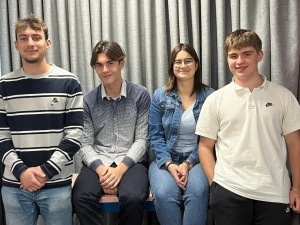
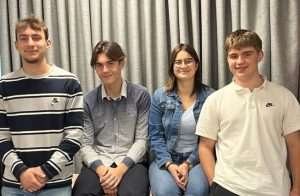
These four teenagers all moved from wartorn Ukraine to Kfar Silver near Ashkelon in Israel. From left: Michael Reider, Artem Karpin, Maria and Sviatoslav Kulyk.

Originally from Kyiv, Reider arrived in Israel in March 2022 following a gruelling journey from his homeland to Poland, where he spent a week on his own before flying out.

On that “black Shabbat” of October 7, he said: “I woke up and there were a lot of sirens and rockets were flying.

“I had already experienced one invasion and now this was a second one. I don’t know how to explain it – I wasn’t really afraid. I felt kind of angry and like I had the energy to fight.”

Pupils and staff remained in the shelter for hours as the unprecedented terror raged around them.

Amos Gofer, who served in the IDF for 25 years before becoming chief executive of Kfar Silver, told CNN: “During my military service I spent time in Lebanon, Gaza, occupied territories. I saw some stuff but October 7 was the hardest day of my professional life.

“We were terrified. We knew very early that the situation was very bad, that there were a lot of terrorists.”

‘Thousands of rockets’

Friday had marked the end of a week-long religious holiday, so fortunately very few pupils were at school, said Gofer. Most of the Ukrainian students, however, had nowhere else to be.

“I was sure the terrorists were going to come here to kill us,” said Gofer, who keeps the remains of a rocket which exploded on the school grounds on his desk.

“I had three people with personal pistols, which was nothing compared to the heavy ammunition the terrorists had.

“We saw no helicopters, no police, no military – I still don’t understand why it took so long,” said Gofer, referring to widespread reports on October 7 that the army and security forces took hours to react to the incursions.

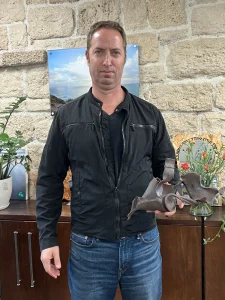
Amos Gofer, CEO of the Kfar Silver youth village, poses with the gnarled remnants of a Hamas rocket which landed near to the school.

Gofer told CNN that “thousands of rockets” flew over the village, while fires broke out everywhere around them.

With no response to his repeated calls to the army and emergency services, who were dealing with ongoing attacks in multiple locations, Gofer finally called a bus company manager he knew.

“He told me none of his bus drivers were willing to come… everyone was terrified.”

Two drivers from the bus company eventually volunteered to evacuate the children to another village further north, he added. “They told me if they’re not out of here in two, three minutes they would go without the students.”

Karpin recalled: “We had several minutes to pack our clothes and run for the buses. I got the most essential stuff and that’s it. In an hour or two we were in Netanya.”

Four days later, Karpin’s parents, back in Ukraine, insisted that he leave Israel with other relatives for Europe.

“After three weeks I started to feel that I wanted to return (to Israel),” he said of his time in Greece and Germany. “I missed my studies and my friends. It was getting a little safer in Israel, so I convinced my family I needed to get back.”

‘I was scared’

In common with some other foreign boarders, 17-year-old Maria, who asked not to give her surname for privacy reasons, was staying with a nearby “host family” because of the religious holiday when Hamas launched its assault on October 7.

“At six in the morning we were all running to the shelter and you could hear sirens,” she said.

Originally from the eastern Ukrainian city of Kharkiv, Maria and her younger brother had moved to their father’s home in Kyiv following the Russian invasion. Eventually the two siblings left the country via Moldova and flew to Israel.

“When war broke out in Ukraine it was like life fell apart and this time it was very similar – I had flashbacks,” she said. “I was scared but also thought if I tried to distance myself as much as possible everything would be OK.”

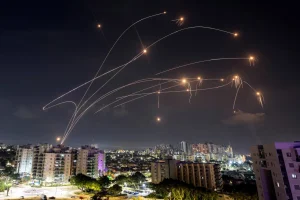
Israel’s Iron Dome anti-missile system intercepts rockets launched from the Gaza Strip, as seen from Ashkelon in southern Israel October 8, 2023.

She remained with the family, who live in Ashkelon, for several days before heading north to join the evacuees, including her brother. There they remained until last month when they returned to the school.

“My mum was worried about us,” she said, adding that their mother suggested they return home to Ukraine.

“I told myself I could go back but that I’d be going back to war and I couldn’t possibly know if it’s safer. At the same time, I didn’t want to leave Israel. I thought ‘do I need to flee again to start life again once more?’”

After lengthy family discussions, the siblings decided to stay.

“In some ways I’d rather be here,” said Maria. “I just wish for my family to be brought together again in peace.”

Fellow Ukrainian Sviatoslave Kulyk, 17, told CNN he had “not been afraid at all” about leaving his family for Israel back in 2022.

“I understood that it was better to live in a country with no war,” he said.

That all changed when he woke up at his friend’s house in Ashkelon on October 7.

“I had flashbacks to Ukraine, especially when we watched TV about what was happening,” said Kulyk, who told CNN he had witnessed Russian forces roll into his street from his home in Kharkiv.

“My mum was really afraid of me being in Ashkelon but I was trying to explain that I had a bomb shelter here,” he said, adding that Ukrainian homes are not equipped with so-called safe rooms. All Israeli homes built after 1993 must have such a shelter, designed to protect residents from rocket attacks.

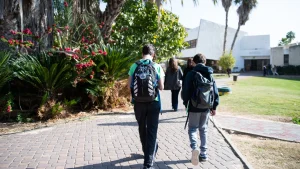
Pupils at the Kfar Silver “youth village” near Ashkelon have come under fire from Hamas rocket attacks. Among them are a number of Ukrainian teenagers who fled their homeland for refuge in Israel.

World ORT schools in Mexico, Bulgaria offer education and empathy for Israelis traumatized by war

This article first appeared in the Times of Israel

The month-long program at Colegio Olamí, geared for students aged 12-16, provided teens with plenty of opportunities for learning and socializing

Colegio Olamí ORT in Mexico City has introduced a transformative program for 25 Israeli high school students who were evacuated from their communities near Gaza, in the wake of the war in Israel.  The initiative, the brainchild of Olamí school principal Avi Meir, is part of global Jewish education network World ORT’s broader mission to support Jewish students, providing stable educational environments during challenging times.

The month-long program at Colegio Olamí, geared for students aged 12-16, provided teens with plenty of opportunities for learning and socializing, in both formal classes as well as extracurricular activities and trips. None of the guests knew Spanish, but as Orly Picker, the academic director at Olami, explained, “Kids manage! Between Hebrew and English, they were able to communicate beautifully with their host families and the other students.”

The Israeli students were matched in advance with families with a boy or girl of a similar age, giving parents and teens from both sides of the globe the opportunity to become acquainted over the phone. The Israelis joined their Mexican peers for many of the classes and after-school activities. Spanish classes, activities at the local Jewish sports center, and Mexican cooking classes were big favorites.


Some programs, though, were geared to the Israeli guests only, such as the group sessions led by a Hebrew-speaking psychologist, designed to give the teens space to express themselves freely. “Sometimes they wanted to talk, and other times they sang or wanted to just hang out,” said Picker.

There were a few cases of children who were still traumatized by the events of Oct. 7. “We had one girl who had trouble sleeping; and she didn’t have much of an appetite. We arranged professional, one-on-one help with an Israeli psychologist. By the following week, she was feeling better.”


It wasn’t always easy for the teens, accustomed to the relative freedom they enjoyed as Israelis and as kibbutzniks, to adjust to the life in Mexico. “At first, they couldn’t believe that we wouldn’t allow them to go out alone.” said Picker. “We had to explain to them very clearly, ‘No, you cannot travel on your own. This is Mexico City, and you are our responsibility.’”

One of the highlights was the visit to the synagogue on Friday night for Shabbat services, followed by a beautifully catered meal. “They were especially moved by the prayer for the soldiers, and four students asked to stay overnight at the home of the rabbi so that they could attend services the following day.”

Picker points out the generosity of the Mexican community, who picked up the tab for all outings and meals, and particularly the host families, who treated the teens as if they were their own children. The entire program was free of charge.

In January, Colegio Olamí will be welcoming another delegation of students from World ORT Kadima Mada’sKfar Silver Youth Village near Ashkelon, Israel, for a two-week program.

The school has also absorbed a group of 22 students from Israel on full scholarships. According to Amelie Esquenazi, the World ORT representative for Latin America, these are children of Mexican families who had previously made Aliyah, but have now fled war zones and who will be remaining indefinitely in Mexico.

Welcome to Sofia

Mirroring the efforts in Mexico, the ORT school in Sofia, Bulgaria, under the leadership of Director Plamen Petrov and Hebrew Coordinator Stella Dinkova, has also become a haven for children of Israeli families fleeing conflict. Following the outbreak of war, Bulgaria, long a popular destination for Israelis, has seen a significant influx of families, particularly from southern Israel.

“The local community in Sofia has provided families with an outpouring of essential support including food, clothing, toys, and housewares,” said Dinkova. As part of those efforts, ten children, aged 6-13, have been integrated into the ORT school, and have started to learn Bulgarian while continuing their Hebrew education and Jewish cultural studies.

This is a similar arrangement to one put in place by Dr. Petrov and his team after the outbreak of war in Ukraine last year. ORT students from that country were also absorbed into the Sofia school after being displaced by the violence.

Both the Mexican and Bulgarian schools highlight World ORT’s focus on education as a means of stability, growth, and healing for young individuals and families facing adversity. The network’s commitment to global solidarity and empathy across its schools, universities and extra-curricular programs in over 40 countries, stands as a beacon of hope and collaboration in challenging times.


Israel is a nation in trauma, but our children are resilient – opinion

This article first appeared in The Jerusalem Post

Despite the complexity of “the situation,” I’m optimistic. I trust in our students’ resilience and their ability to overcome this trauma.

Having started my career as a teacher, and then gone on to become a “teacher of teachers,” student mental health has always been at the forefront of my mind.

Since assuming my position at World ORT Kadima Mada just prior to the onset of COVID-19 and now with the war in Gaza and its ripple effects, it seems I was destined to work in a state of perpetual crisis management. But while the pandemic brought challenges of loneliness and social anxiety, the war has introduced more profound and pervasive trauma-related issues.

On October 7, our sense of security, as a nation, was shattered. Terrorist incursions suddenly felt dangerously close. We no longer feel safe in our own homes.

Children absorb unspoken messages from their parents and are far more vulnerable. In the first weeks of the war, a video circulated showing how to fashion an apparatus to lock the mamad (safe room) from the inside; it was national hysteria. Parents must realize that they pass on their own fear and anxiety to their children, who don’t have the emotional and cognitive tools to process it. Not surprisingly, my colleagues and I have been seeing children experiencing existential terror, refusing to exit the mamad for any length of time.

Social media is another factor that plays a major role in exacerbating the trauma, as from the first week of the war children were exposed to graphic content, dubbed “war porn.” It’s incumbent on parents and educators to take a more proactive approach in shielding children from triggering images and educating them about responsible media consumption.

1 in 20 students were in the ‘first circle’ of those affected on Oct 7

World ORT Kadima Mada runs the southern youth village of Kfar Silver, located some 8 km. from the Gaza border. Just days after the war broke out, Kfar Silver was evacuated and students were placed with relatives or in hotels and special evacuation centers for displaced residents.

Out of the more than 1,000 students at Kfar Silver, 56 are in the “first circle” of those affected, with people close to them who were murdered, wounded, or abducted. Significant numbers of staff are also in the first circle, having either experienced loss; or having loved ones serving on the front lines. Additionally, we have dozens of students from Ukraine who fled their homes just a year and a half ago, and they are now forced to uproot themselves once again.

In the first weeks of the war, my staff and I were focused on mental health “first aid.” We visited students in 44 evacuation centers throughout Israel, ensuring that they were getting the psychological support they needed, and offering our services as well. Some kids, for example, are eligible for intensive mental health intervention from the government but haven’t taken advantage of the opportunity, for various reasons. One of my biggest responsibilities at this time is making sure no child is left behind.

One of my students from the Gaza border kibbutz of Nir Am knew several people who were murdered and kidnapped. As he and his family were being evacuated on October 7, they witnessed horrific scenes, including bodies strewn on the ground. Since that day, we’ve been in regular contact. His teacher calls him daily, and he receives treatment and support from our educational psychologist and myself.

AS THE conflict wears on, a semblance of normalcy, or what we call “emergency routine” is emerging. Students are starting to return to Kfar Silver and attend in-person classes. Through classroom discussion, one-on-one talks, breathing exercises, mindfulness, and physical activity with an emphasis on self-defense, we’re seeing teens slowly processing what they’ve been through and regaining their sense of empowerment.

Therapeutic workshops, such as robotics and other DIY projects, where students can talk while they build, are also valuable means of getting kids to express themselves. It’s critical that they open up and talk about the events now, during the initial trauma stage, so that there aren’t problems down the line that can turn into post-trauma.

The long-term work is also the most challenging. After weeks of being out of school and away from their regular environment, some displaced youths have begun displaying at-risk behaviors. In Eilat, for example, they were taken to see the sights, to the beach – and that was great for a week or two. But how long can you be on vacation? The boredom, compounded by the trauma and stress, spawned secondary problems, such as vandalism and substance abuse.

Conversely, we have a group of older students who have found jobs. That’s a good thing, but not if it keeps them from returning to school because they want to continue working and earning.

As we progress through the emotionally turbulent period of watching the hostages return, I believe in both a bottom-up and a top-down approach. Not only students but staff, too, should be encouraged to avail themselves of the mental health services we offer. Those who are reluctant should be gently pushed to participate in one or another of the supportive mechanisms designed to help people cope. It’s not only crucial for their personal welfare, it will impact on how they interact with the students.

With the war ongoing, and the ripple effects that we will be seeing as time goes on, my plan at this time is to integrate emotional and mental health content into the fabric of the curriculum and services World ORT Kadima Mada provides.

Despite the complexity of “the situation,” I’m optimistic. I trust in our students’ resilience and their ability to overcome this trauma. We work with them, we foster their sense of belonging, we tell them: “We’re in this together.” And those aren’t empty words; that is truly our strength.

By Moshe Leiba

The writer is head of pedagogy at World ORT Kadima Mada in Israel.

Restoring safety and trust: How educational specialists are supporting traumatized students in Israel

This article first appeared in the JNS

Royi Yablochnik emphasizes talking with them, and being open and honest in an age-appropriate way.

(November 20, 2023 / JNS) By Joanne Newman

In normal times, Royi Yablochnik runs One Team Camp, a summer event bringing together Jewish and Bedouin Israeli teenage girls for cross-cultural sports activities organized by World ORT Kadima Mada. The camps foster a sense of belonging and promote values, including equality, inclusion and mutual respect.

But these are not normal times. Since Hamas’s devastating attacks on Oct. 7, the educational psychologist and sports consultant has been providing therapeutic support to World ORT Kadima Mada students aged between 12 and 16, as well as to staff, instructors and educators.

Over the past month, Kadima Mada—World ORT’s operational arm in Israel—has delivered hundreds of activities to more than 3,500 students, mainly covering psychological needs. From World ORT’s Kfar Silver Youth Village near Ashkelon alone, more than 100 children are receiving urgent mental health support.

Yablochnik has been displaced from southern Israel and is now based in Tel Aviv. His role is threefold: the first is to reduce the anxiety of his colleagues and students; the second is to equip teachers and parents with tools to support the children; and the third is to provide one-to-one or group therapy, either face-to-face or via Zoom.


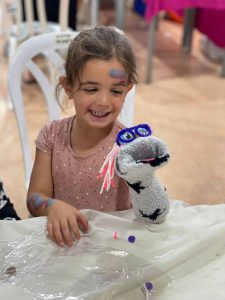
A student in Dimona, Israel, takes part in a puppet-making class. Credit: World ORT.

“In Israel now, there is a lot of anxiety,” he says. “And in times of stress, we can lose the ability to control our thinking, so we need to find a way to calm the mind. I give the students and staff exercises on how to do this. If they need follow-up sessions, I can do that myself or refer them to psychologists near where they are.”

Students, teachers and other staff were evacuated from their base in Kfar Silver, which is only eight miles from Gaza. Many of them have friends or family members who lost their lives in the Hamas attacks and the proximity to Gaza means residents have very little time to find shelter in the event of rocket fire.

Yablochnik, who is also serving in the army reserves, describes how in stressful situations there are three responses: fight, flight or freeze. But now there is another response, he notes, and that is fear. “The sense of security in one’s home is damaged,” he says.

The psychological impact of Hamas’s barbaric attacks cannot be overestimated.

“As children, you are led to believe that there will always be an adult to take care of you,” he says. “In the beginning, it’s your mother and father, and when you grow up, it’s the commander or the army, police and government. But that idea was quashed on Oct. 7 because people’s first questions were ‘Where’s the army? Where is the government?’ because many were waiting almost eight hours in the shelter.”

He explains that “the first thing I’m dealing with is to restore the feeling of safety and trust. From a psychological point of view, if you don’t build your ‘story,’ your mind will keep questioning things and will suggest its own answer, which is not good because it will continue in survival mode and not let us move on.”

Royi Yablochnik.

‘Bring back a sense of control’

Part of his efforts are aimed at reconciling civilians with the fact their lives are not continuing as usual.

“They need to deal with a new situation; they must stop trying to go back to the routine they had on Oct. 6. What we tend to tell them is that we will try to keep as much of a schedule as we can, to keep things as similar as possible to what life was like before. For example, sleep, exercise—things we know will help to bring back a sense of control.

“I bring tools from the world of sports psychology because we know athletes deal with stress all the time. Obviously, the stress is different now and people are in survival mode, but there are things we can do that are very similar to what we can do in times of normal stress—for example, focus on how to breathe and take part in physical activity.”

Some Israeli schools are operational, but teachers understand that students will be distracted and unfocused. Additionally, parents fear their children may develop post-traumatic stress disorder (PTSD) from their experiences, but he is reassuring. “Most of the people, almost 80%, will heal by themselves,” but he emphasizes that the way parents handle the situation will influence the way their children do.

“If you are very anxious and afraid, or you’re very mad all the time because you’re not sleeping, it will affect the children. Conversely, if you see your children laugh and be happy, it will make you stronger and reduce your anxiety.”

He emphasizes talking with them, and being open and honest in an age-appropriate way. “Children notice things. It’s hard to tell children about the situation, and many parents think it might be best to hide it from them, but children don’t live in isolation; they talk with friends.”

He praises World ORT, the Jewish education network working across more than 40 countries, and Kadima Mada for the support provided straight after the attacks. “It is very important to provide therapy straight away, as well as in the months afterwards, particularly to prevent PTSD. They encouraged us to contact people immediately to see whether they needed our help, rather than waiting for them to contact us.”


Students in Dimona, Israel, take part in a puppet-making class.

He hopes to be able to provide more face-to-face therapy and physical activity sessions, especially as he foresees a rise in PTSD cases in the country given the unprecedented numbers of people who were involved in the terror attacks.

But, he adds, offering a note of optimism: “The solidarity in the country now means I don’t think it will be as bad as it could have been. As human beings, we love to be in groups, and groups make us strong. The [political] situation we had in Israel in the past year was very bad. People are now more united.”

ORT’s emergency global campaign is working to provide urgent educational and psychological support for students, teachers and their families across Israel.

DONATE TO THE EMERGENCY CAMPAIGN

Nurturing Hearts and Minds in Troubled Times

This article first appeared in the Times of Israel 

These are dark days for all of us across Israel. Tragically, children have been terribly affected by the atrocities, displacement and learning loss of the past weeks.

In response, in the earliest hours and days of the war, World ORT Kadima Mada – the operational arm in Israel of World ORT’s global Jewish education network – initiated efforts to provide urgent educational and psychological support.

World ORT has provided dignity and hope to displaced people since the Holocaust. We had assumed that the type of work characterized by our support for Jewish refugees in DP camps between 1945 and 1948 was something relegated to the history books. But here we are, nearly 80 years later, continuing our mission with the same commitment and passion.

Israel is currently a hotbed of NGOs and civic society organizations carrying out remarkable work across diverse areas. Our contribution is focused on two key areas.

One of the most significant needs right now is to support the emotional and mental health of our nearly 10,000 students and teachers and their families, as well as others in communities across the country.

Our comprehensive psychological support packages include running one-on-one and group sessions with psychologists trained in mental first-aid. We have been systematically mapping and evaluating the emotional needs of our beneficiaries, particularly in the mild-to-severe ranges and providing dedicated, tailored support to individuals.

We’d like to start online classes for all our student diaspora, but for many children, their heads are just not in it right now. They are not ready for Maths or English classes. It is one step at a time. All they can currently manage are educational distraction online programs – taking their minds off things for a short time while they are trying to process everything that has happened.

Examples of this are seen most clearly with our students from the Kfar Silver Youth Village at Ashkelon, just a few kilometers from the Gaza border. Although the village was thankfully safely evacuated on the day of the attacks, tragically a significant number of students and teachers have lost family members and friends. Dozens of people with links to our organization have been killed or kidnapped by terrorists. A number of Kfar Silver graduates have been killed serving in the IDF.

The bespoke work with counsellors or social workers can be a lifeline for teenagers grappling with these heartbreaking scenarios. Many have been taking part in therapeutic workshops in subjects including science, robotics, coding and virtual reality. We have already reached almost 2,000 children, helping kids from grades one to eight in both the southern and northern peripheries of Israel. The daily sessions give them some semblance of normalcy – beacons of hope during this turbulent time.

In parallel we are training teachers and instructors in effective online teaching methodology so that we can continue to provide education for the duration of the crisis, however long it might be. Distributing laptops and assisting educators in integrating their curricula into online activities ensures a comprehensive approach. We will not leave any student or teacher behind in this work.

One of the most heart-warming aspects of this dreadful time is seeing our friends and colleagues in Israel, and across World ORT’s global network spanning more than 40 countries, offering to volunteer their time and resources to support us. We have been inspired by the commitment of Jewish students worldwide to reach out to their peers here, exemplifying World ORT’s values of co-operation and Tikkun Am – Jews investing in our own identity, culture, religion, rituals and state to ensure a meaningful Jewish future with young people who are able to engage in the world with pride and knowledge.

This is a devastating moment in our history, but this compassion and kindness gives us hope that better times lie ahead – they have to, and we will work night and day to ensure they do.

DONATE TO THE EMERGENCY CAMPAIGN

Ukrainian students travel to Bulgaria for digital summer school

This article first appeared in Jewish News Syndicate.

Ukrainian students travel to Bulgaria for digital summer school

The two-week program, taught by skilled professionals, deepens students’ experience in photography, video and audio production.

Three Ukrainian teens took part in a summer school in Bulgaria after World ORT facilitated their departure from the war-affected country to join peers for the chance to learn digital skills.

It took more than 24 hours as they crossed thousands of kilometers by road and then rail from their Ukrainian home cities—first across the border to Poland and then by plane to Sofia.


Polina Tymofieieva, 16, records a song she wrote about Ukraine, August 2023. Credit: World ORT.

Natan Hen from Bila Tserkva in the Kyiv region and Ihor Belinskiy from an ORT school in Kyiv, both 15, as well as 16-year-old Polina Tymofieieva, who traveled furthest from the ORT school in Zaporizhzhia, participated in the World ORT Digital Skills Academy.

The two-week program, taught by skilled professionals, deepens students’ experience in photography, video and audio production. Natan studied video editing; Polina took an audio production course; and Ihor focused on photography skills.

Anna Chumakova, an ORT Ukraine staff member based in Kyiv, joined the trio on the journey and at the camp. She said that “the kids were so excited to take part. Combining the opportunity to have a distraction from life at home and the constant air raids with the chance to learn so much and have this priceless experience was really an amazing thing.”

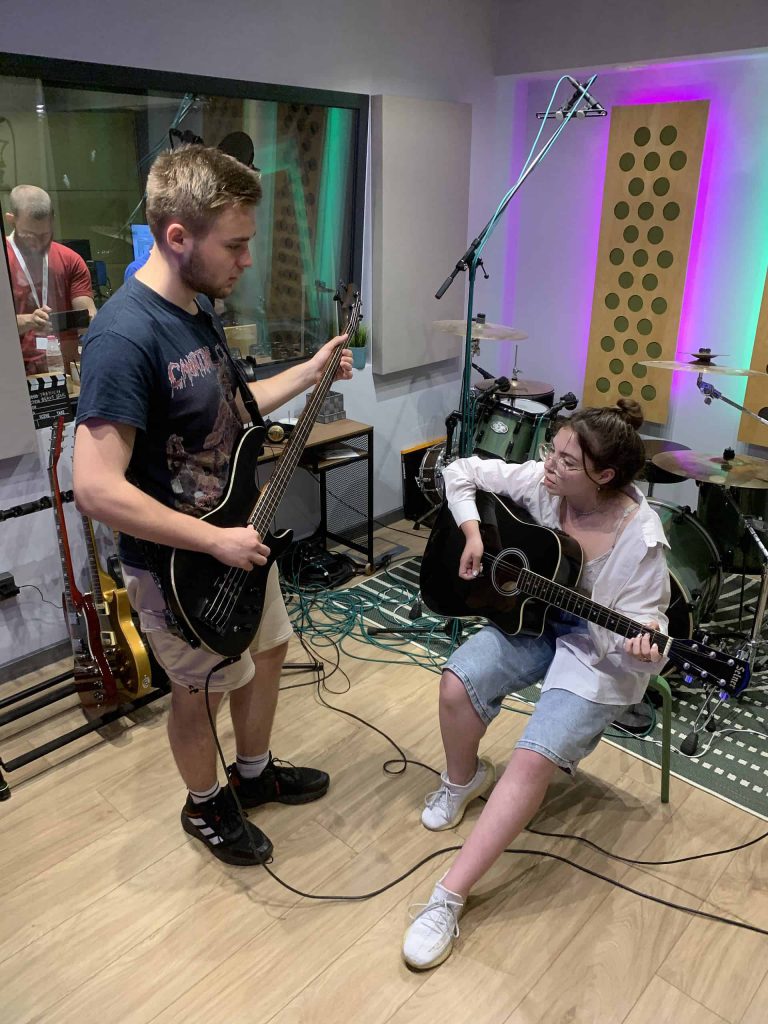
During the camp, Polina played guitar and recorded a Ukrainian song about hope and the future in a professional-standard studio. A fellow student attending the summer school from Lithuania filmed the experience and created a short video for social media.

“The summer school was an opportunity for me to distract myself from the reality of life in Ukraine and to gain a lot of new knowledge to help build my future career,” she said. “We worked so enthusiastically on our projects and attained a really high level.”

“The camp had an atmosphere of peace, mutual support and friendship. It was a place where dreams could come true. I had always dreamed of recording a song in a professional studio. I was so pleased we recorded a Ukrainian song; it was very important for me. I have a lot of precious memories from this summer school.”

Ihor’s work featured experimental approaches to the use of light in photography and images of his fellow camp participants.

 “Thank you to the new friends and teachers who were with us all the time,” he said. “I had a lot of fun, and I’ll remember this—the memories will stay in my heart.”


Teens from Ukraine with others at a summer school in Bulgaria that focused on photography, video and audio production. Credit: World ORT.

World ORT helps Ukrainian teens enjoy summer school abroad

This article first appeared in The Jewish News.

World ORT helps Ukrainian teens enjoy summer school abroad

The program deepens ORT students’ experience in photography, video and audio production taught by professionals.

World ORT, a global education network driven by Jewish values and innovation, has helped three Ukrainian teens participate in a summer school in Bulgaria by facilitating their departure from the war-torn country. 

The three students, Natan, 15, from Bila Tserkva in the Kyiv region, Ihor, 15, from an ORT school in Kyiv and Polina, 16, from the ORT school in Zaporizhzhia, traveled thousands of kilometres across the border to Poland, and then flew to Sofia in Bulgaria to attend the two-week program.

The program deepens ORT students’ experience in photography, video and audio production taught by professionals. Ihor chose to focus on photography skills, Natan studied video editing, and Polina took an audio production course.

Anna Chumakova, an ORT Ukraine staff member based in Kyiv, joined the the three teenagers, saying they were “so excited to take part.”

“Combining the opportunity to have a distraction from life at home and the constant air raids with the chance to learn so much and have this priceless experience, was really an amazing thing,” Chumakova added.


Polina, Natan and Ihor traveled thousands of kilometres on the road across the border to Poland, and then flew to Sofia in Bulgaria to attend the two-week program. Credit: World ORT

Polina said the summer school was an opportunity for her to distract herself from “the reality of life in Ukraine – and to gain a lot of new knowledge to help build my future career. We worked so enthusiastically on our projects and attained a really high level.”

“The camp had an atmosphere of peace, mutual support and friendship. It was a place where dreams could come true. I had always dreamed of recording a song in a professional studio – I was so pleased we recorded a Ukrainian song, it was very important for me. I have a lot of precious memories from this summer school,” she added.

Ihor expressed his gratitude to his new friends and teachers, saying: “The memories will stay in my heart.”

Throughout the 18-month-long war in Ukraine, World ORT staff and supporters across ORT’s global education network have worked to support the thousands of ORT Ukraine students, teachers, staff and their families affected by the violence.

“Natan, Ihor and Polina have had a life-changing opportunity – gaining valuable digital skills that will give them a head-start as they look to build their careers in digital industries,” Dan Green, World ORT Director General and CEO, said.

“This is at the heart of what ORT has done for more than 140 years. Adapting to ensure we continue this provision during a time of conflict is something that brings me and our professional team enormous pride,” he added.