Making the World a Better Place: ORT Students Join Global Project Promoting Jewish Values

Students from ORT schools in six countries created products that allowed a paralysed man to eat independently and a teenage stroke victim to play the guitar again.

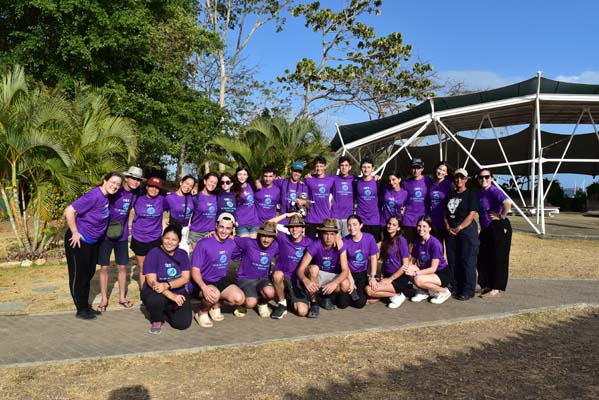
The teenagers, aged 14 to 16, from schools in Spain, Italy, Mexico, Brazil, Costa Rica, and South Africa, attended the ORT-affiliated Colegio Hatikva in Barcelona to take part in the Tikkun Olam Makers (TOM) project, which is designed to help improve lives.

It was the first time the Barcelona school had collaborated with international students, thanks to connections made through the ORT network, and the first time the other schools had taken part in the TOM project.
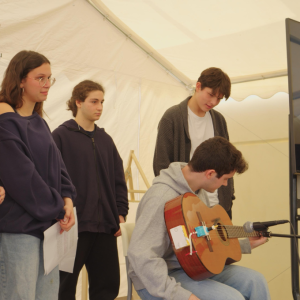
Students show the guitar implement they designed

Students show Bernat the tool they designed to enable him to play the guitar again

A total of 35 students from Colegio Hatikva – which organised the week – and another 25 students from ORT Colegio Estrella Toledano, Madrid, Spain; Colegio ORT Olamí, Mexico City, Mexico; Scuola Della Comunità Ebraica, Milan, Italy; Instituto Dr Jaim Weizman, San José, Costa Rica; King David Linksfield High School, Johannesburg, South Africa; and Escola ORT, Rio de Janeiro, Brazil, took part.

TOM is a movement of around 70 communities around the world that try to provide affordable solutions for the challenges of people living with disabilities, the elderly, and the poor.

Roger Guerrero, Colegio Hatikva’s Co-ordinator of Innovative Technology and Education, has been working on the TOM project since its adoption by the school three years ago.

“It was amazing,” Mr. Guerrero said of this year’s participation. “It was the first international TOM project in Spain, and it went better than expected.

“We try to make the world a better place. It’s not only about teaching the students innovation and technology; it’s about teaching them the values that make us civilized.

“Through this project, our students realise how lucky they are, and they learn what it means to help others who are in need. We wanted to share these values and innovation with other schools.”

Colegio Hatikva student, Ariel, 15, said: “The Tom project Makeathon was fun. We learned a lot about leadership and design. I loved the fact that we worked with students from other countries. Helping people with needs was very emotional as some of them didn’t think they could do some activities again.”

Alan, from Colegio ORT Olamí, said: “I enjoyed working with people my age from other countries and finding out what their community is like as well as solving problems for people.”

Amber, Demi and Ruby, a trio of South African students who joined the initiative, said: “This was the most remarkable and unforgettable experience, and we are so grateful to have had this opportunity. We encourage everyone to get involved as the skills you learn are unbelievable, including design thinking, working in teams across cultures and presenting to a wide audience.”
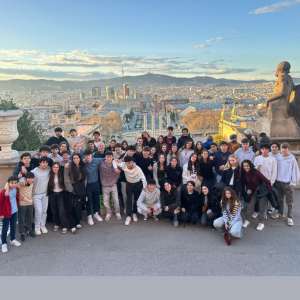
Students take time out to visit Barcelona

The students took time out of their designing schedule to be tourists

The Makeathon normally only involves university students. Colegio Hatikva is believed to be one of the only participating schools. It was while attending the World ORT Hatter Technology Seminar in London last November that Mr. Guerrero discussed the project with peers from other ORT schools.

The overseas students were hosted by Colegio Hatikva families and the students did everything together. “They enjoyed it a lot, and they gained much more than pure knowledge – they learned how they can improve the world with technology. They are not just using technology, such as TikTok or Instagram, in an individual way; they are using it to improve the lives of others,” explained Mr. Guerrero.

As part of the Makeathon project, students meet people with disabilities to discuss their daily challenges, discover what solutions they have tried, and how they feel their situation could be improved.

The school has collaborated with the Institut Guttmann in Barcelona – which supports people affected by spinal cord injury, acquired brain injury, and other neurological disabilities – as well as hospitals to assess options available to patients. Colegio Hatikva’s students then work on a prototype, continually improving it following feedback from the end user until it becomes “a product they can use for the rest of their life”, says Mr. Guerrero.

This year, students heard from 19-year-old Bernat, who had suffered a stroke that left him with limited mobility on his right side. Among his greatest frustrations was that he could no longer play the guitar, so students used 3D online modelling program Tinkercad and 3D printing technology to create a support that allowed him to stabilise the instrument and play it with one hand. Bernat said that being able to play the guitar again felt like “recovering a part of myself”.

Students also created a tool, costing less than €1, for a patient who could not independently feed himself. The tool slotted into a spoon, allowing him to hold the implement. “Now he can eat alone,” explained Mr. Guerrero.

Joined by their parents, some students also created 12 children’s wheelchairs for a local hospital. Another item they designed was a micro:bit a pocket-sized computer for software and hardware programming – for visually impaired people, making it 10 times bigger than usual so users are better able to connect the wires. “We are not reinventing the wheel – we are trying to make things easier for people,” explained Mr. Guerrero.

Bernat, for whom the guitar tool was created, said: “Doing these things helps a lot of people and, a year later, I can play the guitar again.”

Mr. Guerrero said the school’s implementation of the TOM Project had been so successful that many other institutions around Spain were keen to take part and he hoped to widen its reach even further next year.

Ari Messer, Principal of Colegio Hatikva, said: “Our school transforms into a pioneering and innovative one in terms of Jewish innovation, instilling Jewish values. It is helping society, tikkun olam, illuminating the world.”
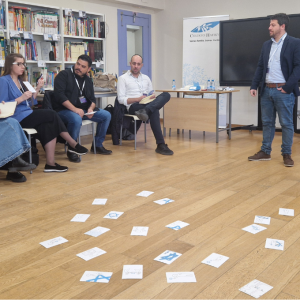
‘This Seminar Deepened My Jewish Identity’

Dean Shannon, Jewish Education Teacher at Sir Manasseh Meyer International School, Singapore, reflects on his experience of the 2025 Jewish Educators’ Seminar

Despite being a Jewish educator for more than 10 years, I have rarely had professional development opportunities that tackled specific needs and ideas relevant to this world.

Facing our own challenges and ideals, the field of the Jewish educator can be a lonely one. This has been exacerbated in a post-October 7 world. I needed this Jewish Educators’ Seminar.

 I was a little sceptical about the seminar in advance. I questioned how suited I might be to an academic approach to Jewish education, but the seminar was filled with wisdom, depth, inspiration and even tears.

The speakers were excellent, the content was thought-provoking, and it was a privilege to share a room with all of the people involved. It was an incredible few days and the seminar exceeded all expectations.

 The ORT team who organized and led the seminar catered to our every need (and literally). The four-day program was outstanding. We covered an incredible range of topics and were exposed to a vast array of practical ideas that we can now implement in our classrooms.

One of the highlights was an exploration of classical Jewish sources on ecology. The session started with the leader hanging texts on a washing line. We were encouraged to look at the sources from ‘different angles’ and then choose the text with which we most identified. This then led into a chevrutah-style learning session and demonstrated the extent to which Judaism contains powerful wisdom to face 21st century challenges.

Damián Weber of Colegio Hatikva reflects on Jewish identity post-October 7

Further invaluable opportunities included a guided online tour of Sefaria and the National Library of Israel. These practical sessions provided insights in how to enable students to discover and utilise primary sources to enhance their Jewish identity. We even explored how to best use AI in the classroom to facilitate our teaching.

We were in tears and in deep contemplation during a post-October 7 activity that explored identity through artistic postcards. A session on the symbolism of food had us considering how powerful ‘culinary stories’ can be in connecting to our Jewish identity.

The walking tour of old Jewish Barcelona provided insights into the importance of ‘urban space’ in education and the Xueta Island movie screening demonstrated the depth, breadth and tragedy of Jewish history. Despite being a terrible artist, the most memorable and enjoyable session was one on Midrash and art.

I am now more confident in delivering a similar creative lesson to my capable students. Each session provided me with insights and ideas that will not only enhance my teaching practice, but has further deepened my own Jewish identity.

The other educators, who were involved in Jewish education and hailed from all over the world, were truly inspiring people, each with an incredible story. We shared, we debated, we laughed, and we cried.

Despite our different nationalities, backgrounds, and opinions, the common denominator was that we all believed in the importance of supporting Jewish education and giving Jewish people the ability to connect meaningfully to their heritage and identity.

I am grateful for all the incredible work ORT does. The Jewish Educators’ Seminar demonstrated how deep, profound, diverse, and beautiful is Judaism. The team made us feel like superheroes who are here to deliver our message to the next generation and to help make the world a better place. Am Yisrael Chai!

ORT Seminar was a ‘Catalyst for Growth, Connection, Inspiration’

Educator Juan Carlos Porras from the Instituto Dr. Jaim Weizman, Costa Rica, reflects on his experience of a World ORT program in Mexico City.

Participating in World ORT’s Global Citizenship Education (GCE) seminar was an incredibly enriching experience that exceeded all my expectations. I arrived at the event full of anticipation, eager to dive into new ideas and connect with fellow educators passionate about promoting global citizenship.

Although I had previously been a mentor in the YEP program, this was my first time attending an in-person ORT event, and I was excited to engage directly with the ORT community.

From the very beginning I felt truly welcomed. Everyone from the organization greeted us warmly, making us feel like part of a close-knit family. The sense of unity was clear from our first dinner together, even before the official activities started. There was an immediate connection among participants, which created an atmosphere of collaboration and open-mindedness. Sharing stories and experiences during that initial meal set a positive tone for the days ahead, breaking down barriers and fostering new friendships.

The talks were deeply inspiring, filled with real examples of how GCE can be applied in everyday life. The speakers didn’t just share theories; they presented practical insights, success stories, and challenges, making the concepts relatable and actionable. Seeing the passion the guest speakers had for their projects was especially motivating.

The days were busy and energizing, packed with well-planned activities designed to make the most of our time. From morning sessions to evening reflections, every moment was used effectively. Despite the full schedule, the energy remained high, thanks to the excellent organization and the shared dedication of everyone involved.

Holding the seminar at Colegio Olamí ORT was a very meaningful experience. We got to see GCE in action – not just through the activities we were doing but also by observing how the school operates and prepares its students to be global citizens aware of the world around them.

Experiencing the school’s approach firsthand was eye-opening. We joined classroom activities, interacted with students, and saw innovative teaching methods that integrated GCE principles seamlessly. Building water filters with students in the Maker Space was a highlight – not just a hands-on project, but a real example of addressing global issues like water scarcity. Seeing the students’ enthusiasm and understanding of global challenges reinforced the impact of GCE on young minds.

All the activities were thoughtfully organized, balancing theoretical lectures with hands-on learning. On a personal level, the experience was profoundly moving and touched me deeply. The visit to the Casa Tochan Migration Center was especially impactful. Hearing personal stories from migrants gave us profound insights into global and local issues, highlighting the human side of topics often discussed in abstract terms. The tour of the Museum of Memory and Tolerance was both sobering and inspiring, emphasizing the importance of tolerance, human rights, and learning from history to build a better future.

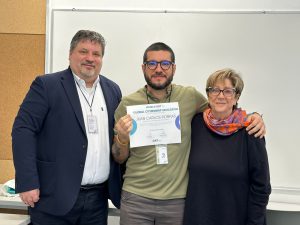
Juan Carlos at the end of the seminar with Daniel Tysman, Head of Education Department, and Amelie Esquenazi, World ORT Representative for Latin America

The group of participants was fantastic: educators from different backgrounds and countries, all united by a common goal. There was always a strong sense of camaraderie, and meaningful conversations could happen at any time – during sessions, meals, or informal gatherings. We shared professional experiences, personal stories, cultural perspectives, and educational philosophies. One of the most valuable takeaways is the network of contacts and friendships formed during the seminar. I feel that all the schools present truly left with the understanding that we are a global community that needs to work together.

We immersed ourselves in the vibrant culture of Mexico. Exploring Mexico City, enjoying its cuisine, and experiencing its rich history added an extra dimension to the seminar. We visited local landmarks, engaged with the community, and embraced the city’s energy, leaving us captivated by its beauty and spirit.

This experience not only strengthened my commitment to Global Citizenship Education but also had a profound effect on my personal and professional outlook. I return to my school with renewed enthusiasm, equipped with new strategies, resources, and a broader perspective on integrating GCE into our curriculum. The seminar reaffirmed the importance of fostering global awareness, empathy, and responsibility in our students. I’m excited to share these insights with my colleagues and to start collaborative projects with the new connections I’ve made.

In looking back, the seminar was more than an educational event; it was a catalyst for growth, connection, and inspiration. It reinforced the idea that education is a powerful tool for change and that as educators, we have the responsibility and privilege to shape the next generation of global citizens. I’m grateful for the opportunity to participate, and look forward to continuing the journey of promoting Global Citizenship Education in our schools and communities.

Juan Carlos Porras is a design teacher and integrator of technological education at the ORT-affiliated Instituto Dr. Jaim Weizman in Costa Rica

Global Citizenship Education: Making Mensches in a Modern World  

We nurture our children to be mensches. Today, across our global network of ORT schools, we prioritize Global Citizenship Education as a catalyst to that end.

At Colegio Olamí ORT in Mexico City this month, educators from around Latin America, including Peru, Panama, Mexico City, Colombia and Costa Rica, convened to take a deep dive into Global Citizenship Education (GCE), one of World ORT’s flagship programs.  

This enriching professional development opportunity took educators on a journey to explore the different facets of GCE, equipping them with the tools to foster a sense of global awareness and responsibility among their students, integrating the principles into classroom lessons and their school culture. The seminar featured a rich program of discussions led by experts in the field, collaborative activities and interactive workshops to enlighten and inspire participants.  

Defining Global Citizenship Education

The seminar featured expert-led discussions that guided the participants to develop a theoretical foundation for the definition of GCE. Participants explored the broad definition of GCE, honed in on ORT’s focus, and crafted a personalized definition relevant to their schools.

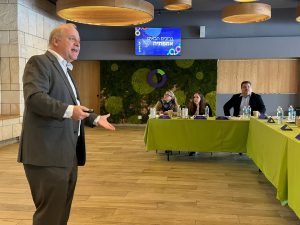
Dr. Moises Salinas Fleitman, Rector of Universidad ORT Mexico, delivered the keynote presentation, “Why Global Citizenship Education?”. 

Another popular session with the participants was led by Dr. Tamara Kolangui, Director for the Shimon Peres Chair for Peace, titled: “What is Peace Education and How is it Connected to Global Citizenship Education?” 

Dr. Moises Salinas Fleitman, Rector of Universidad ORT Mexico, delivered the keynote presentation, “Why Global Citizenship Education?”.

A Case Study: Colegio Olamí ORT

Participants put theory into practice and delved into how GCE might look in their own schools. 

They used Colegio Olamí ORT as their learning lab, touring the school with staff to investigate how Olamí, which is heavily invested in GCE, makes it come to life. 

Orly Picker and Mariana Piven, educational leaders at the school, demonstrated how their teachers explore global citizenship with their students through the educational model of project-based learning. 

Jorge Arditti, Founder of the We Are Water Foundation, spoke about innovative education on water issues, followed by the group working alongside students in the school’s Maker Space to collaboratively build a water filter like those seen around the school.

The humanitarian organization CADENA led an interactive workshop showcasing Olamí students and their involvement in the organization and left with an invitation to bring CADENA programming to our ORT schools.  

GCE in our World 

Participants zoomed out and explored GCE both on a communal and global level. The group was transported outside of the four walls of the Olami classrooms to witness first-hand Global Citizenship in Mexico City. Hearing personal narratives at a site visit to Casa Tochan Migration Center inspired our educators to think about how to bring local issues into their own students’ lives.  

The group also visited the Museum of Memory and Tolerance, whose mission is to disseminate the importance of tolerance, non-violence, memory and human rights. They had a private tour of the exhibits and met with museum staff to hear all that they have to offer to bring the museum to their schools through curriculum, virtual tours of the exhibits and webinars. 

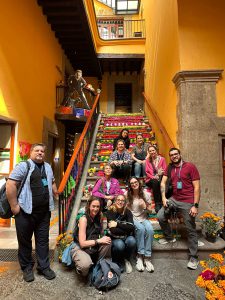
The group of educators on location in Mexico City

Next Steps

At the conclusion of their intensive study, these newly formed thought partners collectively chose joint projects to move forward in our Latin American schools, using the new information and resources acquired during the seminar. 

Our seminar participants who came as individuals definitely left Mexico City as a community of practice ready and highly motivated to roll up their sleeves to integrate Global Citizenship Education into their schools. 

Conversations that sprouted wings at the seminar about collaborative programming and individual projects will plant roots back at schools in the weeks to come.

Exemplifying our values: Harmatz Award Winners Celebrate Success

What do socks, chess and aquatic ecosystems have in common?

Believe it or not, they have all inspired a series of meaningful student projects that have been recognized as part of World ORT’s leading social responsibility program.

The 2024 Gina and Joseph Harmatz Award winners highlight the positivity of Tikkun Olam, teamwork, a sense of belonging, forward-thinking attitudes and problem-solving skills.

For students at the ORT-affiliated King David High School Linksfield in Johannesburg, South Africa, it was a hat-trick of successes, with three teams recognized for their inspirational projects.

WATCH: The five winners of the 2024 Gina and Joseph Harmatz Award

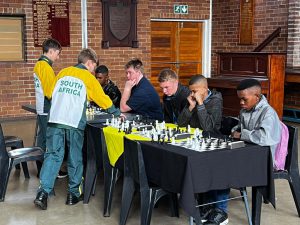
Among the winners were twins Caleb and Judah, whose ‘Every Move Matters’ initiative distributed chess resources to those less privileged.

They secured funding and collaborated with their local authority Department of Education to support other children and provide enhanced educational opportunities through chess.

The brothers, aged 13, have already been national chess champions in four different age groups.

They said: “Chess has transformed our lives in ways we never could have imagined – the strategies, the focus, the friendships. It has been an honor to represent our country and a life-changing journey. And now we want to share this incredible game with other kids. We believe every kid should have the chance to explore the world of chess.”

The brothers at the chess club in Johannesburg

A four student team from Escola ORT in Rio de Janeiro, Brazil, designed an app to raise awareness of freshwater species and promote the conservation of aquatic ecosystems. The app allows users to assess the water quality of nearby rivers and lakes, identify threatened creatures living there and access information on conservation techniques. Their ‘WaterWise’ project encourages the public to be more aware of conservation and sustainability, with the goal of creating a well-informed society.

Back at King David Linksfield, the school’s 75th anniversary was celebrated with a fundraising campaign to improve the lives of vulnerable children through the creation and sale of funky socks.

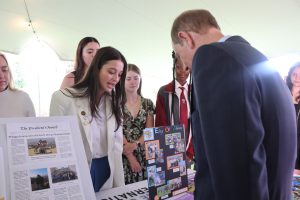
Student Gabi sourced materials, created sock designs and planned a marketing campaign as part of her efforts. In doing so she raised more than $10,000 and was invited to a reception at the British High Commission in Pretoria where she met dignitaries including Prince Edward, the Duke of Edinburgh, and South Africa’s Deputy Minister of International Relations.

Gabi said: “I am so proud of the success of this initiative because it exemplifies my personal values of community, outreach and Tikkun Olam. Not only have Jewish children benefitted from this initiative but also the children from the Kids Haven charity and the wider South African community too.”

Gabi explaining the initiative to Prince Edward, the Duke of Edinburgh

A group of students at the ORT Technology School in Moscow, Russia, created a social club for peers with developmental challenges and health conditions (main image). Meeting at school once a week, the club’s aim is to give children who are often isolated the opportunity to socialize, take part in specially co-ordinated quizzes and games, and to learn how to cook.

Team member Diana explained how a quiz for hearing-impaired children worked: “The kids wrote their answers on paper or showed with their hands. The main thing is not the way you speak or whether you can answer in a loud voice. What is more important are your emotions, your desire to communicate and the warmth that you are ready to share with another person.”

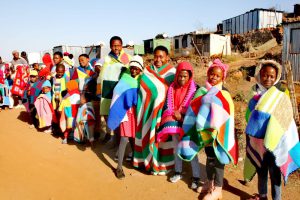
The final group of winners in Johannesburg created the ‘Woven Wishes’ initiative. Benjamin and Julia, a brother and sister team, sought to incentivize the knitting and donation of knitted squares from students across the city. They then partnered with an NGO which teaches unemployed women from a township new skills and roles in which they join the squares, creating blankets which can be sold for income or donated to those in need.

The siblings collected more than 200 knitted squares and have a goal of 5,000 for 2024.

Beneficiaries of the blanket project in South Africa

Other entrants in this year’s Harmatz Awards included a student from Mexico who welcomed Israeli peers into their community after the October 7 attacks, the creation of an app tackling pollution in Rio de Janeiro, a Russian flash mob project encouraging healthier lifestyles, and a boxing club in Johannesburg which promotes better mental health and physical outcomes for young people.

Prizes in the competition are awarded in memory of the late Gina and Joseph Harmatz, who played pivotal roles in ORT’s history.

Joseph Harmatz was Director General of World ORT in the 1980s and 1990s. He was a partisan who was regarded as a hero of Lithuania’s resistance movement against the Nazis.

Gina Harmatz escaped Nazi persecution in western Europe in the 1930s and 1940s before settling in Israel. She was renowned for her graciousness and the importance she placed on family relationships, and concern for the welfare of others.

Ecology Summer School – A Hands-On Learning Experience in the Panama Rainforest

The 2024 World ORT Ecology Summer School has taken place in Panama. This regional summer school, which runs in Spanish, brings together ORT students from our Latin American and Spanish schools who are passionate about ecology.

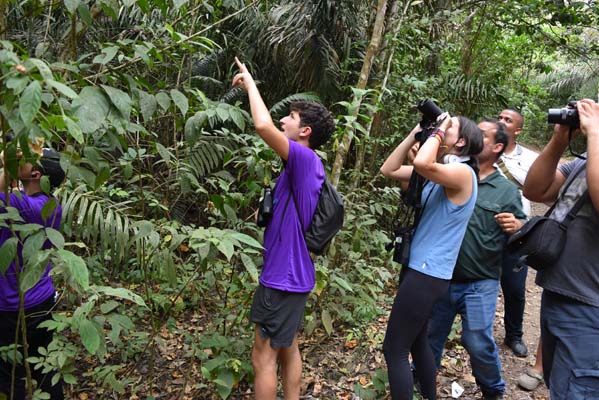
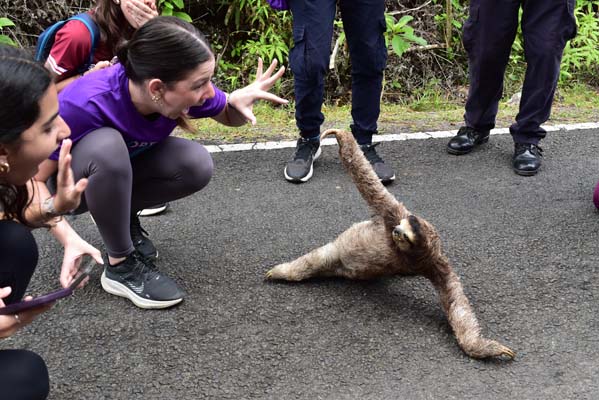
Twenty-one students aged 15-17 from Brazil, Colombia, Mexico, Panama, Peru, Spain, and Venezuela, along with ORT teachers Ximena Grandez Breña (Peru) and Tania Amilburu (Spain) spent two weeks in the Gamboa Rainforest in Soberania National Park, working with experts from the Smithsonian Tropical Research Institute and Adopta Bosque, a non-profit NGO promoting rainforest conservation, conducting scientific ecological research.

Guido Berguido, the founder of Adopta Bosque, along with his team of experts, Chelina Batista, Ana Portugal and Ryan Oniel, worked closely with the students and guided them through their hands-on and interactive, independent research study projects. The students immersed themselves in the rainforest and gained a firsthand experience of what it would be like to be a scientific researcher, collecting and analyzing data across a range of projects.

Daniel Tysman, Head of World ORT’s Education Department, summarized the trip and said: “Although they were only together for 12 days, these ORT students were quick to connect with each other and collaborated well on their research projects. They not only improved their scientific research skills, but gave expert presentations of their analysis of the data at the end of the process.

“We present them with the richness of the rainforests and encourage them to zoom in on the details. Through this process they develop a deeper understanding of the value of these incredibly complex but ultimately endangered ecosystems and their responsibility for conservation.”

Elias, aged 15, from Colegio ORT Olami in Mexico, said: “My highlight is the research that we did in the jungle. We spent three days, three hours a day in the jungle researching the information. I want to thank ORT for making this trip possible. It’s an amazing opportunity to meet new people and to learn a lot about mammals, birds, and plants.”

Dana, aged 15, from Colegio Moral y Luces ‘Herzl-Bialik’ in Venezuela, said her highlight was “when we went to the jungle in the middle of the night searching for bats and learning more about them”.


One of the unique aspects of this experience for the students was the opportunity to build bonds and form connections with peers from different countries, learning from each other and sharing their differences and similarities.

Karen, aged 16, from ORT Colegio Estrella Toledano in Madrid, Spain, said: “I have made a lot of connections with a lot of people here, but I would mostly have to highlight that we are all so different from each other, we talk differently, we have cultures and different tastes in music and food. Going on the buses to the different excursions, we saw a lot of that difference through music… I’ve learnt a lot of that from the people here.”

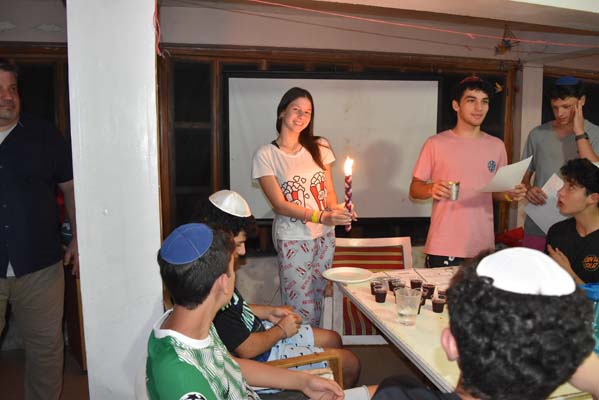
During the program the students experienced Shabbat – a great opportunity to see the connections they had formed. A mixture of students from different countries came together to lead a discussion session on Friday night, analyzing Jewish texts and concepts and engaging in a heart-warming Havdalah ceremony the following evening.

Ximena, an ORT teacher from Colegio Leon Pinelo, Peru, commented: “The Jewish community is very close to each other and help each other and experience everything together. Here I have seen even though we are from different countries, all students share the same Jewish culture and feeling. When we celebrated Shabbat everyone knew what they were talking about or most of them knew the songs and prayers, and all hugged each other. It was a very special moment for me as a teacher to experience and I feel very fortunate for that.”

Towards the end of the summer school, once the students had finished collecting their research and working together in the groups to analyze the findings, the students then presented their research projects to their peers and demonstrated their skills and learning from their experience.

The research projects included analyzing leaf-cutter ants with a group comparing the differences between the leaf-cutter ants in Pipeline Road and Sandero de la Laguna, analyzing if the ants prefer to carry branches and different types of leaves, seeds, and fruits between the two places. The second group researched lichen on trees and their relationship with the ants. This group compared three different sites and analyzed the percentage of ants in these places, specifically looking at the ant nests on the trees to see if there was a difference between the position of the nests.

The third group analyzed shrubs and plants, comparing the differences in height, width, composition of leaves, organisms inside the plants and plant colors between those close to water and those further away. The fourth group researched Azteca Ants, comparing the location of their nests on the trees. They were analyzing the quantity of nests, the height of the trees, looking at the relationship between other plants and animals, the shape of the nest, the position on the tree and the light and temperature around the environment. The final group researched the interaction between monkeys and the forest. They analyzed their eating habits, the monkeys’ relationships with other animals, their behavior and monkey group dynamics.

Galiana, aged 17, also from Venezuela, said: “After we did the investigation of finding each shrub in different areas and microhabitats, we found out they have different physical characteristics that identify them in their different areas. In the moist and in the dry areas we found out that the shrubs and bushes had differences in the quantity of their leaves and the health of them. We found out that if they are near to water, they have less damage in their leaves and if they are in a drier area, they’ll have more damage in their leaves. We also could identify their difference in height, and their difference in centimeter by diameter and we could also identify their differences in lichens, in fungus and in their color.”

Along with the high-level scientific concepts that the students were able to grasp and develop during their time on the program, they were also able to immerse themselves into the Panamanian culture and experience more of the country. When the students weren’t busy in the field they were also given the opportunity to explore the country and culture and the highlights of the trip included visiting the Panama Canal, meeting with the indigenous Embera-Wounaan tribe and learning about their culture, visiting historical sites of key importance such as Fort San Lorenzo and there were trips to Punta Culebra Nature Center where they learnt about marine life.

VIEW THE PHOTOS

WATCH THE YOUTUBE PLAYLIST

Watch the highlights

Ilan from Mexico, Ecology Summer School participant

Ximena, Teacher from Peru, Ecology Summer School

Ongoing Challenges as Ukrainian Students Return to Classrooms

Thousands of ORT students are returning to their classrooms across Ukraine this month, despite the continuing attacks on the country.

Many will be enjoying lessons in person for the first time since the start of the war more than 18 months ago. Others are continuing to take part remotely, using online learning platforms.

All ORT schools in the country have opened the academic year with face-to-face classes running alongside hybrid options, except in Odesa and Zaporizhzhia, which remain too close to the front line and face a wider range of security issues.

Shoshana Kandel, Head of World ORT’s International Coordination Unit, said: “The impact of the war is still heavily felt at all our schools. A significant number of people have fled their home cities and are currently categorized as ‘internally displaced’ – effectively as refugees within their own country. Others who left Ukraine soon after February 2022 remain abroad but are also restarting classes online.”

Ukraine’s children have faced significant learning loss due to repeated setbacks since 2020. They are now entering their fourth consecutive disrupted academic year. A recent UNICEF report revealed that 57% of Ukrainian teachers have seen a deterioration in their students’ Ukrainian language abilities. Up to 45% have lost skills in math and more than half have deteriorated in foreign languages.

ORT schools appear to be faring better thanks to the direct support provided, teacher training and the efforts taken to protect students during their time on-site at school. Parents have reported these as being among the reasons they have registered their children to learn at reopening ORT schools.

The huge influx of people to Kyiv means that at the city’s ORT Educational Complex #141, a new class has opened in the 6th grade entirely to accommodate children who have moved to the city.

The school basement is undergoing major refurbishment works, similar to in many older buildings in Kyiv, to make it suitable for use as a shelter. The plans will allow the school to bring back all children whose families want them to engage in face-to-face learning. The complex works are expected to be finished in the coming weeks.

To further ensure safety and maintain a sensible balance of students in the school at any time, the high school is encouraging more distance-learning days for teenagers. The total number of students resuming in-person classes is now more than 1,000 – almost double the number from the last academic year.

At the Jewish State Educational Complex ‘ORT-Simha’, also in Kyiv, the balance is different, with the majority of the school’s 350-plus students remaining abroad and learning online.

At our schools in Chernivtsi and Bila Tserkva, the majority of families and children have returned home and are back to in-person schooling.

Unfortunately the circumstances in Odesa and Zaporizhzhia remain more critical. The government is overseeing the renovation of a basement at the Odesa ORT Zhabotinski School #94 with the intention of completing the work by October 1.

Ms Kandel added: “We are hopeful that the school will return to in-person classes by mid-October, pending the successful completion of these renovations. Our main need will be to restock the shelter and purchase necessities such as furniture, mattresses, blankets, warm clothes, and food supplies.”

An alternative building is being sought for the ORT ‘Aleph’ Jewish Gymnasium in Zaporizhzhia. Constant air strikes on the city are making it hugely challenging to find premises with suitable shelters for students and staff and are also disrupting online learning. Around 425 ORT students in the city are registered for the new school year.

In total, ORT Ukraine expects to educate around 3,800 students this year – although the number is ever- changing due to the circumstances. Around 400 ORT teachers will be guiding our students, with all but a handful working in Ukraine.

“Maintaining Jewish education is a major concern for us,” said Ms Kandel. “This is due to the ongoing shortage of Jewish studies teachers from Israel and the lack of local teachers specializing in Jewish studies.

“Ukrainians are already looking ahead to the winter with concern. It is likely that in Odesa the resumption of in-person classes will require new equipment and electrical repair work – a more powerful generator may be necessary. Greater use of these facilities will likely lead to additional challenges and the need for more repairs and funding.”