World ORT has held its annual meeting in Vilnius, Lithuania, convening senior professionals and key lay leaders from across its global network.
The gathering , between May 3 and 7, marked the organization’s first major convening as a unified global entity following the March 2026 merger of World ORT and ORT America and formally recognized a leadership transition. Michael Perlmuter, Chair of ORT America, and Robert Grey, Chair of World ORT, concluded their tenures, and Jon Levine was recognized as Board Chair of a unified World ORT.
The transition reflects years of deliberate planning and a shared commitment to positioning the organization for its next chapter.
Two Leaders, One Legacy
Michael Perlmuter and Robert Grey (pictured above with Dr. Louanne Smolin, Executive Committee Board member, World ORT; Simon Alberga, Vice-President and Secretary, World ORT; and Dov Ben-Shimon, Chief Executive Officer, World ORT) played defining roles in shaping ORT’s modern evolution, guiding the organization through periods of growth and complexity and, ultimately, toward unification.
Their leadership laid the groundwork for a more aligned global organization and ensured continuity during a critical period of change.
“Michael and Bob provided steady, principled leadership at a pivotal time for our organization,” said Dov Ben-Shimon, CEO of World ORT.
“Their governance helped make the merger of World ORT and ORT America both possible and successful. Because of their work, we are well positioned for what comes next.”
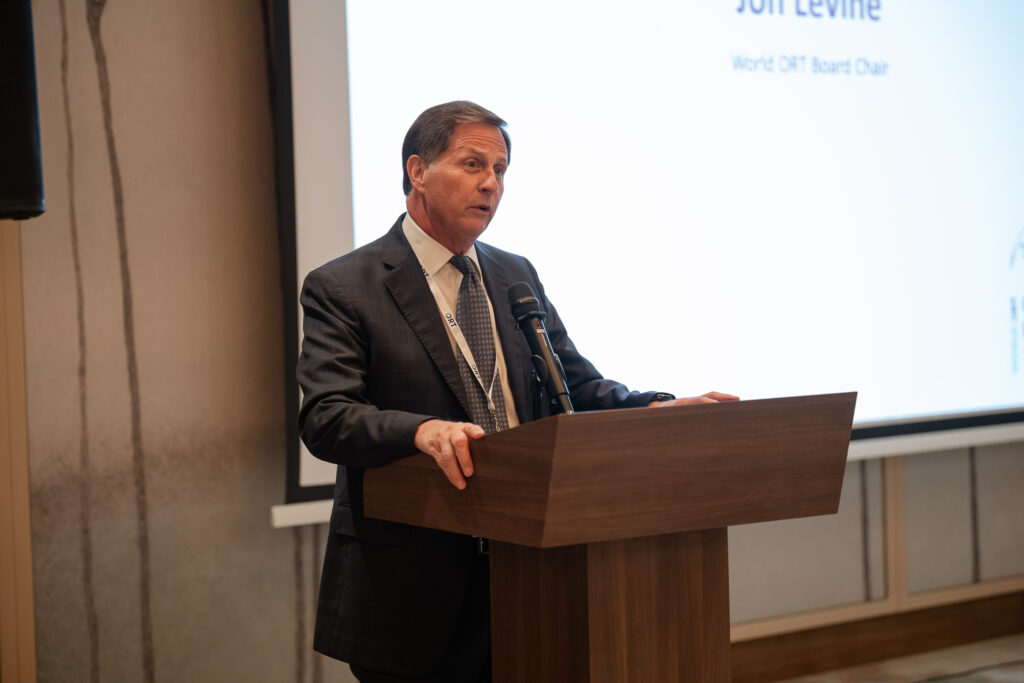
Board Chair Jon Levine addresses attendees of the 2026 Council of Representatives Meeting in Vilnius
Jon Levine Assumes the Role of Board Chair
As Board Chair, Jon Levine will focus on governance, strategic alignment, and long-‑term stewardship as World ORT begins its first chapter as a unified global organization.
He will work in close partnership with Ben-‑Shimon as the organization advances its mission worldwide.
“World ORT enters this next chapter with a strong foundation, thanks to the leadership of Michael and Bob,” said Jon Levine, Board Chair of World ORT.
“I’m honored to take on this role and look forward to strengthening impact across the global network.”
The Work Continues
The merger that united World ORT and ORT America was driven by the communities the network serves. Each year, World ORT impacts the lives of 80,000 students and 200,000 beneficiaries across five continents, advancing access to high‑quality education rooted in shared Jewish and human values.
From classrooms to communities facing poverty, displacement, or limited educational access, World ORT connects the Jewish world and strengthens the future through educational excellence, leadership development, and innovative programming in robotics, STEM, vocational training, and entrepreneurship.
###
About World ORT
Founded in 1880, World ORT is one of the world’s most far reaching Jewish educational networks, serving 80,000 students and 200,000 beneficiaries annually across more than 30 countries on five continents, with headquarters in New York and offices in London and Israel. Learn more online at www.ort.org
MEDIA CONTACT Alex Galbinski, World ORT [email protected] +44 (0) 20 7446 8502
World ORT, the global Jewish education organization serving approximately 80,000 students across more than 30 countries, today announced the establishment of the Mikhail Libkin Memorial Award for ORT History and Jewish Heritage. The award honors the memory of Mikhail (Misha) Libkin, the National Director and alumnus of ORT Russia, whose sudden passing has left a profound loss across the World ORT family.
Misha was a devoted champion of ORT’s mission and a passionate custodian of Jewish history and heritage. Throughout his career, he worked to make ORT’s story vivid and meaningful, connecting students and communities to the deeper roots of the organization and the wider tapestry of Jewish life. This award is established in that spirit.
“Misha believed that history was not something to be stored away. It was something to be shared, felt, and passed forward. This award invites students across our network to carry that belief into their own creative work,” said Dov Ben-Shimon, CEO, World ORT.
About the Award
The Mikhail Libkin Memorial Award invites students across the World ORT network to explore ORT’s global impact and the broader story of Jewish life, research key moments, people, and milestones in ORT and Jewish history, and bring them to life through compelling, original creative work.
The award is open to ORT students of all ages, individually or in small groups. Submissions may take any creative form, including documentary-style films, visual art, poetry, music, theatre, digital storytelling, podcasts, graphic novels, oral history interviews, and more. All entries will be evaluated on historical understanding, creativity and originality, communication and clarity, technical quality, and the depth of reflection they bring to ORT and Jewish heritage.
Submissions will open before Rosh Hashanah 5787 (September 2026). Winners will be announced around Chanukkah.
Endorsed by World ORT’s Executive Committee
The award has been formally endorsed by World ORT’s Executive Committee. Further details on the submission process, judging criteria, and how to enter will be shared with schools and network leaders in the coming months.
For more information about this award or other World ORT educational initiatives, please contact Sheryl Gold via email: [email protected]
###
About World ORT
Founded in 1880, World ORT is one of the world’s most far reaching Jewish educational networks, serving 80,000 students and 200,000 beneficiaries annually across more than 30 countries on five continents, with headquarters in New York and offices in London and Israel. Learn more online at www.ort.org
World ORT and ORT America have united, bringing together two organizations that have long shared a mission yet operated with distinction: one raised funds, the other developed programs.
Now, both will operate under the leadership of CEO Dov Ben-Shimon with headquarters in New York and offices in London and Israel. The announcement marks a defining moment for a cause that has never stopped evolving or wavered on why it exists.
A Promise Made in 1880 In 1880, Jewish life in Tsarist Russia was under siege. Legal restrictions barred Jewish people from most professions, owning land, and living freely outside the Pale of Settlement. When a group of Jewish leaders in St. Petersburg petitioned to establish an organization dedicated to teaching trades to impoverished Russian Jews, they were determined to improve their circumstances — they called it ORT.
That promise has proven itself across every generation since. From 1880 Russia to 30+ countries spanning five continents, World ORT has grown into one of the most far-reaching Jewish educational networks in the world.
What the Merger Makes Possible World ORT is positioned to deepen relationships with locally run schools, connect educators across borders, and direct funding more strategically to where the need is greatest. The ambition is not to standardize. It’s to strengthen. Every student in the World ORT network, wherever they are, should have access to the best that the network has to offer.
Dov Ben-Shimon, CEO of World ORT, said: “Even when situations are dire — poverty, war, displacement — ORT students can imagine a future. That is what World ORT has done for 145 years. And we will carry it forward for 145 more.”
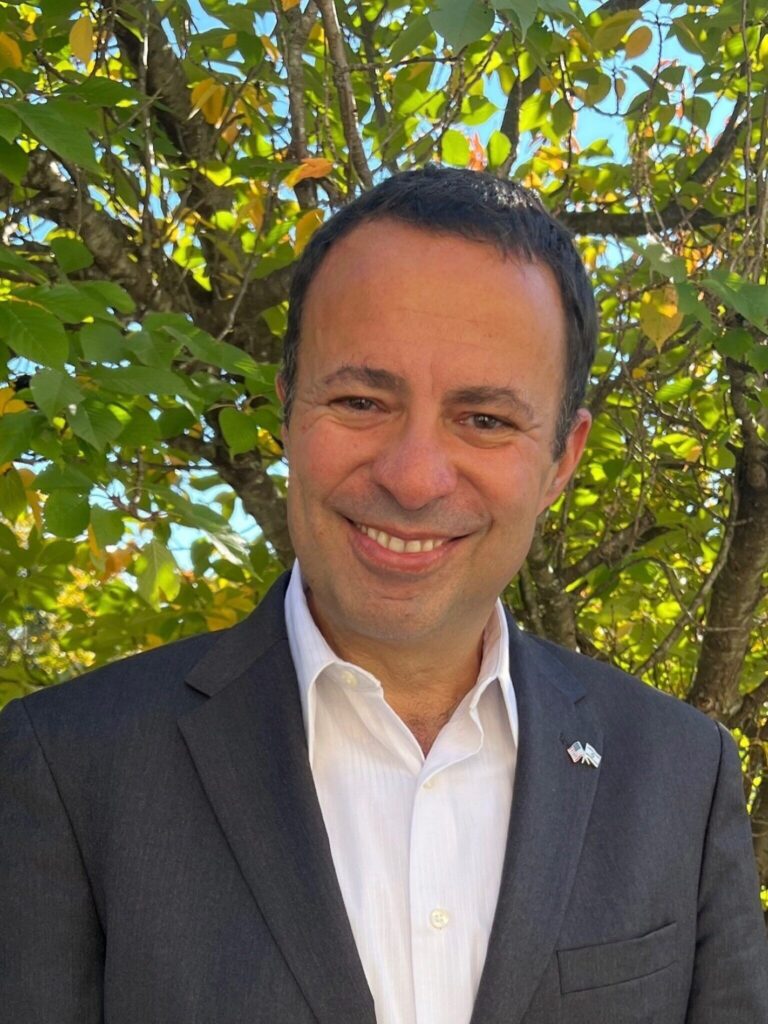
Dov Ben-Shimon, World ORT CEO
Jon Levine, Board Chair of World ORT, said: “World ORT doesn’t just teach skills. We also share the joy of Jewish Peoplehood, ensuring our students are both prepared for the future and proud of their identity.”
World ORT by the Numbers 145 years of impact · 30+ countries · 5 continents · 80K annual students · 200K annual beneficiaries
Watch the video created for the announcement below. For more information about the merger, visit ort.org/merger
Students from Escola ORT Brazil have won the 2025 World ORT Young Entrepreneurship Program (YEP) in the southern hemisphere.
Their winning idea was the establishment of social enterprise Solar Access, which aims to improve the lives of people on low incomes by increasing energy accessibility. The students’ pilot sought to provide 50 solar panels generating energy for 30 families.
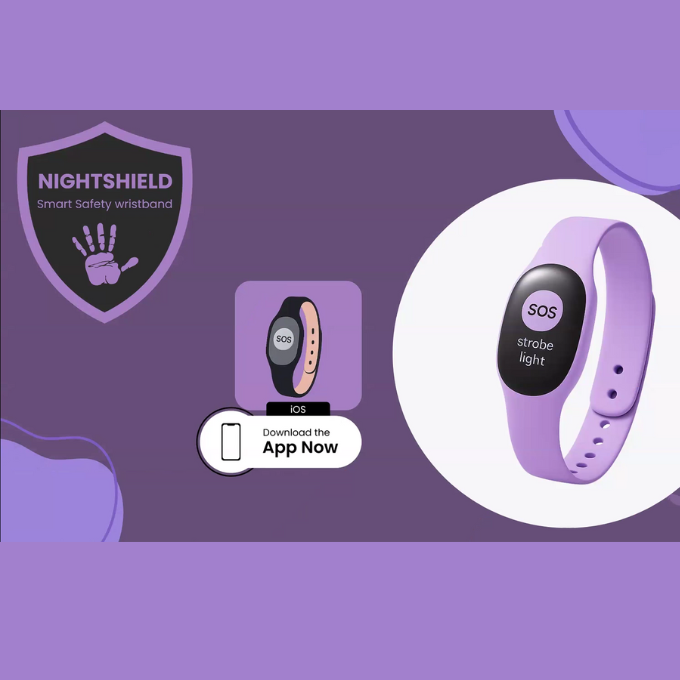
Students from King David School Linksfield, in South Africa, were the runners-up, with their design of a smart safety wristband that combats gender-based violence.
Nightshield, which has the tagline “empowering safety, everywhere”, was pitched as an affordable, rechargeable and life-saving device that would be of benefit in a country that has one of the highest rates of gender-based violence in the world. It features an SOS squeeze activator, glowing strobe light and automatic route tracker.
Students from seven schools in four countries – South Africa, Argentina, Brazil and Peru – took part in this year’s Southern Hemisphere program.
During the YEP competition – one of ORT’s flagship programs which helps students aged 15 to 17 learn decision-making, verbal communication, and critical thinking first-hand – teenagers are given the opportunity to design a product or service that addresses a social issue or a business need.
Over the nine-month course, students write detailed reports and present in front of expert judges. They begin with several ideas, narrow these down to one main business concept, and then develop it step by step – from market research and risk analysis to product specifications, business model, marketing strategy, prototype creation, creating a full business plan and pitch.
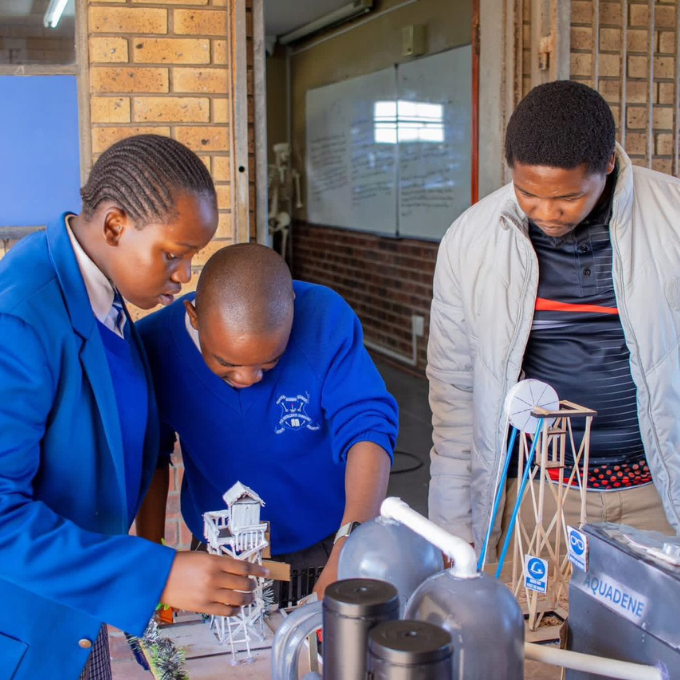
Aquadene Secondary School students work on their BioGreen Incorporation proposal
Students from Aquadene Secondary School in South Africa were awarded the highest score in this final round for their initiative, BioGreen Incorporation. Their aim was to turn greenhouse emissions into profit through converting methane and carbon dioxide from industry into dry ice, biomethane, oxygen and carbon credits.
World ORT CEO Dov Ben-Shimon told the teams: “You’ve gained knowledge, and you’ve learned new skills. But, most of all, we hope that you’ve developed an entrepreneurial mindset.
“You’re the ones who will shape your future. You’re the ones who’ll take responsibility for yourselves and your – our – community and what we’ll look like. That’s building skills for life. Not only about making money, but helping people and creating jobs.
“You’ve had opportunities to make real decisions about your business, but you’ve also had to deal with setbacks or criticism and learn from mistakes – building your confidence and resilience. You’ve had to develop good time management, to manage schoolwork alongside entrepreneurial projects. And that balancing is all about who you’re going to be. I know that we all look forward to following your future success in the years to come.”
The four judges were Brad Kolar, who is the founder of Avail Advisors and works with organizations around the world to simplify problems, decisions, data, and communication; private investor and company director Christian Varin, who serves on several boards, including that of Banque Edmond de Rothschild in Paris; Sandra Merrill, a mind–body practitioner and leadership coach who helps people live more balanced and fulfilling , and Philippe Leopold Metzger, World ORT Vice-Chair and a former CEO of Piaget, who is currently a private equity investor in a number of start-ups.
Mr. Leopold Metzger is also the vice-president of ORT Switzerland, which is the proud sponsor of the YEP program.
A smart glove and walking stick equipped with sensors to assist visually-impaired people, the hosting of a regular staff and teacher appreciation event and the preservation of the memory of the Holocaust are among the projects for which ORT students have been recognized in their efforts to improve the world.
Seven projects that were deemed to have made an outstanding contribution to Tikkun Olam – our shared responsibility to heal, repair and transform the world – have won the World ORT Gina and Joseph Harmatz Award out of a record 18 entries.
Ten entries were submitted by students from Escola ORT in Brazil; two by students from Scuola della Comunità Ebraica di Milano in Italy; two by students from Moscow ORT School #1540 in Russia; and one from students in each of ORT “Mishpahteinu” School in Kazan, Russia; ORT “Gesher” School in Samara, Russia; Colegio Olamí ORT in Mexico; and Colegio Isaac Rabin in Panama.
In a competition first, all four entries from Russia won the award.
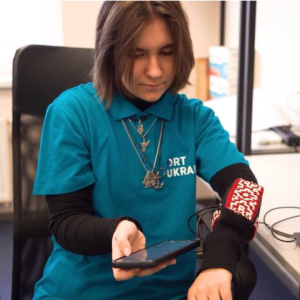
Smart Glove and Smart Walking Stick, conceived by students from Escola ORT, is a glove equipped with ultrasonic and color sensors, activated by voice command, to assist visually-impaired people to navigate indoors. A smart walking stick was also envisioned, equipped with proximity sensors to assist visually-impaired individuals in open urban environments.
The students said: “One of our team members was inspired by a conversation with his father, a coach for Paralympic athletes. His father described the daily challenges faced by the visually-impaired, sparking a deep desire to create a practical solution that could improve their quality of life.”
Toys from the Heart was conceived by Vika, a 10th grade student at Moscow ORT School #1540, who works with children in an orphanage. Many of them struggle with emotional expression, so Vika invites them to draw characters and describe their traits. She then crochets toys based on their drawings, helping them to express their feelings in a safe and creative way.
“When I see a child smile after receiving a toy, I realize we haven’t just created a toy – we have helped them feel important and heard,” explained Vika.
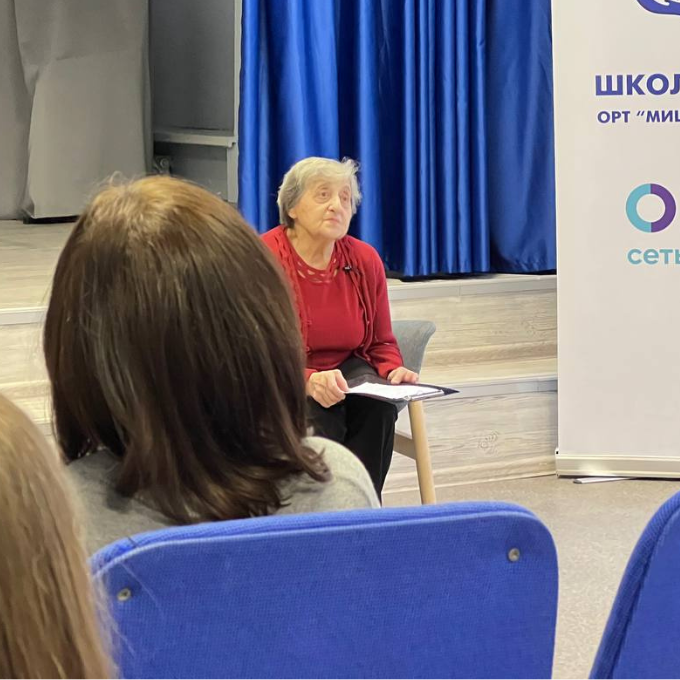
The Memory Through Fates project by students at ORT “Mishpahteinu” School aims to preserve the memory of the Holocaust not only through storytelling but also deeper historical analysis and reflection via archives and the taking of testimonies.
A speaker for the Memory Through Fates project
Student Elizaveta said: “My family met Rakhil Peretsevna Arleevskaya, who told us how her father, Perets Arleevskiy, saved his family along with 66 orphans in July 1941.
“We couldn’t find any information about him at Yad Vashem and we realized there were many such stories that could be forgotten. So we decided to create a project that would help preserve memories and explore the fates of people affected by the Holocaust.
“The project has allowed participants to see the human stories behind the numbers.”
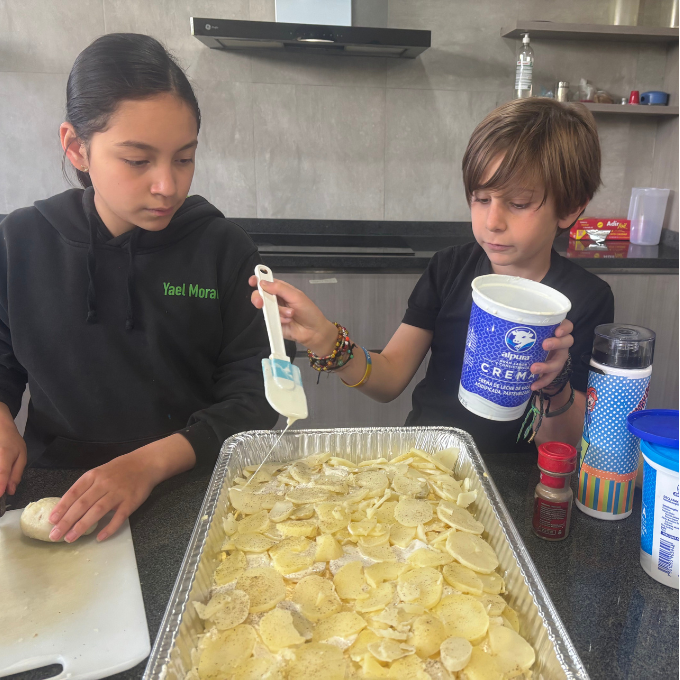
The Toda Le’Kulam (Thank You Everyone) project by students from Colegio Olamí ORT, Mexico, gives thanks to school staff in various departments in recognition of their hard work and contribution.
Once a month, on Friday afternoons, elementary students, along with a teacher and student leaders, prepare and cook a lunch, have a Kabbalat Shabbat and social activities with staff groups.
“Our role is to plan the meals and activities, prepare, cook, share and clean after the event,” the students said.
Students make food for teachers in the Toda Le’Kulam project
Students from Moscow ORT School #1540 were behind the Culinary Connection project, which brings together generations through cooking traditional Jewish dishes. Students host workshops with elderly people from chesed organizations and deliver meals to those who are housebound.
“Many elderly people face social isolation, especially those who live alone or have mobility issues. In large cities like Moscow, this issue is particularly noticeable as older individuals often find themselves cut off from society and lose connections with others,” students explained.
“The students realized how important it is to build connections between generations and how this helps to combat loneliness. What began as a simple cooking activity has grown into a meaningful experience for everyone involved – a chance to talk, share stories, and truly understand each other.”
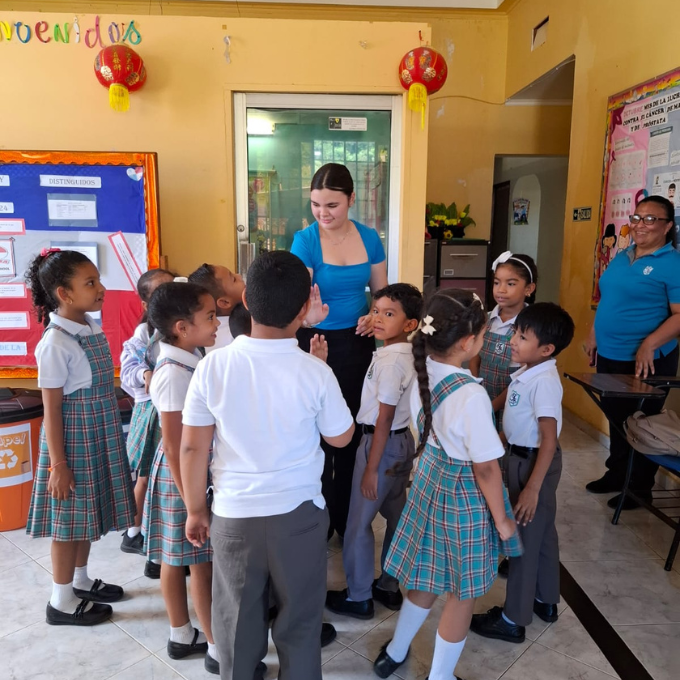
Eva, a student at Colegio Isaac Rabin in Panama, conceived the Recycling Talks project, for which she donated four recycling bins (organic, plastic, glass, and paper) to a school in the coastal town of Veracruz, where ocean pollution is a significant threat.
“I explained to preschool and first graders how to use the bins and why recycling matters, especially near the sea. I wanted to help protect our beaches and marine life. The children were so engaged, and teachers said they would keep using the bins, so the impact keeps going.”
Colegio Isaac Rabin student Eva discusses the benefits of recycling with children
Students from ORT “Gesher” School participated in the Volunteer Squad project, supporting the preservation of Jewish culture and traditions.
They organized national holidays in their school, participated in ORT programs, and helped in chesed centres. “We maintain connections between generations. We consider it important to preserve national customs, culture, languages, and traditions of our peoples,” they explained. “We pass on our knowledge to younger children and promote our idea to the masses.”
Some of the students credited the ORT network with being able to participate in the projects.
“Being part of the ORT network was essential to everything we achieved,” said the students behind the Smart Gloveand Smart Walking Stick project. “ORT provided us with tools, structure, support, and guidance that made the project possible and enjoyable. The learning environment and teacher guidance helped us apply our knowledge in a practical and concrete way.”
Jim Lodge, CEO of World ORT, said: “We were thrilled with the excellence and breadth of entries to this year’s World ORT Gina and Joseph Harmatz Award.
“They showcase the concern and desire of our students to improve the lives of others in a practical way. We are incredibly proud of our students, who truly embody the values ORT holds dear.”
Prizes are awarded in memory of the late Gina and Joseph Harmatz, who played crucial roles in ORT’s history.
Joseph Harmatz was Director-General and CEO of World ORT in the 1980s and 1990s. Formerly a partisan, he was regarded as a hero of Lithuania’s Jewish resistance against the Nazis, while Gina Harmatz escaped Nazi persecution in western Europe in the 1930s and 1940s before settling in Israel. She was well-known for her graciousness and the importance she placed on family relationships along with concern for the welfare of others.
To view videos of the students’ projects, click here
ORT students in Ukraine have been recognized with international awards for inventing devices aimed at helping citizens affected by war.
One design is a bracelet that recognizes potential threats for people with hearing problems. Another is a mobile app that aims to relieve psycho-emotional stress in children as young as six. Both projects won the students platinum awards at an international competition.
Viktoriia, 16, a pupil at Lyceum #141 “ORT” Kyiv, designed SoundAid, a smart bracelet that recognizes the name of the person wearing it as well as dangerous signals, such as car horns, sirens, and screams. If a potential threat is detected, the bracelet vibrates to alert the wearer to take care.
Viktoriia demonstrates her SoundAid bracelet
Her project won a platinum award at the world final of Infomatrix 2025, an international computer project competition held in Bucharest, Romania, in May.
Viktoriia, who was assisted by technology teacher Maksym Koroliov and headteacher Olha Rybak, learned about the problems of people with hearing impairments and, after talking to the Ukrainian Society of the Deaf, discovered that there were few devices to support them.
“My goal was to create an affordable and accessible device for people with hearing impairments,” Viktoriia explained. “Other target audiences were added, such as parents with young children and people who often wear headphones, but the device is still planned to be accessible to everyone.”
Meanwhile, 15-year-olds David and Alisa, also students at Lyceum #141 “ORT” Kyiv, won a platinum award for their project Quiet Heart, which aims to relieve some of the stress connected with the Ukraine war experienced by children aged six to nine and their teachers. These stressors include concern over the fate of relatives in the army, air raids, and loud noises.
David and Alisa designed the Quiet Heart app
Their schoolmates, Dmytro and Nazar, 14, who formed the ORT-2 team, won a silver medal for their entry in the Lego Sumo Robot category of the Infomatrix competition: a robot assembled and programmed on the EV3 controller.
ORT Ukraine provided the school in Kyiv with all the necessary equipment and all teachers of STEM subjects receive a salary supplement, supported by World ORT. The organization also partially covered the expenses of students and teachers to participate in the final of the world competition in Bucharest, as well as the round-trip travel.
Thanks again to the support of World ORT, ORT Ukraine was able to equip the school’s shelter with everything needed not only for the safe and comfortable stay of students and teachers, but also to continue the educational process. The school was also provided with uninterruptible power supplies, allowing the students to continue their education during power outages.
Yuliia Tkachuk, of ORT Ukraine, said the organization was proud of the achievements of its students and mentors. “This success is a clear indication of the strength of Ukrainian innovative education, as well as a confirmation of the high level of training of students and teachers of the ORT educational network,” she said. “No matter what, we teach, learn, inspire and support.”
People with hearing impairments often cannot hear important environmental sounds, which increases the risk of accidents, especially on roads. Existing devices are mostly focused on the high volume of the sound rather than the potential danger.
Viktoriia says SoundAid, which uses a neural network to analyze ambient sounds, can be used in everyday life as well as in specialized environments, such as workplaces with high noise levels. In the context of the war in Ukraine, people with hearing impairments are particularly vulnerable to dangers because they cannot hear alarms or approaching danger. SoundAid can be a critical tool for their safety in such conditions as well as more generally.
The prototype bracelet, which can be charged and turned on via a button, was created from a Raspberry Pi Zero 2 W board with vibrators and a connected microphone. These were provided by the school.
David and Alisa believe that because Generation Alpha (children aged between 0 and nine) were born into a digital world where smartphone use is ubiquitous, they will be receptive to receiving psychological help via a mobile app. They say they have not found suitable apps for children aged six to nine, therefore decided to design their own.
Their app, which aims to improve concentration during class, will focus on breathing, movement, distraction games, audio fairy tales, and cartoons with exercises. It can also be used with parental support at home and by psychologists.
“Children, especially young ones, are experiencing stress and psychological tension because of the war. They are all in a generation of smartphone users, so the idea of creating an app that will help relieve this situation was creative and everyone liked it,” explained Alisa. “After testing, the children said it helped them to relieve tension and stress, distract themselves and relax a little.”
Eight students and two staff from World ORT’s operational arm in Israel who were stranded in the Czech Republic due to the Israel and Iran conflict have returned home on an emergency flight.
The group, which was part of a wider Israeli delegation of 60 students and 20 teachers who had been taking part in an international science accelerator competition in Prague, landed back in Israel on Friday morning [June 20]. They had been due to return to Israel a week earlier, but their plane had been turned back due to the closure of Israeli airspace on June 13.
Half an hour after arriving at Israel’s Ben Gurion Airport, the students and staff had to run to an airport bomb shelter because of emergency alerts during an Iranian missile bombardment.
Dr. Moshe Leiba, Chief Pedagogy and R&D Officer for World ORT Kadima Mada, said: “They landed 30 minutes before an attack – other planes were in the air so were turned back. Our group landed and had to run back to the shelter, and then they finally got home after driving more than an hour.”
Speaking before the group returned, he had said: “These are very challenging times. Our students, who are aged 13 and 14 and in Grade 8, are staying in an apartment we rented for them. We have arranged a full array of activities for them. All the groups are connected and there are meetings on a daily basis.
“We are also taking care of their mental health needs with our professionals (including me) and locals. I meet with staff and students on Zoom daily.”
The students and staff were looked after by World ORT Kadima Mada colleagues as well as staff and students from the ORT-affiliated Lauder School in Prague. Dr. Leiba added: “The Jewish community in Prague was amazing and gave its full support for every need.”
Lior Barzilay, vice-principal of the Junior High School at World ORT’s Kfar Silver Youth Village at Ashkelon, said: “It was a very stressful situation. We were shocked because we didn’t know what was happening in Israel, and we didn’t know how or when we were going to come back.
“But World ORT Kadima Mada, Dr. Moshe Leiba, Kfar Silver CEO Amos Gofer, and the program’s CEO Vered Cohen Barzilay, took care of everything behind the scenes so we could focus most of our attention on the children.”
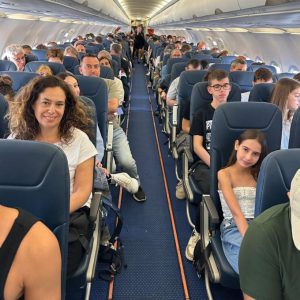
The Israeli students on the plane home
ORT America supporter Margie Green, of Florida, who has a long-standing connection to Kfar Silver, made a significant donation to help cover the costs of the students’ time in Prague and travel back to Israel.
The parents of these students wrote in a letter to Ms. Green of their “heartfelt appreciation”, adding: “Thanks to your help, our children had a safe and welcoming place to stay in Prague during uncertain and stressful times.
“Your care, generosity, and quiet strength made all the difference. You gave us not only practical help, but real peace of mind — and for that, we are truly grateful.”
Tzippi Becker, a teacher at Kfar Silver, said: “The Jewish community in Prague were very welcoming and students made us feel comfortable and showed us places in the city. They gave us kosher food, which, for a lot of people, was important.”
Lucie Hall, World ORT’s representative in Prague and a teacher at the Lauder School, said: “The school normally has around 400 students but needed to accommodate and feed an extra 80 people. Our school paid for their food, and Czech parents sent us contributions.”
English and Hebrew teachers at the Prague school prepared a program for the students. During the week, students visited the school and attended lessons, played sport including football and table tennis, made pancakes and chatted to their Czech counterparts.
Kfar Silver students back in Israel
“Emotionally, they seemed to be fine when in school, but their teachers said they were up and down,” Ms. Hall said. “Sometimes it was emotionally exhausting for them – they were happy for two hours, then they were sad, possibly when they received news from their families.
“They were talking with the Czech students a lot about our school, about their situation, about their school in Israel,” said Ms. Hall.
Student Yonatan, who is 13 and studies at Kfar Silver , said: “It was a very good trip – I had a lot of fun and enjoyed meeting new people. The community treated us very well. Two of the older students showed us around Prague.”
Students attended the competition from all over the world, including Turkey, Ukraine, and Nigeria.
Students from ORT schools in six countries created products that allowed a paralysed man to eat independently and a teenage stroke victim to play the guitar again.
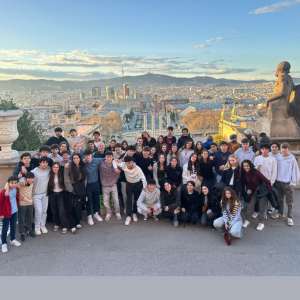
The teenagers, aged 14 to 16, from schools in Spain, Italy, Mexico, Brazil, Costa Rica, and South Africa, attended the ORT-affiliated Colegio Hatikva in Barcelona to take part in the Tikkun Olam Makers (TOM) project, which is designed to help improve lives.
It was the first time the Barcelona school had collaborated with international students, thanks to connections made through the ORT network, and the first time the other schools had taken part in the TOM project.
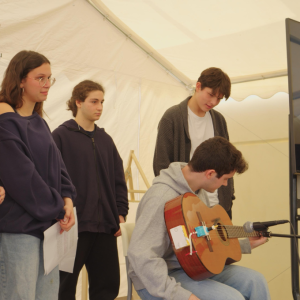
Students show Bernat the tool they designed to enable him to play the guitar again
A total of 35 students from Colegio Hatikva – which organised the week – and another 25 students from ORT Colegio Estrella Toledano, Madrid, Spain; Colegio ORT Olamí, Mexico City, Mexico; Scuola Della Comunità Ebraica, Milan, Italy; Instituto Dr Jaim Weizman, San José, Costa Rica; King David Linksfield High School, Johannesburg, South Africa; and Escola ORT, Rio de Janeiro, Brazil, took part.
TOM is a movement of around 70 communities around the world that try to provide affordable solutions for the challenges of people living with disabilities, the elderly, and the poor.
Roger Guerrero, Colegio Hatikva’s Co-ordinator of Innovative Technology and Education, has been working on the TOM project since its adoption by the school three years ago.
“It was amazing,” Mr. Guerrero said of this year’s participation. “It was the first international TOM project in Spain, and it went better than expected.
“We try to make the world a better place. It’s not only about teaching the students innovation and technology; it’s about teaching them the values that make us civilized.
“Through this project, our students realise how lucky they are, and they learn what it means to help others who are in need. We wanted to share these values and innovation with other schools.”
Colegio Hatikva student, Ariel, 15, said: “The Tom project Makeathon was fun. We learned a lot about leadership and design. I loved the fact that we worked with students from other countries. Helping people with needs was very emotional as some of them didn’t think they could do some activities again.”
Alan, from Colegio ORT Olamí, said: “I enjoyed working with people my age from other countries and finding out what their community is like as well as solving problems for people.”
Amber, Demi and Ruby, a trio of South African students who joined the initiative, said: “This was the most remarkable and unforgettable experience, and we are so grateful to have had this opportunity. We encourage everyone to get involved as the skills you learn are unbelievable, including design thinking, working in teams across cultures and presenting to a wide audience.”
The students took time out of their designing schedule to be tourists
The Makeathon normally only involves university students. Colegio Hatikva is believed to be one of the only participating schools. It was while attending the World ORT Hatter Technology Seminar in London last November that Mr. Guerrero discussed the project with peers from other ORT schools.
The overseas students were hosted by Colegio Hatikva families and the students did everything together. “They enjoyed it a lot, and they gained much more than pure knowledge – they learned how they can improve the world with technology. They are not just using technology, such as TikTok or Instagram, in an individual way; they are using it to improve the lives of others,” explained Mr. Guerrero.
As part of the Makeathon project, students meet people with disabilities to discuss their daily challenges, discover what solutions they have tried, and how they feel their situation could be improved.
The school has collaborated with the Institut Guttmann in Barcelona – which supports people affected by spinal cord injury, acquired brain injury, and other neurological disabilities – as well as hospitals to assess options available to patients. Colegio Hatikva’s students then work on a prototype, continually improving it following feedback from the end user until it becomes “a product they can use for the rest of their life”, says Mr. Guerrero.
This year, students heard from 19-year-old Bernat, who had suffered a stroke that left him with limited mobility on his right side. Among his greatest frustrations was that he could no longer play the guitar, so students used 3D online modelling program Tinkercad and 3D printing technology to create a support that allowed him to stabilise the instrument and play it with one hand. Bernat said that being able to play the guitar again felt like “recovering a part of myself”.
Students also created a tool, costing less than €1, for a patient who could not independently feed himself. The tool slotted into a spoon, allowing him to hold the implement. “Now he can eat alone,” explained Mr. Guerrero.
Joined by their parents, some students also created 12 children’s wheelchairs for a local hospital. Another item they designed was a micro:bit – a pocket-sized computer for software and hardware programming – for visually impaired people, making it 10 times bigger than usual so users are better able to connect the wires. “We are not reinventing the wheel – we are trying to make things easier for people,” explained Mr. Guerrero.
Bernat, for whom the guitar tool was created, said: “Doing these things helps a lot of people and, a year later, I can play the guitar again.”
Mr. Guerrero said the school’s implementation of the TOM Project had been so successful that many other institutions around Spain were keen to take part and he hoped to widen its reach even further next year.
Ari Messer, Principal of Colegio Hatikva, said: “Our school transforms into a pioneering and innovative one in terms of Jewish innovation, instilling Jewish values. It is helping society, tikkun olam, illuminating the world.”
Students from a school in Spain have secured victory in the final of World ORT’s Young Entrepreneurship Program (YEP) in the northern hemisphere for the second consecutive year. Their product concept provides real-time alerts if a customer accidentally leaves their front door open.
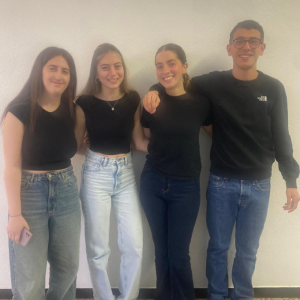
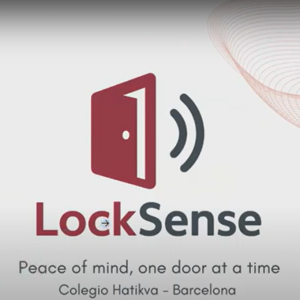
The pupils, aged 15 and 16 from the ORT-affiliated Colegio Hatikva in Barcelona, won the program’s final round with their business idea LockSense, which has the tagline ‘peace of mind, one door at a time’.
LockSense uses a battery-powered door sensor to provide an instant light and sound alerts, with optional Bluetooth and app connectivity.
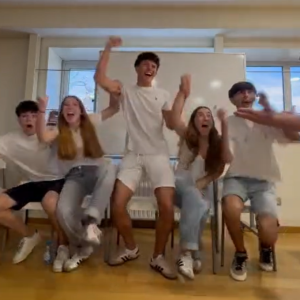
The Colegio Hatikva team celebrate their win
Two members of Colegio Hatikva’s team presented LockSense to World ORT’s Council of Representatives 2025 meeting, which was attended by international ORT colleagues, including lay leaders and professionals.
Students from Colegio Hatikva won the YEP northern hemisphere final last year, with their idea for an app, Mental Buddy. It is designed to offer a supportive environment for teenage users to explore and understand their feelings in real time, helping them to navigate through turbulent emotions.
Students from Milan’s Scuola della Comunità Ebraica were awarded second place in this year’s final for their DoctorNow idea, a health app that provides instant diagnoses based on experts and medical textbooks.
The team from Scuola della Comunità Ebraica were behind the DoctorNow proposal
The other seven schools taking part were: ORT Colegio Estrella Toledano, Madrid, Spain; Chernivsti Lyceum “ORT” 15, Ukraine; Lycée ORT Daniel Mayer, Montreuil, France; ORT No. 134 “Dimcho Debelianov” Jewish School, Sofia, Bulgaria; Kfar Silver, Israel; and Instituto Dr. Jaim Weizman, Costa Rica. The judges assessing the students’ pitches were Eric Bronstein, Dan Martin, John-Bernard Rondeau, Eli Richlin and Felix Dreyfus.
YEP promotes business entrepreneurship, motivates students and encourages collaboration. It is one of the key programs run by ORT to help students transform their lives using 21st century skills.
Other entrepreneurial ideas presented in this year’s final were: a food-ordering airport delivery company that avoids long lines; a pepper spray that, when activated, also alerts police and emergency contacts and takes a photograph of the attacker (one judge described this idea as a “serious, viable product”); an intelligent wardrobe that helps to choose the client’s perfect outfit; an app that provides real-time cultural insights for travellers; a pillow that combines technology and education; ‘Build an Organ’, an anatomical interactive toy; and a skill-swap app that allows users to trade skills for little or no cost.
LockSense, the proposal from the Colegio Hatikva team
The YEP program will be sponsored for the next three years by ORT Switzerland. Speaking before the presentations, Phillipe Léopold-Metzger, World ORT Vice-Chair and Vice-President of ORT Switzerland, said: “We are so excited. Training young kids to be great entrepreneurs is one of the best things we can do. I know the quality of the presentations will be great.”
Jim Lodge, World ORT CEO, told the finalists: “I want to say how very impressed I am with this program and with all of you teachers, students and judges – thank you judges! – who have devoted so much time and energy to it.
“I have spoken with some of the past participants of the program, and I know what the impact is. I also know how hard everybody works on it, so kol hakavod to all of you. The power of this program has not gone unnoticed.”
Under YEP, teachers deliver a 30-week curriculum, providing students with an introduction to the world of innovation, technology, and entrepreneurship. The brief is for students to design a product that solves a social problem.
Mr. Martin said: “It was a very tough decision for us as judges because each idea was thoughtfully researched and meticulously put together. Congratulations to the winners and congratulations to everybody participating. Good luck, and I am hopeful for the futures of the inventors globally.”
Mr. Richlin said: “Thank you to the students for all the hard work you put in. Certainly, you are all winners and I hope you take with you the experience of preparing, thinking hard about the problem and the solution, and practicing – those are the skills you can draw upon in whatever you do. We can’t wait to see what is in store for you.”
Mr. Bronstein concluded: “Every presentation… was so impressive and to be able to do so across languages is doubly impressive. I look forward to seeing every one of these people as business leaders, community leaders, and entrepreneurs.”
Students from Colegio Hatikva’s winning team said: “We want to thank the whole ORT team – we are really thankful for this opportunity. We also wanted to say thank you to our teacher, Roger Guerrero; he was with us every step of the way.”
ORT Day, the annual global celebration of our network, took place with students participating from countries including Bulgaria, Lithuania, Mexico, Panama, Brazil, Georgia and Israel.
The event unites students, teachers, alumni and friends of ORT to celebrate our mission, which is to prepare people and communities all over the world for meaningful, self-sufficient futures.
Welcoming attendees to the online session, Daniel Tysman, World ORT’s Head of Education, said: “ORT Day is an annual event where we’re celebrating almost 150 years of education and training all over the world.
“This is an important celebration of being part of ORT but at the same time we are all very much aware that these are very difficult times to be part of the Jewish community, to be living in the Jewish world.”
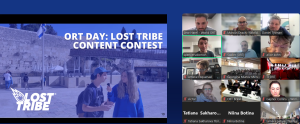
The students heard from keynote speaker Spencer Solomon, Director of Marketing of Lost Tribe, an organization aiming to build a stronger Jewish future. He delivered a compelling talk about celebrating Jewish identity and Israeli culture in the digital space. It included advice on how to produce good content, the power of analytics in brand growth, working with content creators and influencers and concerns relating to posting online.
Spencer Solomon’s Lost Tribe session
Lost Tribe has 81,800 followers on Instagram and 123,400 followers on TikTok and Spencer told the session: “Lost Tribe is the largest online Jewish teen community in the world on social media. [It] leverages the power of new media platforms to cultivate Jewish life, spread knowledge and strengthen Israel-Diaspora bonds, making connections around the world to Israel and connecting and empowering the next generation to lead vibrant Jewish lives and overcome antisemitism with Jewish pride, identity, and joy.
“I think [Lost Tribe and ORT’s] missions are very closely aligned, so it’s awesome to be speaking with all of you today as I know you have a deep and profound understanding of the importance of a mission like this, which is really special.”
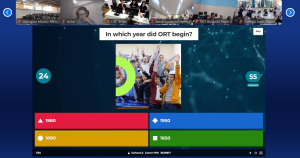
Following his talk, students tested their knowledge of the network at the annual ORT Day Quiz, for which they had previously received an information pack. The students answered questions about the foundation of the organization and its former and current programs. Liepa from ORT Sholom Aleichem Jewish Gymnasium in Lithuania won, collecting a $150 prize for herself and her school.
Students taking part in the ORT Day quiz
Jim Lodge, World ORT CEO, said: “I would like not only to congratulate you personally but to give applause to all of you. I am so impressed by both the depth on this program but also its international span, so it’s been a great pleasure being here. I want [to say] mazeltov to you all for what you are doing at our ORT schools, not only today, but daily throughout the world.”
All ORT network students were challenged to celebrate Jewish identity through social media: to create an engaging Instagram Reel or TikTok that is up to one minute long on any Jewish-related theme in their own style before April 16.
To enter, students need to follow and tag @ort.orglife on Instagram or TikTok, use the hashtag #ORTDay and send us a message with their full name and Instagram/TikTok handle. The best Reel or TikTok will win a special prize.